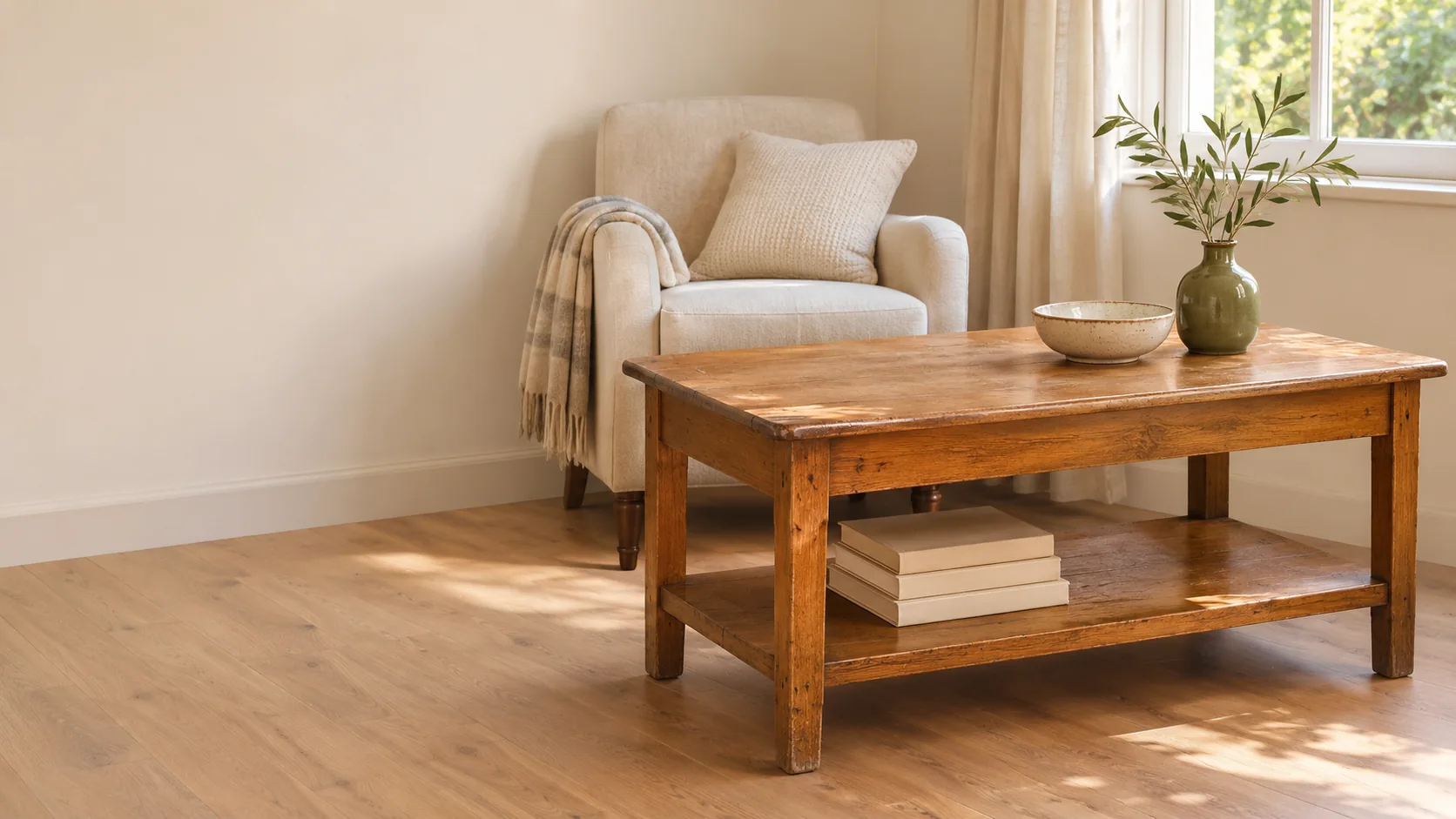
Check condition before choosing a project
Clear the table and inspect its top, joints, legs and any drawers or hinges. Photograph damage and identify the material from the original description if you have it. Solid wood, veneer, glass and coated surfaces need different approaches.
A loose joint or chipped glass is not merely a styling problem. Ask an appropriate repairer about structural damage before deciding that paint or a decorative cover will make the table useful again.
Try a new position first
Move a sound table within the room and see whether it works better with a different seating arrangement. A smaller table might serve a reading area or hold books in another room if its height and footprint suit the task.
Keep the original load and use limitations in mind. Do not turn it into a bench, climbing step or aquarium stand simply because it looks sturdy. Repurposing should not depend on an unconfirmed structural assumption.
Choose a refresh that suits the finish
Cleaning, a compatible repair or replacement hardware may be enough. For refinishing, identify the existing surface and ask a supplier about a suitable process. Avoid sanding an unidentified old coating or treating a thin veneer as thick solid timber.
Do not move an indoor table outdoors without confirming its suitability. Our outdoor furniture paint guide explains why an exterior coating must match the material, and paint alone does not establish that the whole table is weather-ready.
Sell or donate with an honest description
For a usable table, take clear photographs and list dimensions, material if known, damage and collection arrangements. Mention missing parts and previous repairs. A buyer or recipient should be able to judge the actual item.
Habitat ReStore asks for reusable, resellable donations in good condition. Contact the local store before arranging a drop-off, since acceptance and pickup depend on the location and item.
Use the right disposal route
If reuse or repair is not practical, ask your local waste service how the specific materials should be handled. Keep glass, metal fittings and composite boards identified rather than assuming the whole table goes into one recycling stream.
Before buying a replacement, review what failed in the old arrangement. Our storage coffee table guide can help if clutter was the problem. If size was the issue, measure the seating group before repeating the same purchase.
Check whether it is safe to keep using
Inspect legs, joints, glass, lift mechanisms and sharp edges. A wobbly table may need a simple tightening or a professional repair; cracked glass or unstable structure should be kept out of use. Photograph the condition before deciding on a project. A cosmetic paint change is worthwhile only when the table is sound. Check the maker's finish information before sanding or applying a new coating, especially on veneer, laminate or a table with unknown age and materials.
Try a different role first
A table that crowds the sofa may work as a side table, plant stand or hallway surface if its dimensions and stability suit that use. Measure the new location and traffic path before moving it. Keep weight limits and heat exposure in mind. If it has storage, consider whether a change of room solves a real problem rather than creating a new clutter spot. A modest clean or repair can be more useful than an elaborate upcycling project that no one needs.
Pass it on with an honest description
If selling or donating, give dimensions, material description, clear photographs and any damage or repair history. Do not conceal a loose leg under a tablecloth. Check the receiving charity's current acceptance rules; Habitat ReStore's FAQ is one example, but local rules vary. A buyer should know whether the item fits their vehicle and room. Keep pickup arrangements safe and avoid leaving an unwanted table at a charity entrance.
Choose a local disposal route when needed
If the table cannot be repaired or reused safely, check the municipality's bulky-waste and material rules. Glass, metal and treated wood may need different handling. Remove personal items from drawers and consider whether reusable hardware can be separated. Do not put a damaged table on the curb without checking local collection requirements. Record what you learned about the old table's size and function before buying a replacement so the same room-fit problem is not repeated.
Common questions
Can I turn a coffee table into a bench?
Only with a competent assessment and any necessary redesign for seating loads and stability. A table's appearance or weight does not establish that it can safely support a person.
Is refinishing always worthwhile?
It depends on the construction, condition, desired finish and cost of the work. Ask a repairer about valuable or unfamiliar pieces. A simpler clean or a new position may be more practical than a full refinish.
Will a charity collect the table?
Some organizations offer collection, but acceptance and service areas vary. Contact the local branch with photographs and dimensions before making arrangements. Do not assume damaged or incomplete furniture will be accepted.
Can an indoor table become patio furniture?
Check its construction and materials before using it outdoors. An exterior paint does not automatically make joints, boards or fittings suitable for weather exposure. Choose a protected alternative or purpose-built outdoor piece when suitability is unclear.