Identify the surface under the finish
Check the furniture label or original description. A wood-effect surface might be plastic, while a metal frame could have a factory coating that needs a particular preparation system. Photograph any peeling, rust or weathered areas before asking a paint supplier for advice.
Paint is a finish, not a structural repair. Resolve loose joints, unstable legs or serious corrosion before planning a cosmetic refresh. Keep upholstery and moving parts out of the paint area.
Match the coating to the material
For wood, look for an exterior system approved for that timber and its existing treatment. For metal, confirm whether the product needs a compatible primer and how rust should be addressed. For plastic, check the named plastic types rather than trusting a broad multipurpose claim.
Krylon separates preparation advice by surface. Its guidance reinforces why clean, dry, appropriately prepared material matters, but the exact product label should determine your process and coating sequence.
Plan preparation before buying paint
Ask about compatibility with the old finish, not just the bare substrate. A glossy coating, oily timber or damaged powder coating may require a different system. If an old coating is unidentified, seek advice before disturbing it.
Test the proposed system on a discreet area and allow the specified cure before assessing adhesion. Arrange the ventilation, protective equipment and working conditions required on the label. Do not assume an outdoor setting alone makes every application method appropriate.
Separate drying from readiness for use
Choose a weather window that meets the paint instructions, including temperature, humidity and protection from rain. Plan where the furniture can remain undisturbed between coats and during curing.
Follow recoat intervals and the full return-to-use time. A surface that feels dry may not yet be ready for cushions, covers or regular handling. Keep a record of the paint and primer so later touch-ups use a compatible system.
Choose color after the practical checks
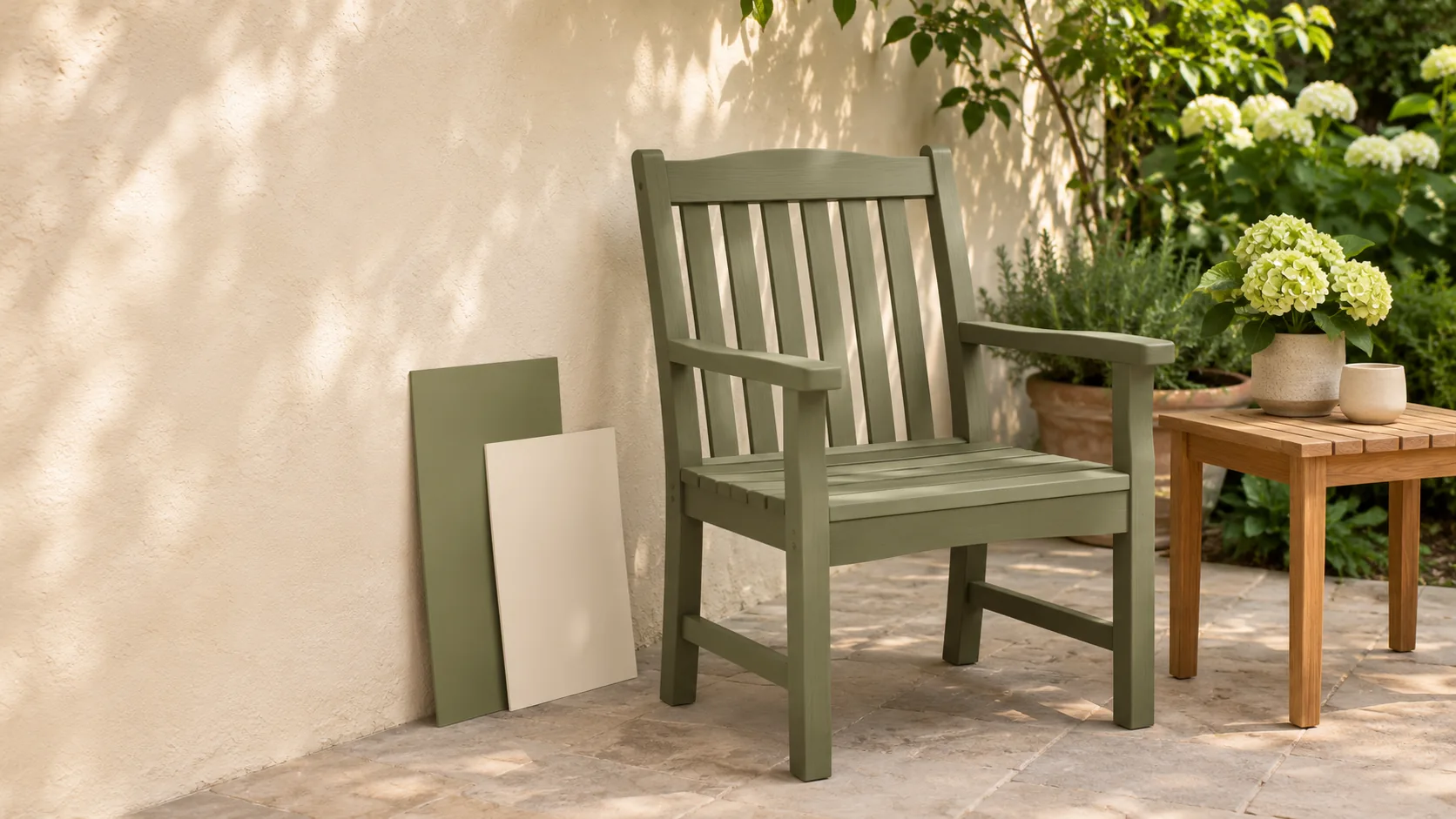
An olive finish can sit quietly among planting, while warm brown may suit a pale patio and natural wood accessories. Those are styling options, not evidence that one color protects better. Ask the supplier about any color restrictions for the chosen material.
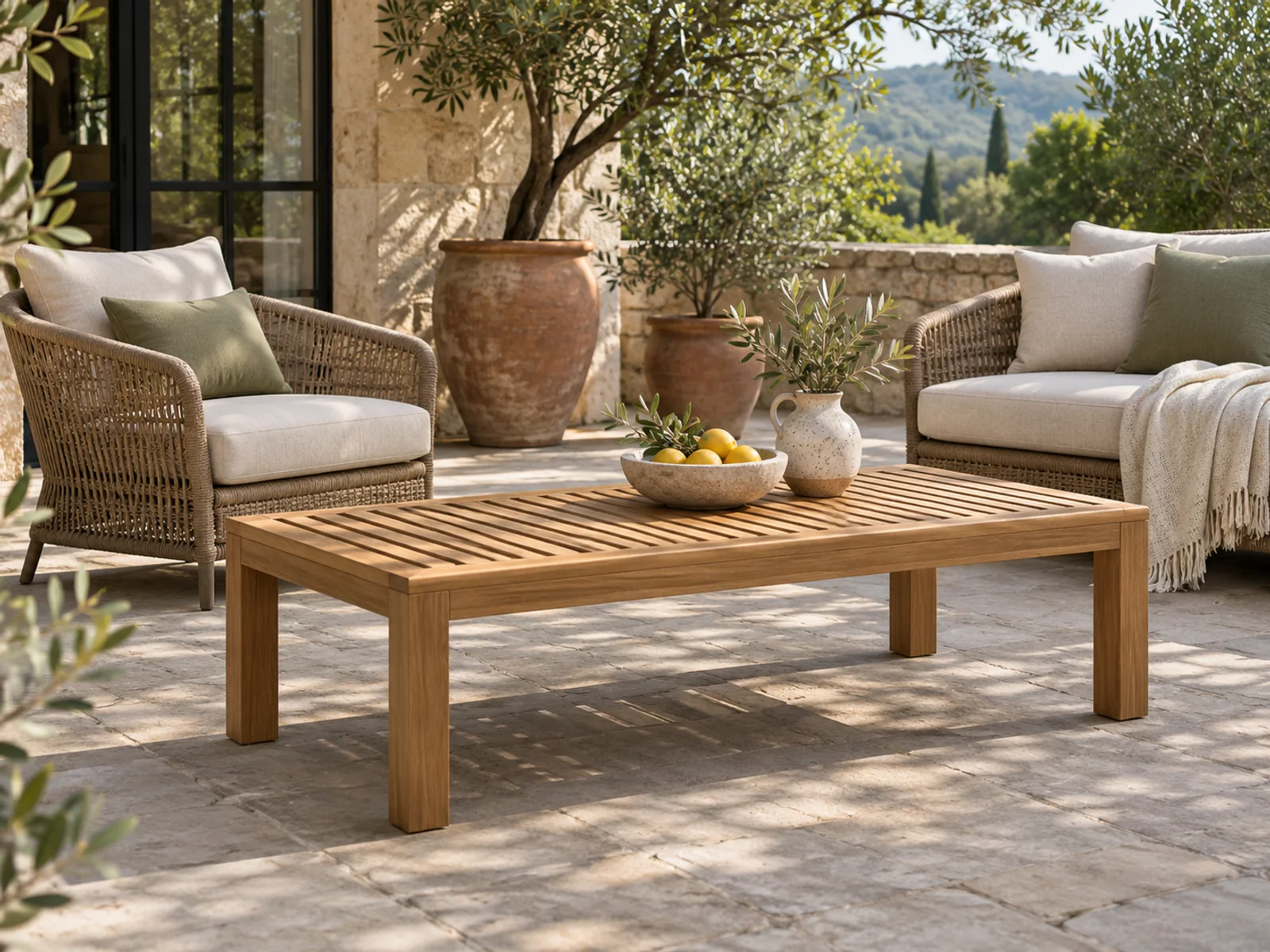
When arranging the refreshed pieces, compare the footprints in our outdoor coffee table guide. Leave enough space to use and maintain the furniture rather than filling every corner.
Identify the substrate and old finish
Look for solid wood, metal, plastic, resin or composite material, then inspect the current coating for peeling, rust or chalking. The paint must be compatible with both the surface and any sound old finish. Krylon's preparation guidance shows how cleaning and surface preparation affect adhesion, but its directions apply to specified products and materials. Do not assume one can of exterior paint works on every part of a mixed-material chair.
Plan primer and coating as one system
Read the paint maker's instructions for the substrate, primer, temperature range, number of coats and drying conditions. If metal is rusted, treat the rust as directed before finishing. For timber, address loose or wet wood rather than painting over it. Mask hinges, labels and surfaces that should not be coated. Test a discreet area for adhesion and appearance. A colour sample in outdoor light can look different from the same shade indoors, so compare before painting the full set.
Keep ventilation and cure time in view
Follow the product label for protective equipment and ventilation. Keep children and pets away from the work area and protect nearby plants and paving. Dry to touch is not necessarily ready for seating, rain or stacking. Check the full cure time and avoid putting cushions back early. Do not paint over a moving joint or screw head that needs later access. Dispose of leftover product according to local guidance and keep the label for future touch-ups.
Decide whether painting is worth the work
A sound frame with a tired finish can be a good project. A corroded joint, cracked plastic or rotten wood may be unsafe regardless of colour. Compare the cost of preparation, primer, paint, tools and time with a replacement piece you would use. Take before photographs and label leftover paint with the furniture model and date. A durable finish begins with a stable substrate; it cannot turn failing structure into safe seating.
Common questions
Can I use leftover interior paint?
Only if its manufacturer explicitly approves the product for the exterior material and use you have in mind. Interior suitability alone does not establish weather resistance or compatibility with outdoor furniture.
Does all outdoor furniture need primer?
No single rule covers every coating and substrate. Some systems require a separate primer and others specify direct application after preparation. Follow the exact paint system, including restrictions on existing finishes.
Can I paint plastic chairs?
Possibly, but the paint must be approved for the particular plastic. Identify the material, check preparation instructions and test the full system before treating the chair. A generic plastic label is not enough.
When can I put cushions back?
Wait for the full cure or return-to-use period stated by the coating manufacturer. Touch-dry paint can still mark or stick under pressure. Account for the actual temperature and humidity during drying.