Read material and method separately
The terms are often placed together in product titles, which makes them sound interchangeable. Ask what the strands are made from and what supports them. A natural-looking brown weave may be synthetic.
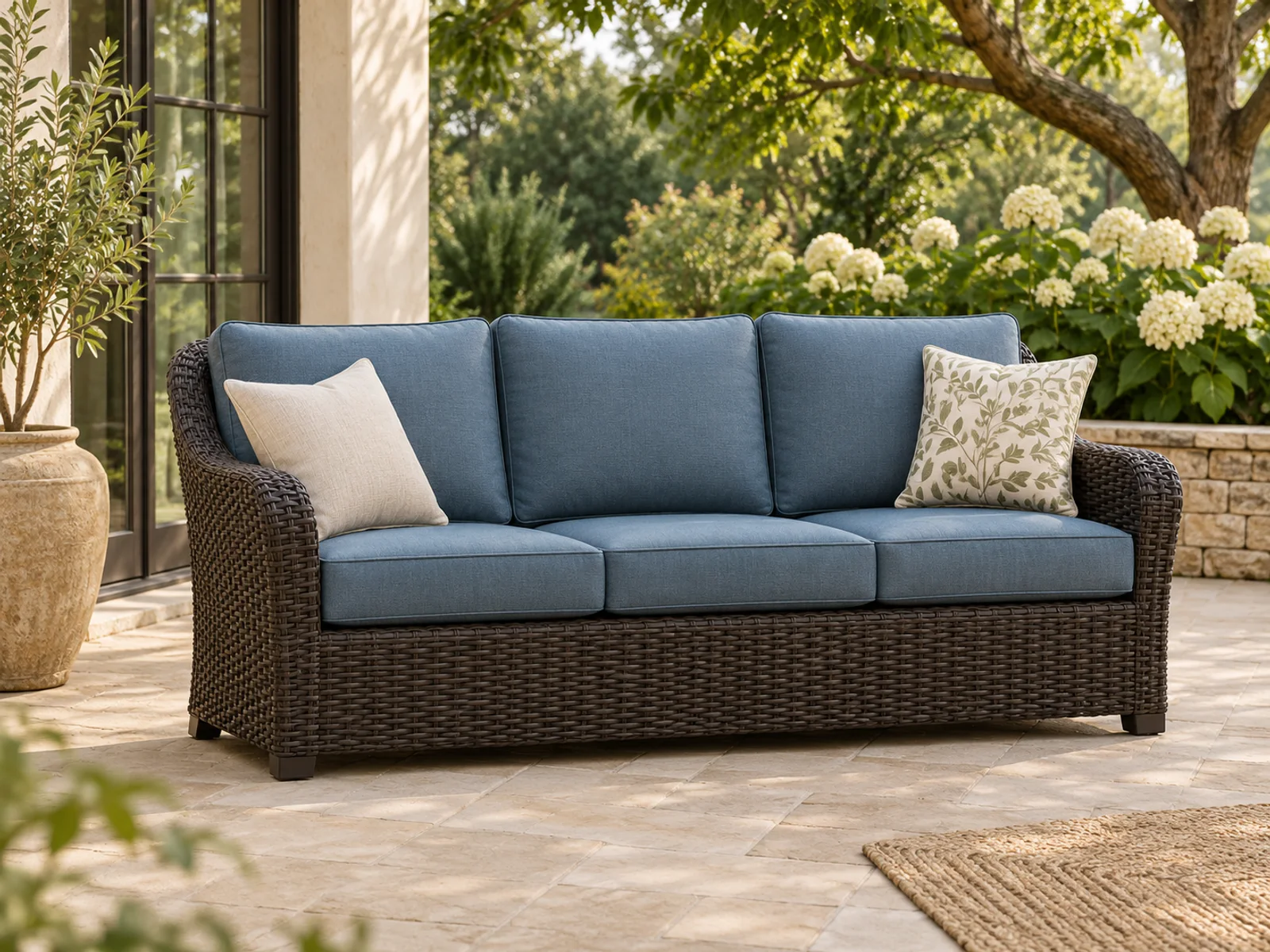
POLYWOOD's woven-furniture page explains wicker as a weaving technique and describes its own HDPE construction. That is a specific material example, not evidence that every product labeled wicker has the same composition or weather resistance.
Check the frame beneath the weave
The frame may be wood, metal or another material. Its finish, joints and feet matter alongside the visible strands. Look at the underside and ask how the weave is attached, especially on areas that take repeated contact.
Inspect whether loose strands, sharp ends or damaged attachments are present on delivery. Do not trim or glue a new piece before contacting the supplier about an issue. A cosmetic-looking flaw may need a model-specific repair method.
Confirm the intended environment
Indoor natural-rattan furniture should not be assumed suitable for an exposed patio. Equally, an outdoor synthetic weave still has instructions covering storage, cleaning and its frame. Check the whole product rather than just the visible material.
Cushions add another specification. Their covers, filling and storage requirements may differ from the frame. Our winter storage guide helps you plan the off-season routine before buying.
Choose by touch, fit and care
Try the seat with the intended cushions and look for the dimensions that affect your room. A broad woven arm can occupy considerable space. Ask for the approved cleaner and whether a protective finish needs maintenance.
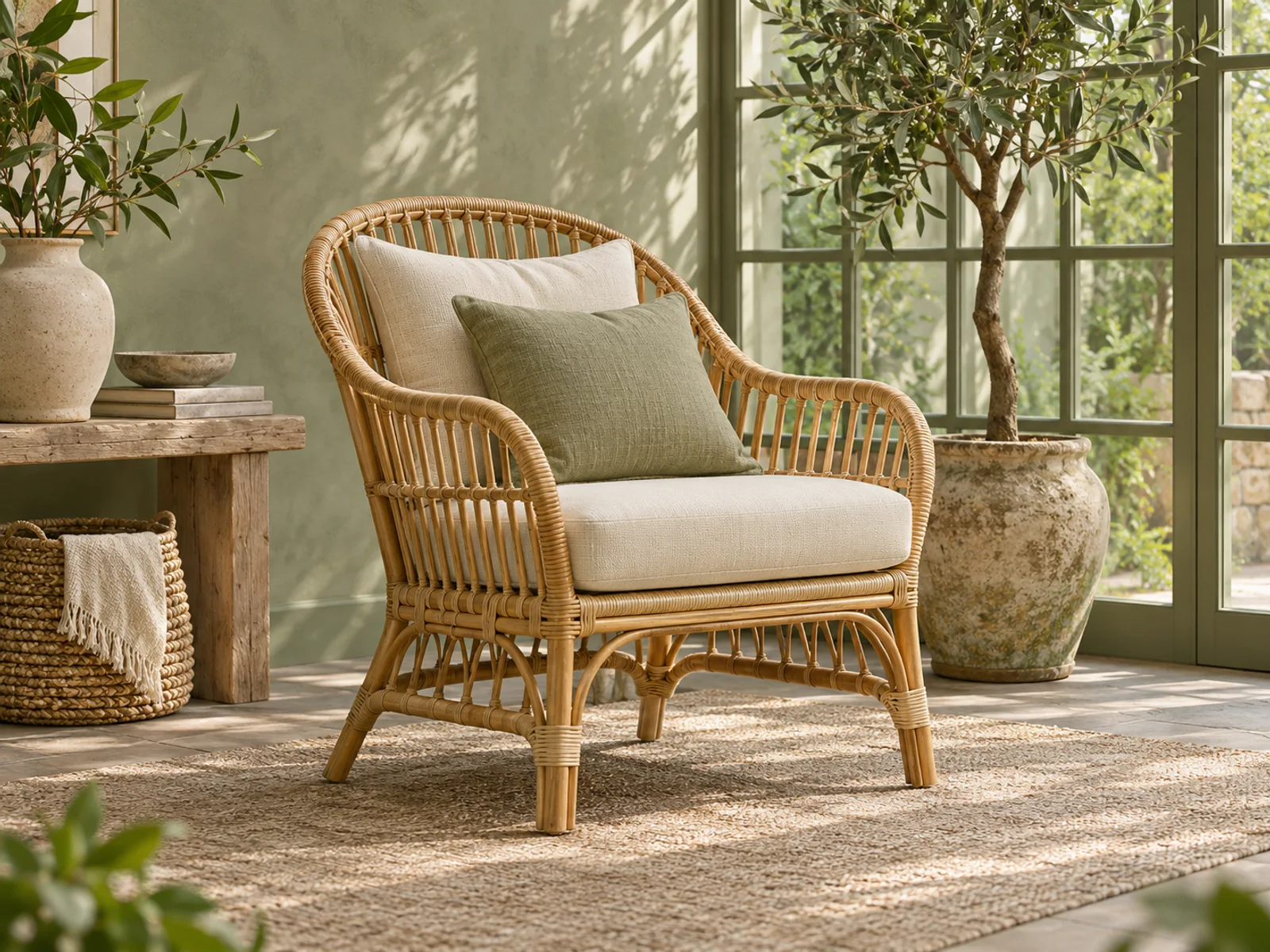
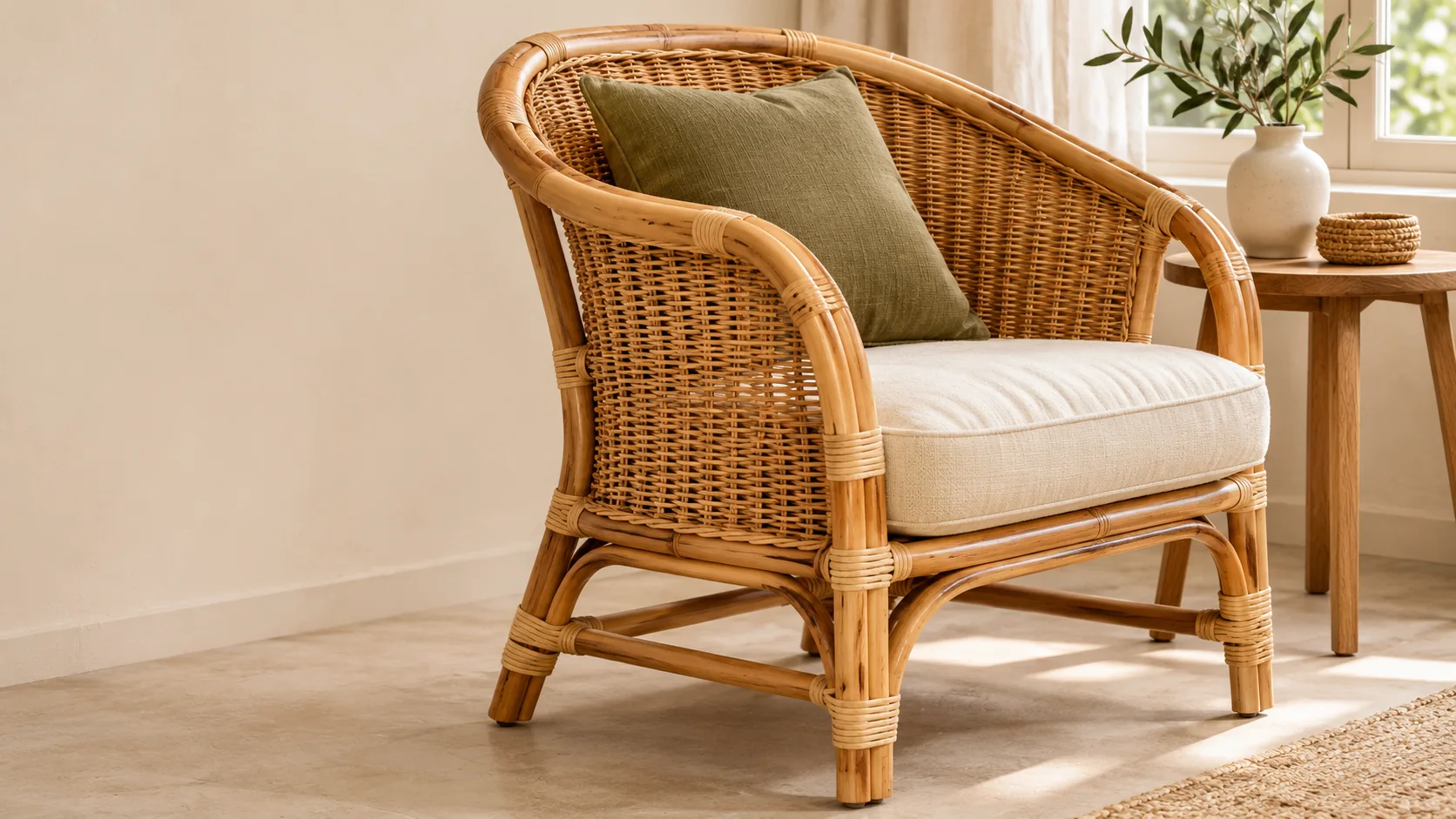
Compare rattan chairs with wicker chair options after separating material from method. The woven appearance is a useful style preference, but it does not replace the construction details.
Separate the material from the weave
Rattan is a plant material used for frames and weaving. Wicker describes a weaving method that can use rattan, resin or other materials. Ask what the actual frame and woven strands are made from rather than buying from a label alone. Natural rattan may suit an indoor protected area, while a synthetic wicker piece may be specified for outdoor exposure. Check the maker's weather and cleaning instructions for the exact product; neither word alone guarantees resistance to rain or sun.
Inspect the structure as well as the pattern
Check that the chair or table sits level, the frame joints are sound and strands are secured without sharp ends. A loose weave on a load-bearing seat is more than a cosmetic issue. Ask about replacement cushions and how they attach. If the item is for a patio, check whether its metal frame can corrode and whether the cushions must be stored dry. Compare weight and delivery size if the piece will move between indoors and outdoors.
Plan care for the chosen material
Brush loose dust from a weave with a suitable soft tool and follow the maker's approved cleaning method. Avoid soaking natural material simply because a synthetic outdoor set can be rinsed. Dry the piece thoroughly and keep it within the conditions the manufacturer specifies. If a strand breaks, ask whether the maker or a specialist can repair it. Keep the material description with the receipt so future care does not depend on guessing from appearance.
Common questions
Is wicker always made from rattan?
No. Wicker describes a weaving method that can use natural or synthetic materials. Check the exact strand and frame specification to understand the construction and intended environment.
Can natural rattan stay outside all year?
Do not assume it can. Follow the product's stated indoor or outdoor use and storage requirements. A covered porch still exposes furniture to changing moisture and temperature.
Does synthetic wicker need no maintenance?
No. The weave, frame and cushions still have cleaning and storage instructions. Weather-resistant marketing does not mean that dirt, trapped moisture or damaged strands should be ignored.
Is wicker always plastic?
No. Wicker is a weave, not a single material. Ask whether the item uses natural rattan, resin or another strand.
Can natural rattan live outdoors?
Only within the maker's stated exposure limits. Many natural pieces need protection from rain and prolonged sun. Check the exact furniture instructions.
Which is easier to clean?
It depends on the material and finish. Synthetic strands may tolerate methods that natural fibre does not. Follow the product's care sheet.
Can a broken strand be repaired?
Sometimes, but the method and matching material matter. Ask the maker or a furniture repairer before trimming or gluing a load-bearing area.