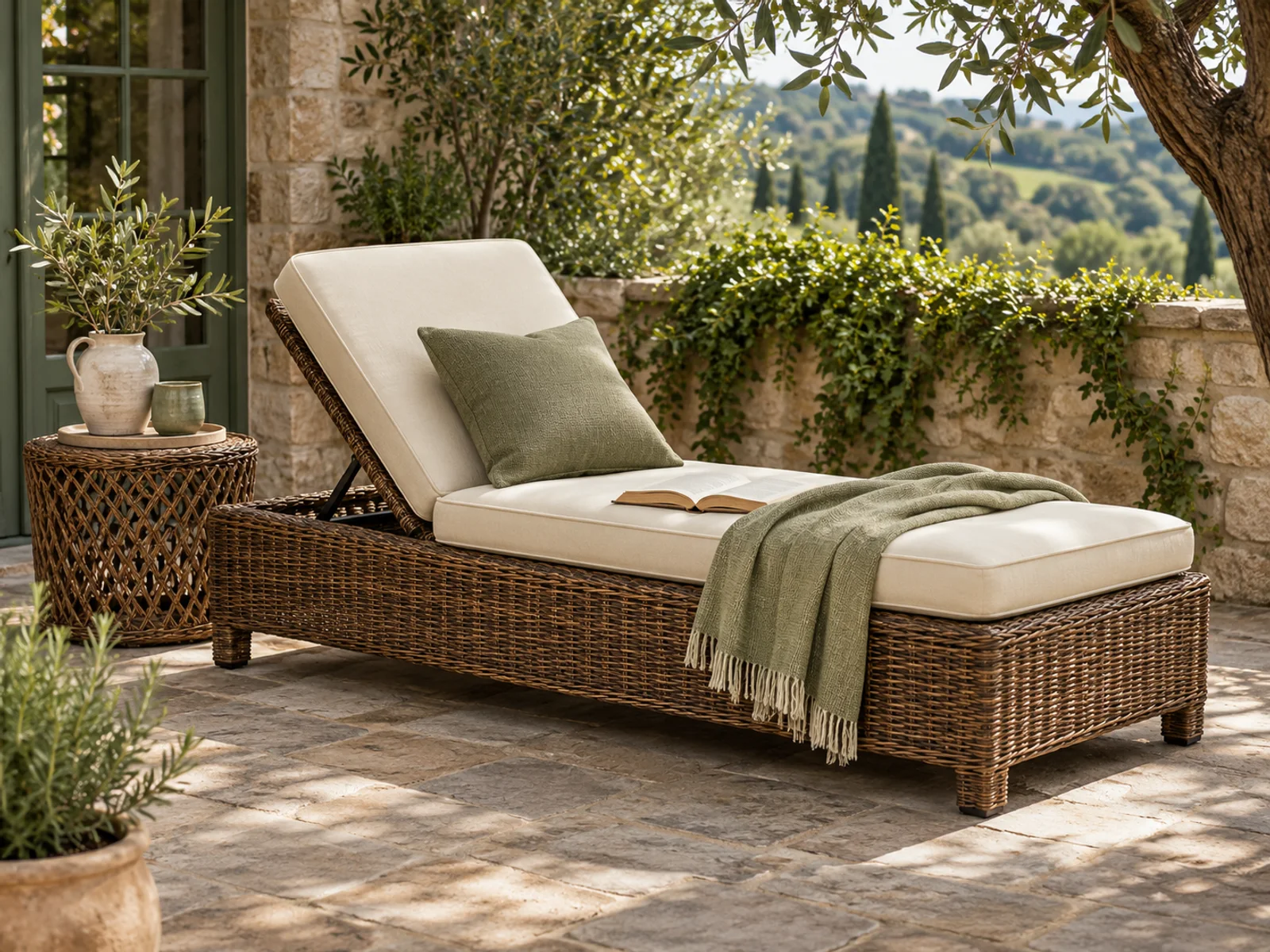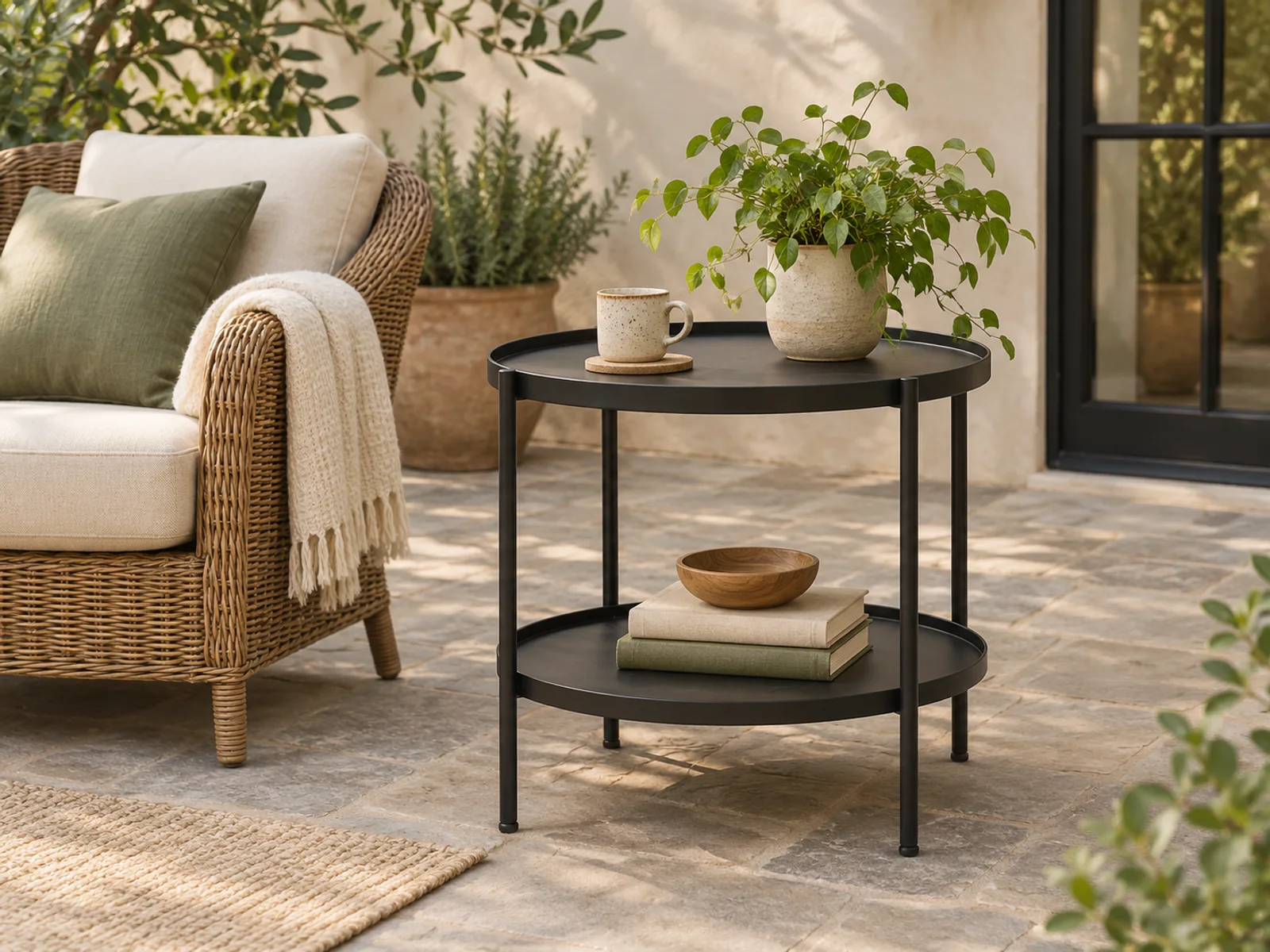
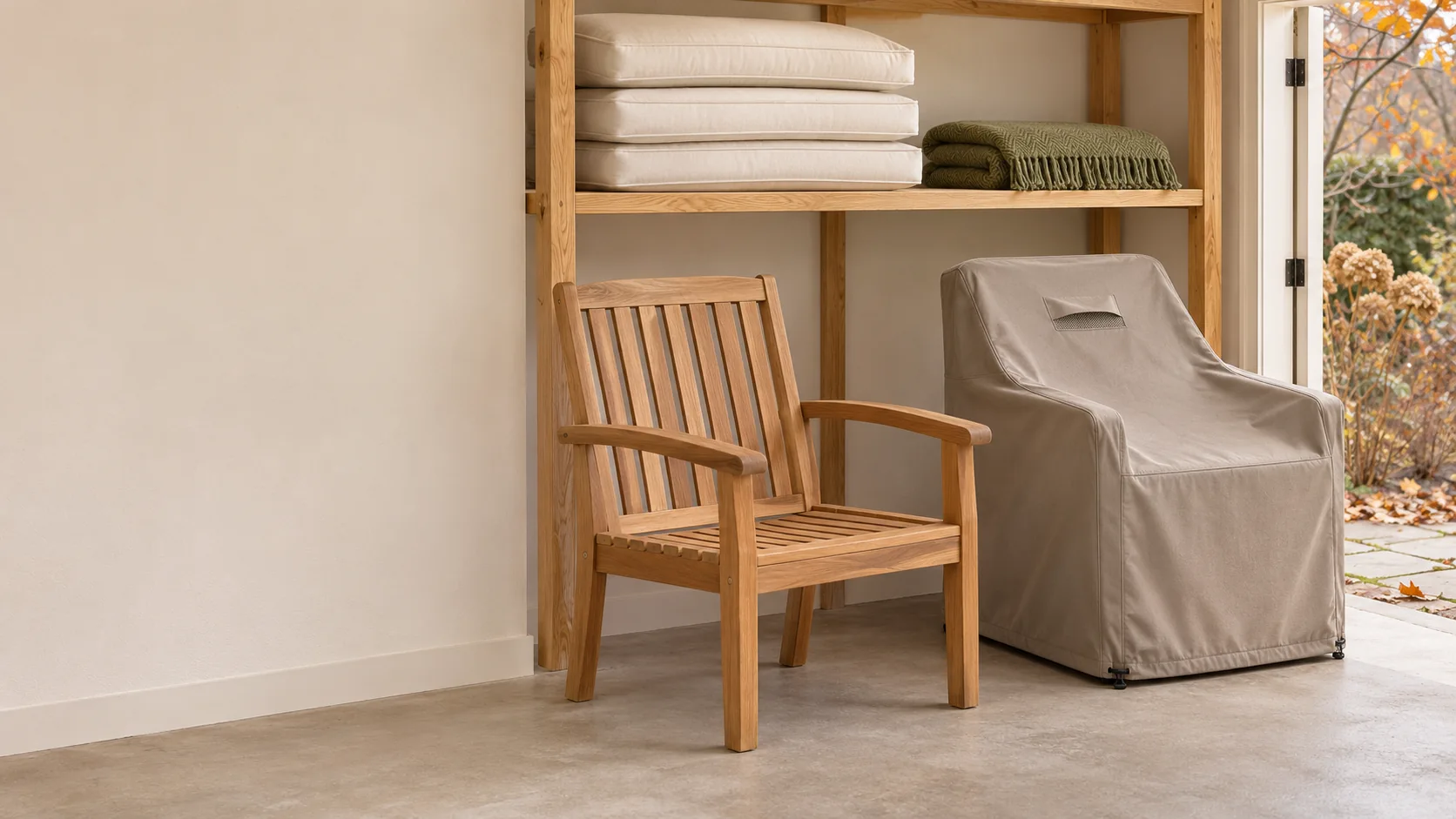
Make a material inventory
Record the frame, tabletop, weave and cushion materials for each piece. Find the relevant care instructions before buying a treatment or deciding what can stay outside. A mixed-material set may need several different routines.
SunVilla's winter-storage guidance advises ensuring furniture is clean and dry before covering or storing it. Apply your own manufacturer's requirements where they differ, rather than using one brand's advice as a universal permission to leave furniture outdoors.
Clean with enough time for drying
Choose a dry period that allows the instructed cleaning and drying process to finish. Remove loose debris and use only approved methods. Avoid putting damp cushions into a sealed container or covering wet furniture to finish the job quickly.
Check hidden areas where water or dirt can collect, including seams and frame recesses. Do not drill drainage holes or dismantle parts unless the instructions call for it. Our outdoor cleaning guide explains the material-first approach.
Plan the storage arrangement
Measure the storage area and the route into it. Confirm whether chairs can be stacked and whether cushions should be stored separately. Protect surfaces from rubbing using materials recommended by the supplier.
Keep cushions away from conditions the maker prohibits and label sets so they return to the right furniture. Do not place heavy objects on cushions or frames unless their storage instructions allow it. A space that fits the pile is not necessarily a suitable storage environment.
Check items that remain outside
Use a correctly fitted cover if recommended, with its fastening and ventilation features arranged as instructed. Inspect it periodically rather than assuming it can be ignored until spring. Follow local weather advice and the furniture maker's storm precautions.
Before using the furniture again, remove covers and check condition, connections and moving parts according to the manual. Compare outdoor couches with their seasonal storage needs in mind if you are planning a replacement.
Clean and dry each material before storage
Brush off debris and follow the furniture maker's cleaning directions for frames, cushions and covers separately. Let every part dry fully, including seams and underside joints, before stacking or covering. A damp cushion sealed in a storage bag can develop an odour or surface damage. Check fasteners, cracks and rust while the set is still accessible. Repair or replace unsafe parts rather than storing a problem for the next season. If a finish needs retreatment, follow its product instructions and full cure time before packing.
Choose a storage place with airflow
A shed, garage or covered patio may offer different humidity and temperature conditions. Follow the maker's limits for natural wood, metal, synthetic weave and powered components. Keep pieces off damp ground where appropriate and avoid leaning a heavy table onto a delicate chair. Remove batteries from accessories if the instructions require it. Use a cover that fits without trapping water and check stored furniture occasionally after storms or temperature changes.
Make spring setup easy
Label cushion bags and keep the assembly manual, hardware and care sheets together. Photograph the set before dismantling so it can be reassembled correctly. Record any loose bolt or finish damage to fix before the next use. When bringing pieces out, inspect joints, feet and covers before anyone sits down. A clean-looking set can still have a weak fastener after a winter in storage. A short checklist now prevents a rushed repair on the first warm day.
Common questions
Can I store cushions in a deck box?
Only if the cushions are dry and the box provides conditions compatible with their instructions. Check ventilation, moisture entry and the space available. A storage box is not automatically a dry indoor environment.
Should I stack all patio chairs?
Only chairs designed and approved for stacking should be stacked. Follow the permitted quantity and protection method. Unapproved stacking can load arms, weave or finishes in ways they were not designed to handle.
Can I leave a cover on all winter?
Follow the cover and furniture instructions and inspect periodically. Trapped moisture, movement or damage may need attention. A fitted cover does not remove the need to check the condition underneath.
Can I leave cushions outside under a cover?
Only if the furniture and cushion maker permits that storage condition. A cover can trap moisture. Dry and inspect inserts before the long storage period.
Should I stack chairs?
Check whether the exact model is designed to stack and its limit. Improvised stacking can bend frames or mark finishes.
Can a table stay on the patio?
Follow its material and finish guidance. Protect it from standing water and inspect covers after weather changes.
When should I clean the set?
Clean and dry it before storage so soil and moisture do not remain through winter. Reinspect and use the approved routine when it comes back out.