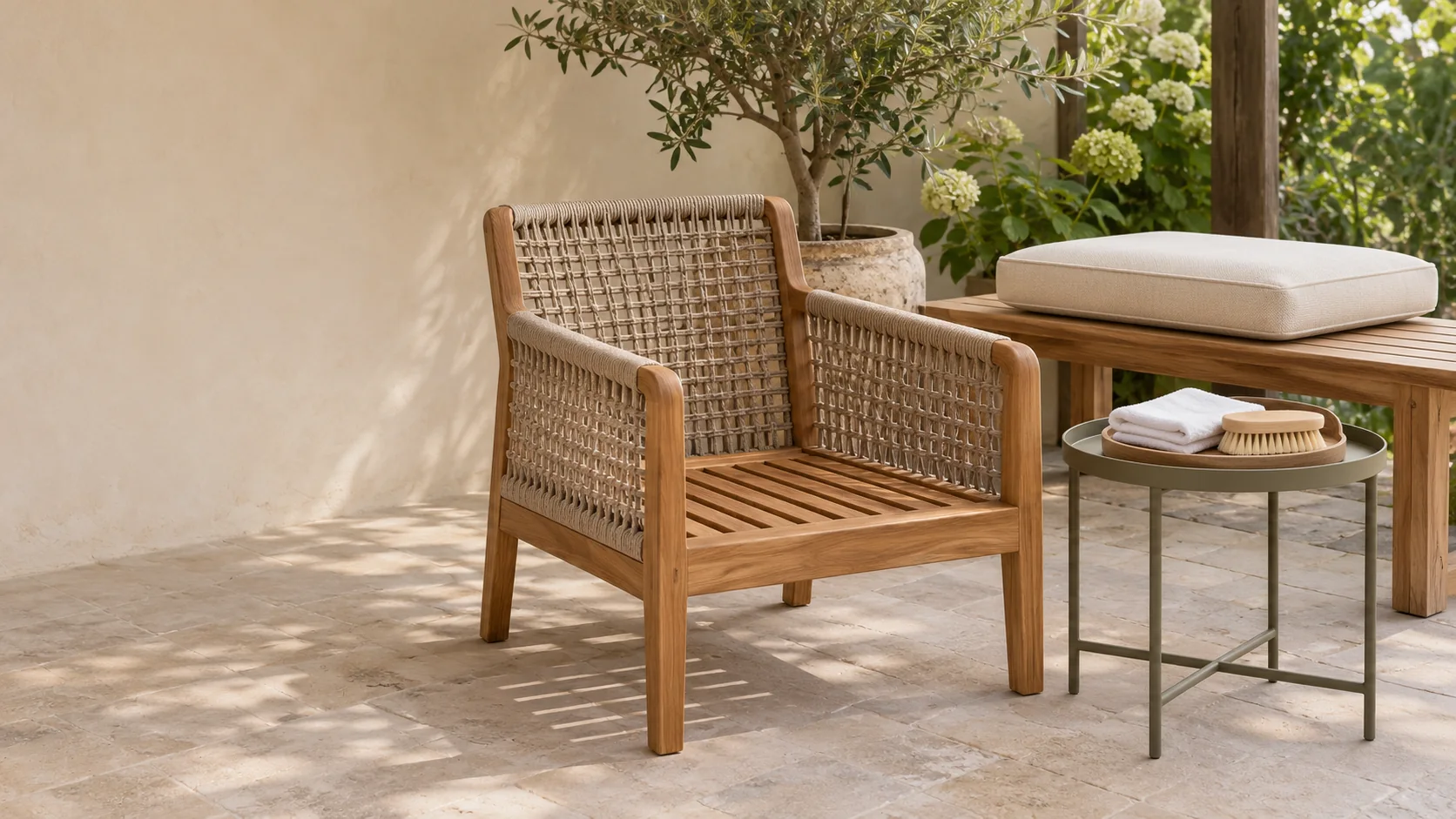
Identify every surface
Check the frame, tabletop, woven panels, hardware and cushions separately. Wicker describes a weave, not whether the strands are natural plant material or synthetic resin. A wood-look surface may also be plastic rather than timber.
Photograph labels and note the model. If the set combines coated metal, glass and fabric, plan separate treatments. Keep cleaner from running onto nearby materials that may not tolerate it.
Remove loose dirt before washing
Take off accessories and cushions where the instructions permit. Use a soft brush or suitable vacuum attachment to lift dry grit and leaves. Work gently around woven strands and damaged coatings.
Inspect empty furniture for loose fittings, cracked panels or chipped glass. Cleaning should not conceal a structural problem. Follow the assembly instructions for tightening hardware instead of forcing an unfamiliar fitting.
Match cleaning to the frame
POLYWOOD's care guidance applies to its own outdoor materials. It should not automatically be used on teak, natural wicker or painted steel. Follow the matching maker's instructions for cleaner, brush type and rinsing.
Where mild soap and water are approved, use the specified dilution and a soft cloth or brush. Rinse as directed and dry accessible surfaces. Outdoor placement does not make a pressure washer, bleach mixture or abrasive pad suitable.
Treat cushions separately
Read the furniture and fabric instructions together. Sunbrella advises consulting the furniture manufacturer before removing casings, because cushion construction varies. A zipper is not proof of machine washability.
Use the prescribed stain method and avoid unnecessarily soaking the filling. Let the entire cushion dry before replacing it or covering the set. A dry-looking surface does not establish that the interior is ready for storage.
Finish with dry, ventilated storage
Let furniture and covers dry before packing them together. Use the storage arrangement specified by the maker, keeping required ventilation and drainage clear. Do not seal damp textiles inside a box.
Covered patios can still admit wind-driven rain. Check the actual exposure limits rather than assuming the roof removes every weather concern. Our wicker side-table guide distinguishes synthetic weave and frame details to confirm before use.
Keep a simple care record with the model, materials, approved cleaner and cleaning date. It makes the next seasonal refresh easier and gives a repair service useful information if a problem appears.
Create a material-by-material plan
Separate the frame, seat fabric, removable covers, metal fasteners and any wood inserts. A cleaning method approved for powder-coated aluminium may be wrong for natural rattan or a sealed timber surface. Check the maker's care sheet for the exact product and test a discreet area. Start with a soft brush or vacuum to remove grit before using water. POLYWOOD's care guide is useful for its own material; it is not a universal patio-set recipe. Avoid a pressure washer unless the furniture maker expressly permits it.
Note loose joints, rust, cracked weave or damaged finish before washing. Cleaning will not repair structural damage, and soaking a weakened joint can make diagnosis harder. Repair or replace unsafe parts before the furniture returns to use.
Dry the whole set before storage
Follow the cushion fabric's label separately from the frame instructions. Some removable covers can be machine washed, while others shrink or lose their finish. Sunbrella's upholstery guidance describes rinsing and air drying for its fabric, with conditions that depend on whether the cover is removable. Do not put a wet insert back into a dry cover. Stand cushions where air reaches both sides and check seams before stacking.
Clean and dry the frame, hinges and underside too. A tight cover over damp furniture can trap moisture. Leave ventilation where the cover design requires it and inspect stored furniture periodically. Before the next season, check fasteners and finish again rather than assuming a clean-looking set is ready for weight-bearing use.
Use the care record next season
Keep the maker's care sheet and note which cleaner worked for each surface. When the furniture comes out of storage, inspect joints, feet and fabric seams before use. A cracked frame or loose fastener is a safety issue, not a cleaning problem. Wash covers only according to their own labels and make sure cushions have not held moisture through the winter. If a protective finish has worn away, ask the maker which retreatment is compatible. Avoid applying a generic waterproofing spray to mixed materials without checking its instructions.
Common questions
Can I pressure-wash any patio set?
No. Use a pressure washer only when the exact maker permits it and gives settings and distance. Concentrated water can damage coatings, joints or woven surfaces. Start with the gentlest approved method.
Is synthetic wicker cleaned like natural rattan?
Do not assume the same treatment suits both. Identify the strands and the frame beneath them, then follow the matching furniture instructions. Similar woven appearances can conceal different materials and exposure limits.
Can outdoor covers be machine washed?
Only when their instructions explicitly allow it. Confirm the cycle, detergent and drying method, as well as whether removing the casing is permitted. A zippered cover may still require cleaning in place.
Should I cover a damp set?
Let the furniture and cover dry according to their instructions before storage. Trapping moisture can affect fabrics or finishes. Preserve any ventilation and drainage paths specified for the furniture and its cover.