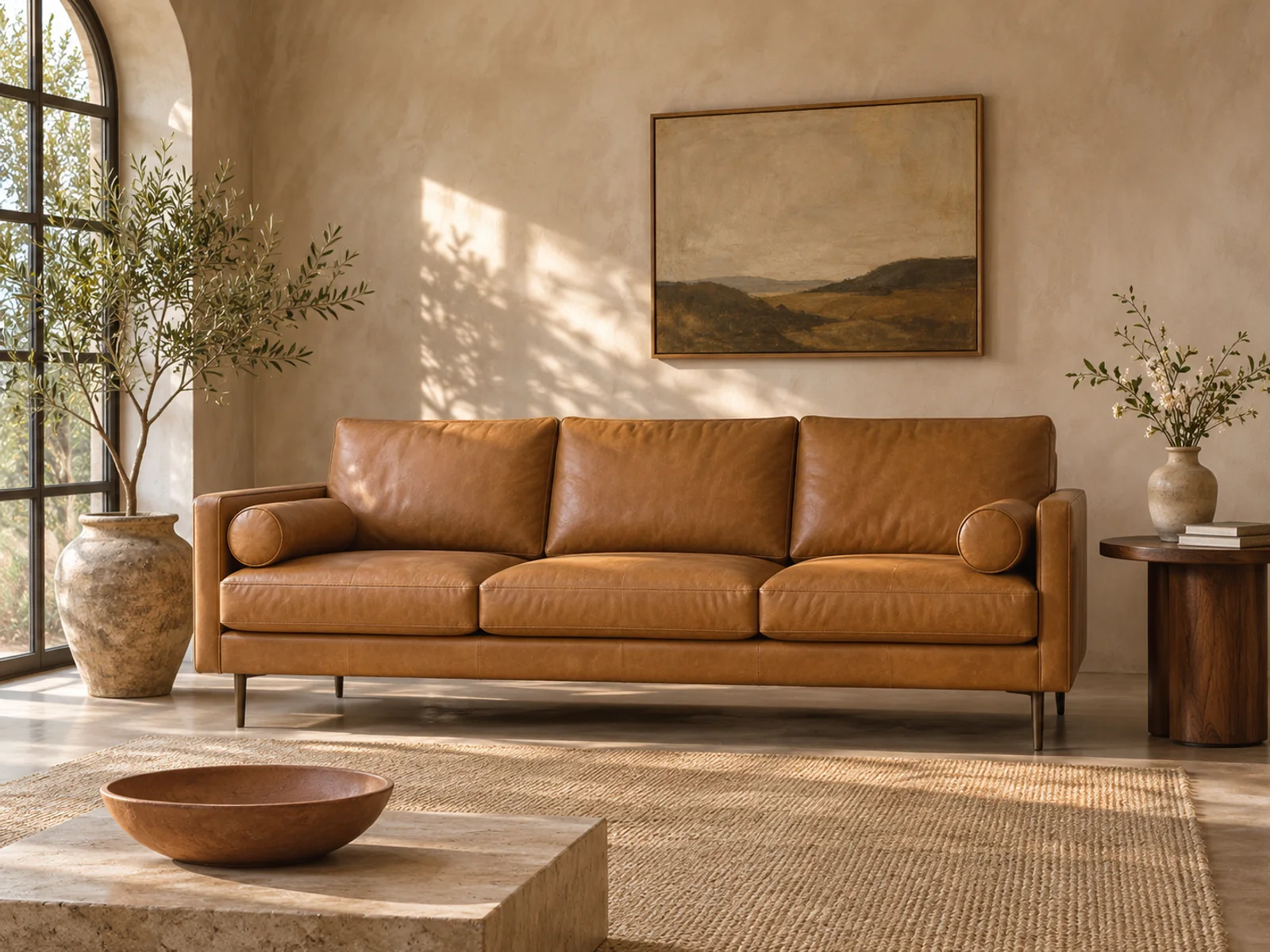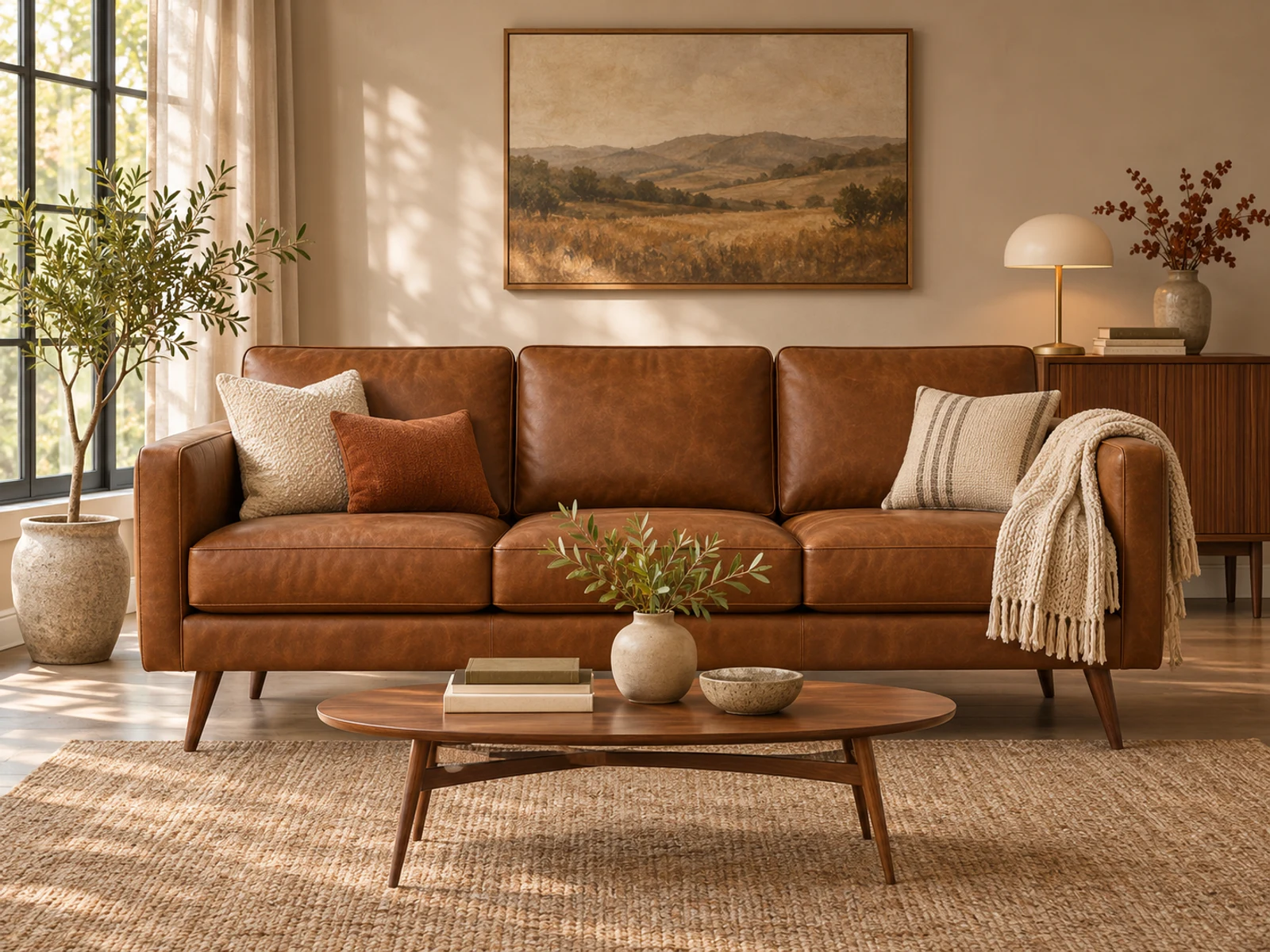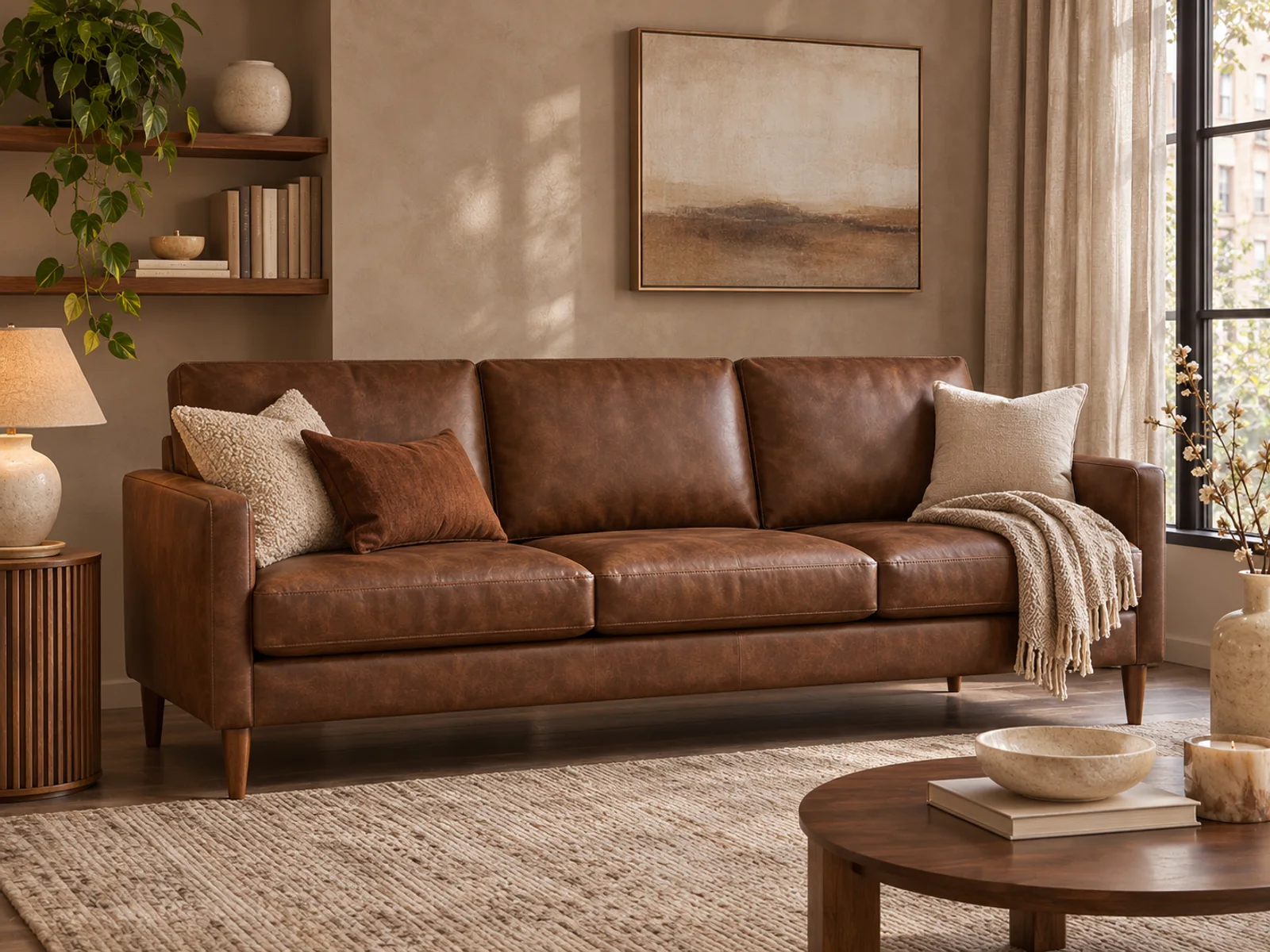
Separate the material from the sales name
Leather comes in different finishes, while faux leather commonly describes a coated textile designed to resemble it. Terms such as leather look or leather match do not tell you the composition of every panel. Request the material breakdown.
IKEA's leather and other materials guide distinguishes leather types from coated fabric and shows that care varies. Its older product examples are not a current specification for your shortlist, but the material distinctions remain useful questions to ask.
Inspect the areas you touch and the areas you see
Ask whether the sitting surfaces and outer panels use the same covering. A mixed-material sofa may look consistent from the front but have different care requirements on its back or sides. That matters if the piece floats in the room.
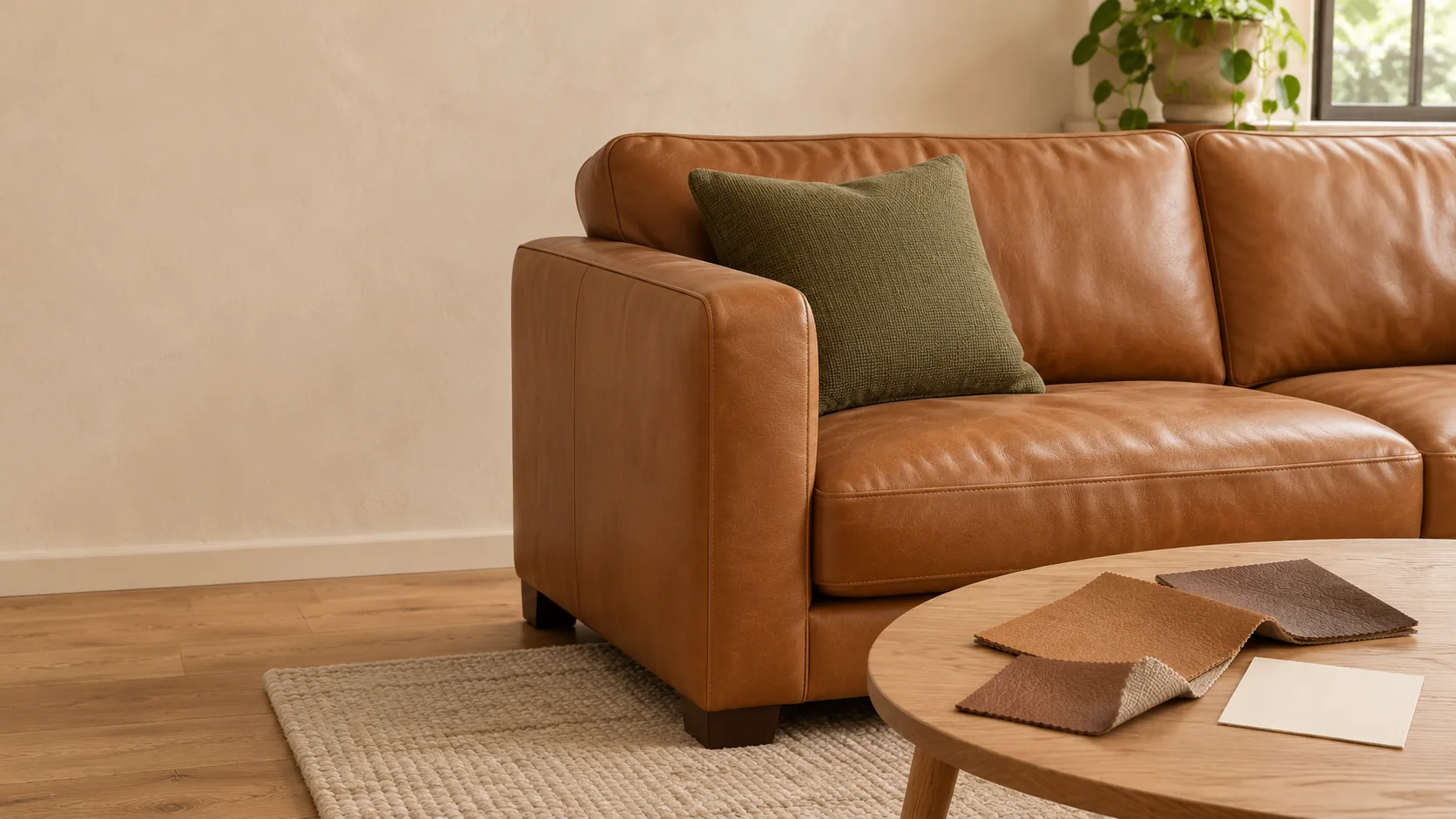
Order samples where available and compare their feel, sheen and color in your own light. Do not infer composition from a photograph or a convincing grain pattern. Keep the sample labels tied to the exact variant on the order.
Compare care without universal promises
Read the manufacturer's cleaning instructions for both candidates. A conditioner intended for one leather finish may be unsuitable for coated fabric or another type of leather. Check how spills should be handled and which products are prohibited.
Avoid claims that either category is always scratchproof, pet-proof or easy to repair. Damage behavior depends on the actual surface and construction. Our leather cleaning guide starts with identification for that reason.
Choose around your priorities
If avoiding animal-derived upholstery matters, request a full composition statement rather than relying on the main cover description alone. If repairability matters, ask what the maker supports for the selected finish and whether matching material is available.
Compare leather couches and faux-leather options using confirmed materials, dimensions and care. Price and appearance are part of the decision, but neither proves how the surface will age in your room.
Read the material map on the sofa
Leather on a listing may describe only contact surfaces while sides and back use a matching synthetic material. Ask for the maker's material map and exact finish names. Faux leather can refer to several coated textiles with different backing and wear characteristics. IKEA's material guide shows how a seller can distinguish leather from other surfaces, but the terms on your chosen sofa need their own written confirmation. Inspect seams and high-contact arms as well as the front cushions.
Compare care without universal promises
Genuine leather can vary from protected to aniline finishes, and faux leather coatings can crack or peel if the material fails. Neither category guarantees a lifespan. Ask for cleaning instructions, sunlight guidance, warranty and repair options for the exact finish. Do not use leather conditioner on a synthetic coating unless its maker approves it. Sit on both options in the room temperature you expect and consider how they feel under bare skin or with pets. Choose the complete sofa, not a material slogan.
Keep the purchase description
Save the listing's exact material terms and photograph the care label. If the sofa combines leather and synthetic panels, record where each material appears. A future cleaner or repairer will need that information. Test the sofa in warm and cool conditions if possible, since surface feel can change. Compare repair and replacement options for worn cushions or arm panels. A lower initial price can be less attractive if the only damaged panel cannot be repaired economically.
Common questions
Does leather match mean leather everywhere?
No. It can describe a mix of leather and another material on different panels. Ask for the panel-by-panel specification, especially for the sides and back that may be visible in your layout.
Can I use leather conditioner on faux leather?
Do not assume it is compatible. Follow the coated fabric manufacturer's instructions and use only approved products. A treatment intended for absorbent leather can behave differently on a coated textile.
Which material lasts longer?
The category name alone cannot answer that. Construction, finish, care and exposure all matter. Compare the exact specifications and warranty coverage, and avoid a lifespan promise that the manufacturer cannot support.
Is faux leather always cheaper?
Not necessarily once construction and quality vary. Compare exact sofas at their current price, including warranty and return terms.
Can either material be repaired?
Some local damage can be treated, but options depend on the finish and backing. Ask a specialist for the exact material before buying a repair kit.
Which is easier with pets?
Consider claw damage, hair, cleaning and how the pet uses the sofa. No surface is immune. Test care instructions and provide a washable throw where needed.
Will sunlight affect both?
It can change colour and coating over time. Check the maker's placement guidance and avoid assuming a darker colour or synthetic label prevents fading.