
Identify the surface before choosing a cleaner
A smooth coated leather, an absorbent aniline leather and a suede surface can respond differently to the same product. Find the model information and care label. A leather-look cover may be synthetic, while mixed-cover sofas can use different materials on different panels.
If you cannot identify the finish, ask the manufacturer or a leather-care specialist. Do not use a visible seat panel to find out whether a household cleaner is suitable.
Remove loose debris first
Use the gentle dust-removal method recommended for the sofa. Work around seams and cushion edges without scraping the surface. Check that any vacuum attachment is clean and has no sharp edge.
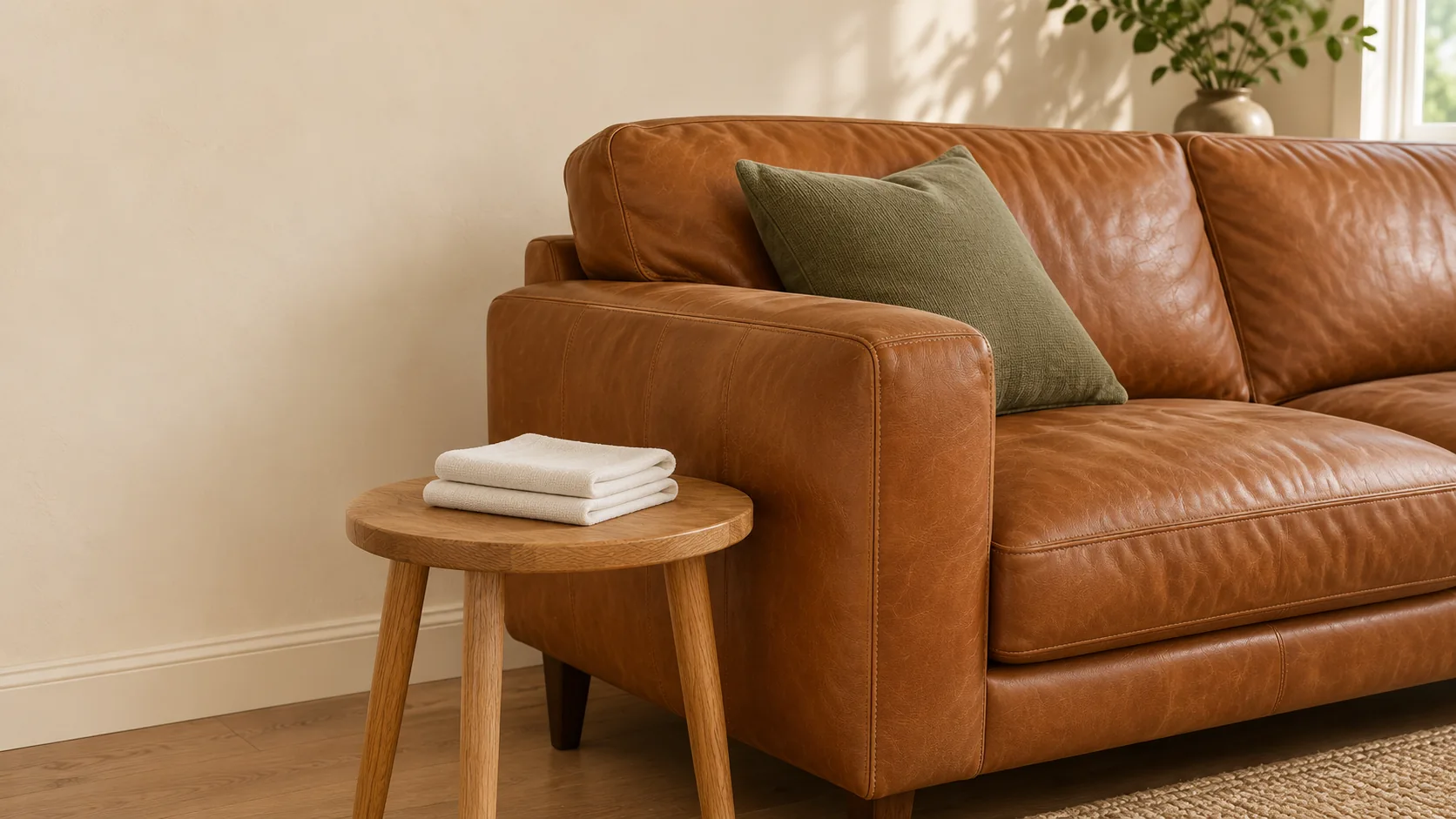
Set up clean white cloths and keep your chosen product away from wood trim and nearby fabrics. Treat one manageable area at a time so you can see whether dirt is lifting or the finish is changing.
Test the complete cleaning process
Follow the cleaner's directions on an inconspicuous patch and let it dry before comparing color, sheen and feel. Stop if the cloth picks up finish or the patch becomes uneven.
Furniture Clinic's leather-sofa method applies its cleaner as foam through a sponge and removes residue with a cloth. That guide excludes suede and nubuck. It is an example of a product-specific process, not permission to use any foaming cleaner on any leather.
Clean gently and reassess when dry
Use the quantity, applicator and drying process approved for your finish. Do not flood seams or keep scrubbing a stubborn patch. Food grease, ink and dye transfer may need a different assessment from ordinary surface dirt.
A cleaner cannot repair a peeling coating or replace lost color. If the problem is damage rather than soil, see our guide to leather color restoration before treating it further.
Avoid turning conditioning into a guess
Only add a protector or conditioner when the sofa and product instructions allow it. Cooking oils and general household creams are not substitutes for an approved leather-care system.
Keep the care information with the purchase record and photograph any concern before treatment. Ask a specialist about uncertain finishes, valuable pieces or a mark that changes under gentle cleaning.
Identify leather before choosing care products
Find the maker's upholstery description and care instructions. Protected leather, aniline leather, suede, nubuck, bonded leather and coated fabric can require different treatment. A generic bottle marked leather cleaner is not proof of compatibility. American Leather's care FAQ advises checking the furniture label and describes routine dry dusting for its own products. Furniture Clinic's cleaning guide is another product-specific source. Follow the instructions that match your actual sofa and finish.
Photograph an existing mark and test the complete approved cleaning sequence in a hidden area. Avoid baby wipes, household degreasers or a stiff brush unless the maker explicitly allows them. Surface colour transfer or a change in sheen is a reason to stop.
Keep cleaning and repair decisions separate
Remove loose dust from seams and cushions before applying anything damp. Use only the amount of approved cleaner and pressure the manufacturer specifies, then let the sofa dry under normal ventilation. Do not put cushions back against a damp surface. A shiny worn patch, flaking coating or deep scratch may be damage rather than dirt. Cleaning or conditioner will not rebuild a failing surface, and repeated scrubbing can make it worse.
If the sofa needs recolouring or repair, ask a specialist to identify the finish and quote the work separately. Keep a record of the cleaner and conditioner used, including dates. Routine care should preserve a sound surface, not become an experiment with several products applied in succession.
Make routine care less demanding
Keep the sofa out of prolonged direct sunlight where possible and remove grit before it is pressed into seams. Use a soft dry cloth for ordinary dusting if the maker allows it, then address spills promptly according to its instructions. Do not apply conditioner on a schedule borrowed from another leather product; the finish may not need it or may be harmed by residue. If a pet scratch or colour transfer appears, photograph it and ask the maker or a specialist before a home treatment changes the surface.
Common questions
Can I use baby wipes on leather?
Do not assume they are suitable for the finish. Their ingredients and intended use differ from leather-care products. Follow the sofa manufacturer's directions and test an approved cleaner on a hidden area first.
Does leather conditioner remove stains?
Conditioning and cleaning are different tasks. A conditioner is not a general stain remover and may be unsuitable for some finishes. Identify the mark and use the process approved for the particular leather.
Should I scrub a shiny patch?
No. Shine can reflect the finish, wear or accumulated soil, and those need different responses. Stop if the surface changes during a test and ask a specialist before applying more pressure.
Can I use this method on suede?
No. Suede and nubuck need care suited to their raised surface. Identify the material and follow its specific instructions rather than transferring a smooth-leather cleaning process to it.