Identify the surface and the goal
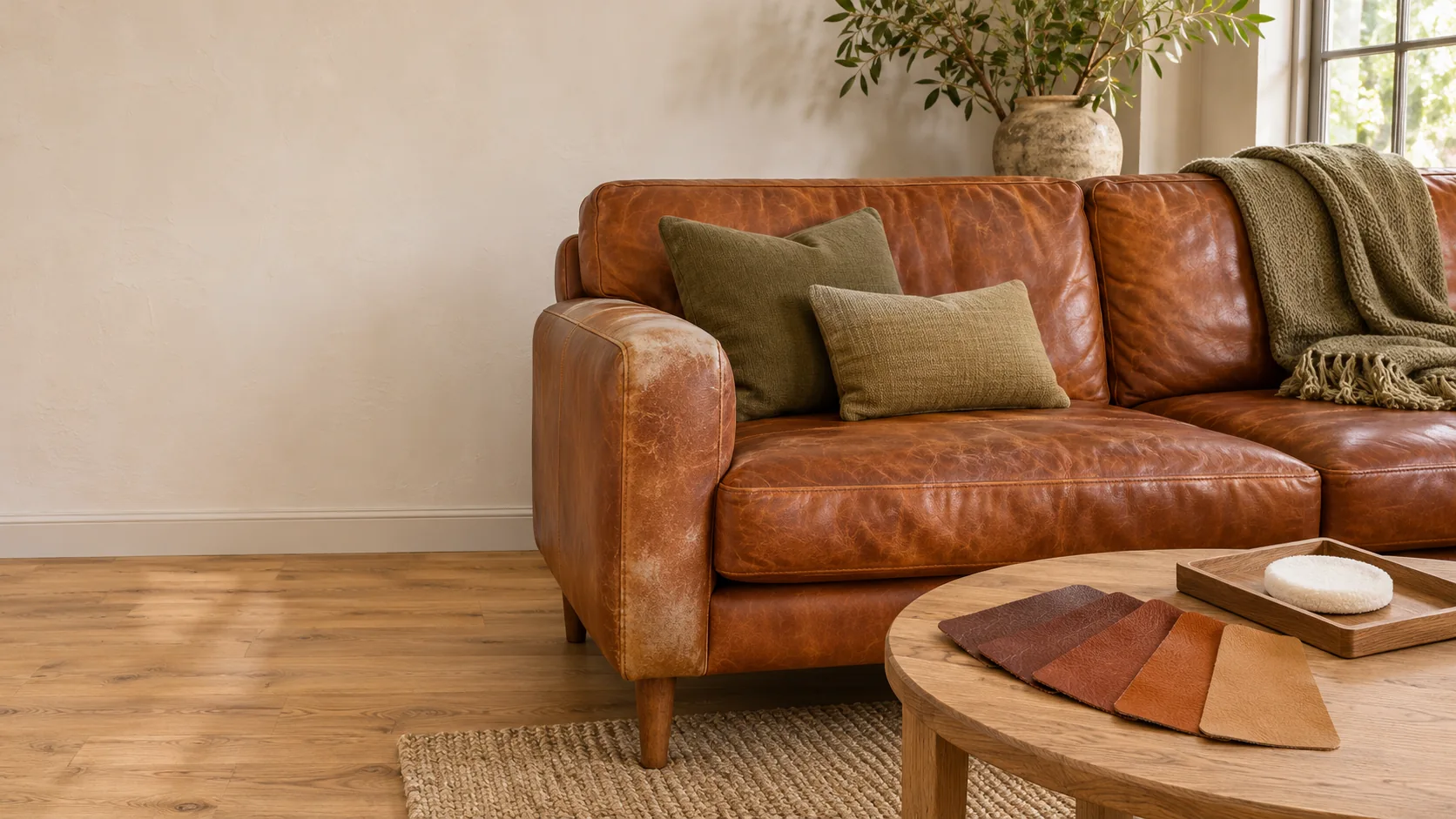
A faded armrest that should match the rest of the sofa is a different project from changing an entire dark couch to cream. Photograph the couch in daylight and note whether the problem is fading, scratches, cracks or peeling.
Find the original upholstery description or care label. Genuine leather, suede, nubuck, bonded leather and polyurethane-coated fabric do not accept the same treatment. If the surface is flaking away, changing its color will not replace the missing layer.
Choose restoration or recoloring
Furniture Clinic distinguishes its recoloring balm, intended to restore absorbent leather, from a colorant system used for a color change. Nonabsorbent surfaces need a different approach. These are product-specific distinctions, not permission to use balm on any couch.
Ask the treatment supplier to confirm compatibility using the material description and photographs. Obtain a sample if offered. Decide whether you can accept a change in sheen or feel before committing to the whole sofa.
Test the complete process
A useful hidden-area test includes the cleaner, preparation product, color treatment and protective finish. Testing only the color misses possible reactions between layers. Use an inconspicuous area of the same upholstery, since an underside panel may be a different material.
- Read the full system instructions and required drying conditions.
- Protect nearby fabrics and the floor. Arrange the ventilation and protective equipment specified on the labels.
- Prepare the test patch exactly as directed. Do not substitute acetone, abrasive sanding or household degreasers.
- Apply the complete system and allow the stated cure time.
- Inspect the shade, sheen and flexibility. Check for transfer using the supplier's method before proceeding.
Work consistently and allow curing
Once the test is satisfactory, follow the prescribed sequence and coat thickness. Record the product, shade and batch. Use seams and panel edges to plan a consistent application rather than stopping in the middle of a visible seat.
Do not add more product simply because a wet coat looks uneven. Let each instructed drying stage finish before deciding whether another coat is needed. Keep the sofa out of use for the full cure period, including restrictions on cushions, covers or conditioning products.
Recognize the limits of recoloring
Stop if the test becomes sticky, loses adhesion or transfers color after the required cure. Ask a specialist about delicate aniline finishes, suede, extensive cracks or an unknown surface. Request a written scope covering repair, color matching and the expected finish.
Our guide to tan leather couch options explains why exact material descriptions matter. A new color can refresh sound upholstery, but it cannot correct a failing frame, sagging support or a deteriorating surface.
Write a finish test before buying colour
Record the couch's material description, current finish, the damaged panels and the result you expect. A change from dark to light is a different job from refreshing faded dye. Ask the treatment supplier whether the proposed system is compatible with that exact surface and request its cleaning, preparation, coating and cure instructions together. Furniture Clinic's restoration guide distinguishes balm from a colourant system and notes that a colour treatment does not rebuild a cracked surface. Treat its directions as product-specific guidance, not proof that every leather couch can be recoloured.
Photograph the hidden test area before and after a full cure. Compare shade in daylight and evening light, then check flexibility and transfer as the supplier directs. If the test changes the feel or sheen in a way you dislike, stop before treating the visible seat.
Decide when a specialist is the better route
Aniline, suede, nubuck, bonded leather and coated fabric can respond differently to cleaners and colour products. If the label is missing, ask a professional to identify the surface before buying a kit. Widespread peeling, deep cracks or a weakened frame may make recolouring poor value. Request a written scope that separates cleaning, repair, colour matching, protective finish and the expected cure period. Compare it with the cost of a replacement couch you would actually accept.
Protect floors and adjacent fabric, provide the ventilation stated on the product label and keep people and pets off the couch during the full cure. Store the product name and batch information so a later touch-up can be assessed against the same system. A successful colour change is a controlled surface treatment, not a quick dye bath.
Keep a practical aftercare record
After the cure, take photographs in the same light as the before images. Keep the product instructions, shade name and date with the furniture record. Clean the treated surface only with products the coating maker approves and avoid placing a throw over it until the stated cure time has passed. If colour transfers to a white cloth or clothing after curing, stop using the seat and ask the supplier or specialist for an assessment. A coating that fails at seams or flex points may need repair rather than another thick layer.
Common questions
Can I use fabric dye on leather?
Do not assume fabric dye is compatible with leather or its coating. Choose a system approved for the exact surface and furniture use. Test every stage in a hidden area before treating visible upholstery.
Can dark leather become a light color?
A dramatic change needs a compatible colorant system rather than a restoration balm. Ask its supplier about preparation, coverage and changes in finish. A specialist may be more predictable for a large or delicate sofa.
Will color treatment fix peeling?
Color does not replace a failing surface layer. Identify whether the couch is coated fabric, bonded leather or another material, then ask whether a durable repair is realistic before purchasing color products.
When can I sit on it again?
Follow the treatment manufacturer's full cure time, not just the point when the surface feels dry. Confirm any restrictions on cushions, covers and later conditioning products before returning the couch to use.