
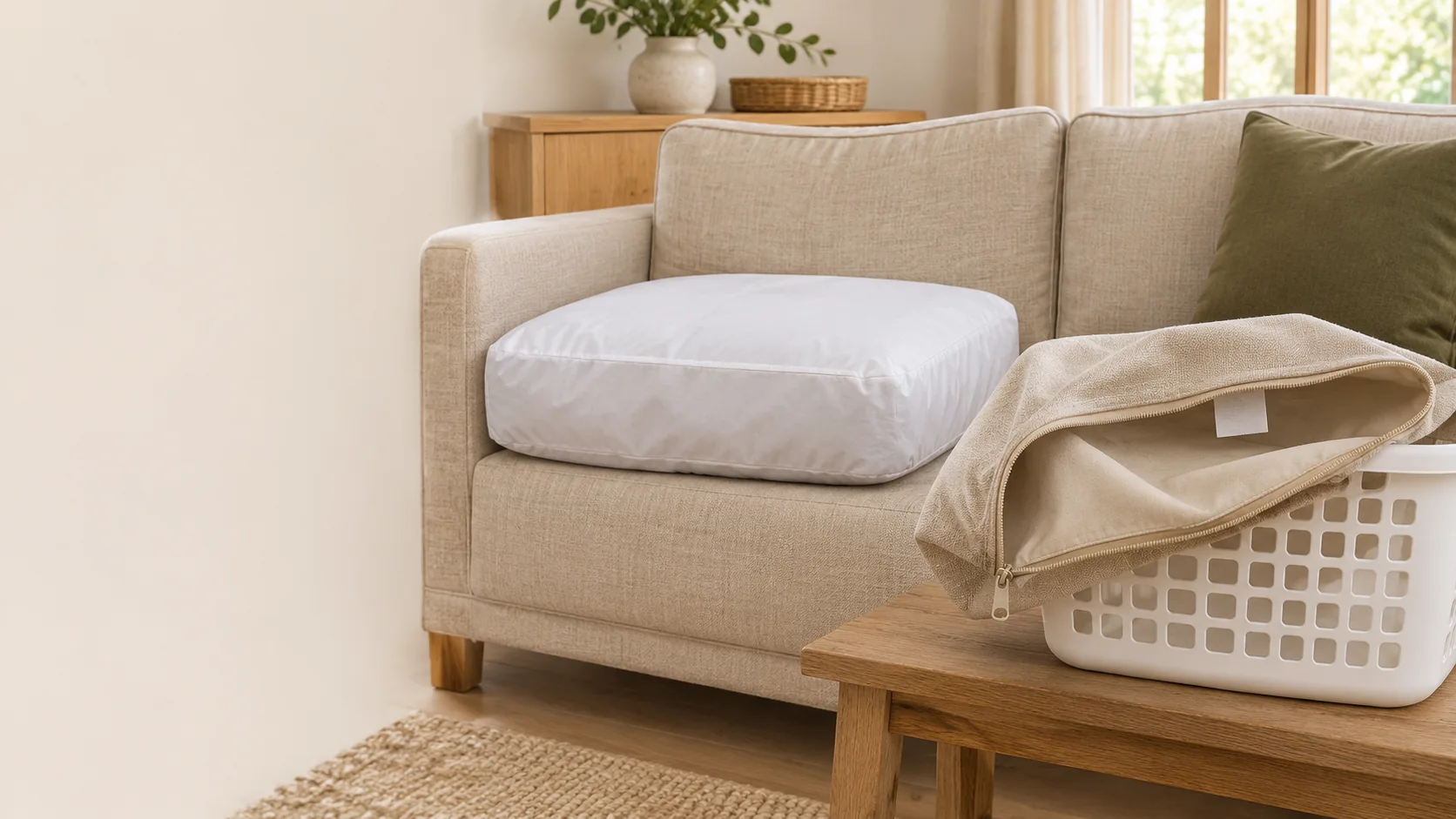
Check what is actually washable
Look for instructions on the cover itself and in the sofa's care information. An upholstery W code concerns a cleaning method, not automatic permission to machine wash. The zipper may exist for manufacturing or replacement rather than home laundry.
If the cover is not washable, use the permitted routine in our cushion-cleaning guide. Do not wash a foam or feather insert simply because its outer cover can be laundered.
Read the whole label before removing the cover
Check temperature, cycle, detergent restrictions, bleaching, drying and ironing instructions together. A permitted wash can still be followed by a prohibited tumble-dry cycle.
For example, IKEA's UPPLAND Blekinge white cover lists machine washing, a separate wash and no tumble drying. Those directions belong to that specific cover. They should not be transferred to another fabric or another sofa.
Prepare a manageable wash
Photograph the cushion positions and note which cover belongs to each insert. Remove loose debris before taking a cover off, then inspect seams and zippers for damage. Follow any label directions for fastening or turning the cover.
Check that your machine can handle the item within its capacity. A tightly packed load may not move or rinse as intended. If the care instructions call for washing matching covers together, plan a suitable machine or service rather than forcing them into a small drum.
Keep the insert dry and protected
Set the inserts aside in a clean, dry place while their covers are being washed. Do not assume a naked foam core should be scrubbed or immersed. If the filling itself is dirty or smells, ask for its separate cleaning or replacement instructions.
Use the required detergent quantity and avoid adding unapproved softeners, boosters or fragrance products. More product is not a substitute for a suitable wash process.
Dry and refit without forcing
Follow the cover's stated drying and refitting procedure. Do not use high heat to hurry a cover that must air dry, and do not force a shrunken cover over an insert. Align corners and seams gradually rather than pulling hard on the zipper.
Inspect the finished cushion before use. If the fit or surface has changed, pause and ask the maker for advice. Save the label photograph so the next wash does not begin with another guess.
Read the cover and insert instructions together
Unzip a cushion only after finding the furniture maker's care directions. A removable cover may have a lining or finish that cannot be machine washed, and the foam insert may need to stay dry. Record the cushion position and orientation before removal. Check for weak seams, loose piping and colour transfer during a hidden test if the label requires it. The fact that another couch's cover can be washed is not evidence for yours. If the tag is missing, ask the maker or a professional before risking shrinkage.
Prevent shrinkage and trapped moisture
If machine washing is explicitly allowed, use the stated cycle, temperature, detergent and drying method. Do not substitute a hot cycle to treat a stain. Close zippers as instructed and wash covers together only when the labels and colours permit it. Air drying may take longer than expected; test seams and corners before refitting. Do not put a damp cover over foam and close the sofa up. Moisture in the insert can cause odour or damage that is harder to fix than the original mark.
Fit the cover without damaging it
Follow the maker's advice about whether the cover should be fully dry or slightly damp when refitted. Work corners and piping gently rather than pulling one zipper against the entire cushion. Check that the insert fills the cover evenly and that no seam is under unusual tension. If the cover shrank or the insert swelled, stop forcing it and ask for guidance. Keep the laundering record for next time, including how long drying actually took in your home.
Check whether a professional process is needed
If the label allows only solvent cleaning or says to use a professional, do not substitute a gentle machine cycle. Delicate piping, backing and fire-safety treatments may be affected even when the outer fabric seems robust. Ask the cleaner whether they will treat the cover in place or remove it, how the insert is protected and how drying is confirmed. Keep the written care code and any past product use with the furniture information. That makes the next spill response faster and safer.
Common questions
Can I put the whole cushion in the machine?
Only if the manufacturer explicitly allows it and your machine can handle it. A washable cover does not establish that foam, feathers or another insert can be washed by the same process.
Should every cover be washed cold?
Use the temperature on the exact cover's label. There is no universal cycle for all sofa fabrics, and choosing a different temperature does not turn a non-washable cover into a washable one.
Can I put the cover back on damp?
Follow the manufacturer's refitting instructions. Some systems specify a particular stage of drying, while others require complete drying. Do not transfer that advice between covers or trap moisture in the filling.
What if the zipper will not close afterward?
Stop rather than forcing it. Check that the insert and corners are correctly aligned and that you have the right cover. Shrinkage or a changed shape may need advice from the furniture maker.