
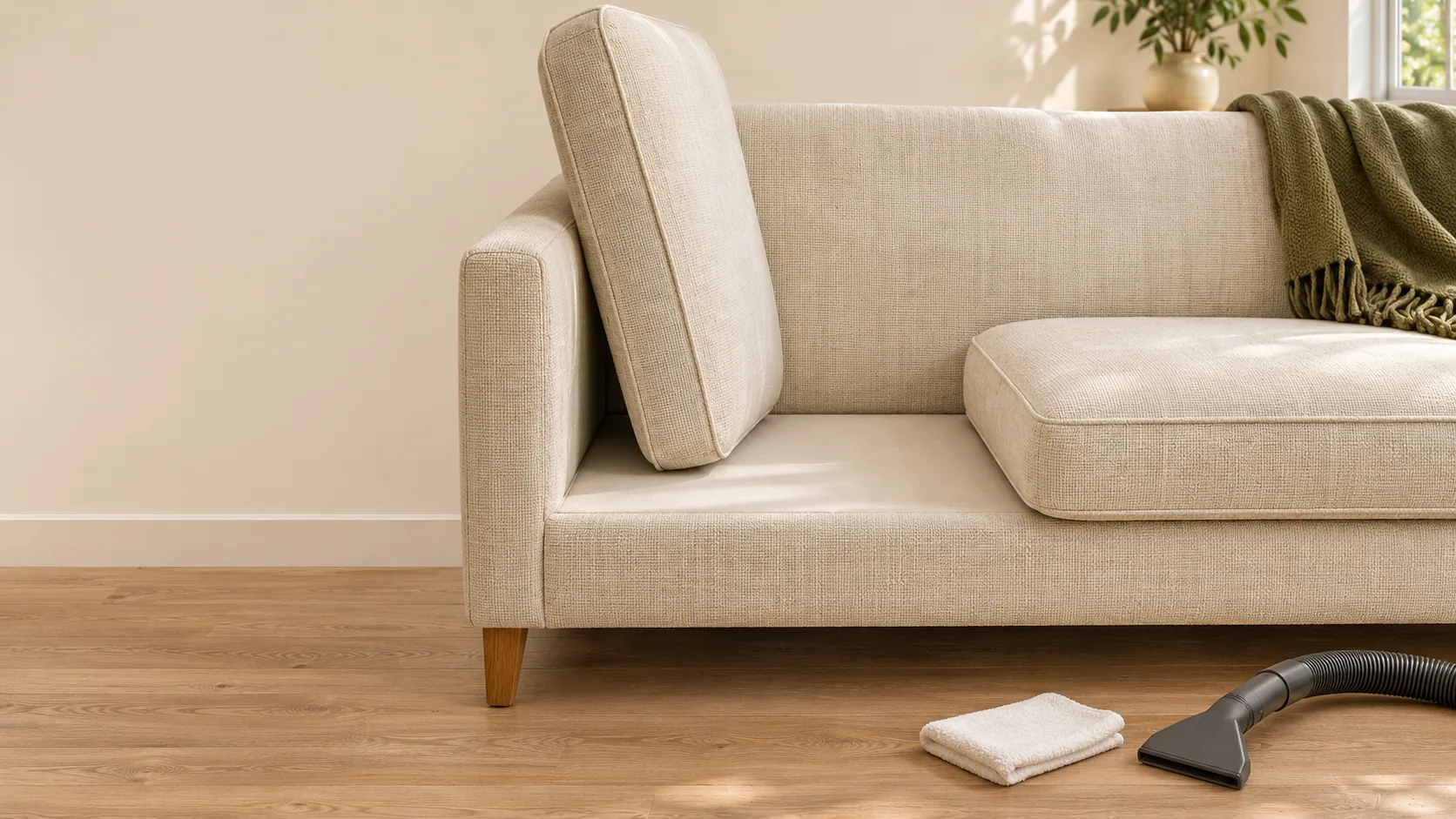
Separate routine cleaning from laundry
This guide is for everyday cushion care and small spot-cleaning decisions. If your cover is expressly labeled washable and you want to remove it for laundry, use our cover-washing guide.
Photograph the cushion arrangement before moving anything. Check which pieces are loose, attached or connected to the back. Do not tug at stitched panels or unzip an inner liner just because it is accessible.
Start with dry debris
Remove throws and loose objects. Use a clean attachment suitable for the fabric to collect crumbs and dust, paying attention to seams and the gap beneath loose cushions. Reduce suction where delicate fabric requires it.
Inspect the surface before brushing. A looped weave, loose thread or decorative trim can catch on an aggressive tool. If the cover needs a specific lint-removal method, follow that instead.
Use the cleaning code as a limit
Ashley's upholstery-care guidance explains that the fabric tag determines the permitted cleaning method. Water-based, solvent-based and vacuum-only instructions are not interchangeable. A water-compatible code still does not authorize soaking the cushion or putting it in a machine.
Keep a photograph of the label with your care supplies. Where the instructions are missing or contradictory, ask the furniture maker before adding liquid.
Treat a small mark cautiously
Use only the approved product and test it on a hidden area first. Allow the test to dry fully so that a color or texture change is visible. Apply the permitted method without saturating the cover, seams or filling.
Do not keep adding different cleaners when a spot persists. Record what caused the mark and what you have applied. This gives an upholstery cleaner useful information if the mark needs professional treatment.
Dry and put the room back together
Follow the specified drying instructions before returning cushions to use. Do not trap a damp cushion under a throw or put a wet cover around dry foam. Avoid improvised heat unless the manufacturer approves it.
If an odor remains inside the cushion, surface cleaning may not reach its source. Ask whether the insert can be cleaned, professionally treated or replaced. Routine care should preserve the seat, not leave the filling wetter than it started.
Make a cleaning map for each cushion
Remove the cushions and identify the upholstery code, whether covers can be removed and whether the filling is foam, fibre or down. A zipper may be for manufacturing rather than laundering. Photograph labels and note which cushion belongs in each position. Ashley Furniture's care guidance shows why the furniture maker's instructions should set the cleaning limits. Dry vacuuming with an appropriate upholstery tool can remove crumbs and grit before any spot treatment, but avoid pulling loose threads or forcing a tool into seams.
Test moisture at the deepest layer
If the permitted method uses water, keep it within the maker's instructions and protect the filling from soaking. A cover can look dry while foam inside remains damp. Remove a cushion from use and allow air to reach all sides until it is completely dry. Do not replace it against a closed sofa frame or under a throw while moisture remains. If a spill reached the insert, assess that separately; cleaning only the cover may leave an odour that returns later.
Reassemble with a repeatable routine
Before putting cushions back, check for loose seams, stretched zippers and uneven inserts. Refit covers without forcing corners, then return each cushion to its original position. Rotate or flip only if the manufacturer allows it; some cushions are shaped or finished on one side. Record the successful method and cleaner for future spills. If a stain persists, tell a professional what was used rather than trying several incompatible products in succession.
Keep the next clean simpler
Place a washable throw on the seat that receives the most traffic if the household is comfortable with the look. Deal with a spill promptly under the care instructions and keep food crumbs from accumulating at seams. A regular dry-cleaning routine can reduce the need for risky wet treatments. If the sofa is under warranty, check whether professional cleaning is required or whether a product could affect coverage. Keep photographs of labels and the exact sofa model so future decisions do not rely on memory.
Common questions
Can I wash a cushion because it has a zipper?
No. The zipper may be for assembly or servicing. Look for explicit washing instructions for the cover, and separate instructions for the insert. If those are missing, ask the manufacturer before removing or washing anything.
Can I use a carpet-cleaning machine?
Only if the upholstery and the equipment instructions permit the process. A fabric cleaning code alone does not approve every machine or formula. Excess moisture can reach the filling and be difficult to remove.
Should I flip every cushion after cleaning?
Only if the sofa is designed for it. Some cushions have a finished sitting face and a different underside or fixed orientation. Follow the model's rotation instructions rather than forcing a universal routine.
What if a ring remains after spot cleaning?
Let the area dry as instructed and stop adding products. The ring may involve residue, moved dirt or a material change. Check the water-mark guide or ask a cleaner to assess the fabric.