Try the seat with a book
Sit as you normally read rather than posing upright for a quick showroom test. Notice where your elbows rest and whether you want your feet on the floor or an approved footrest. Bring the sort of book or device you actually use.
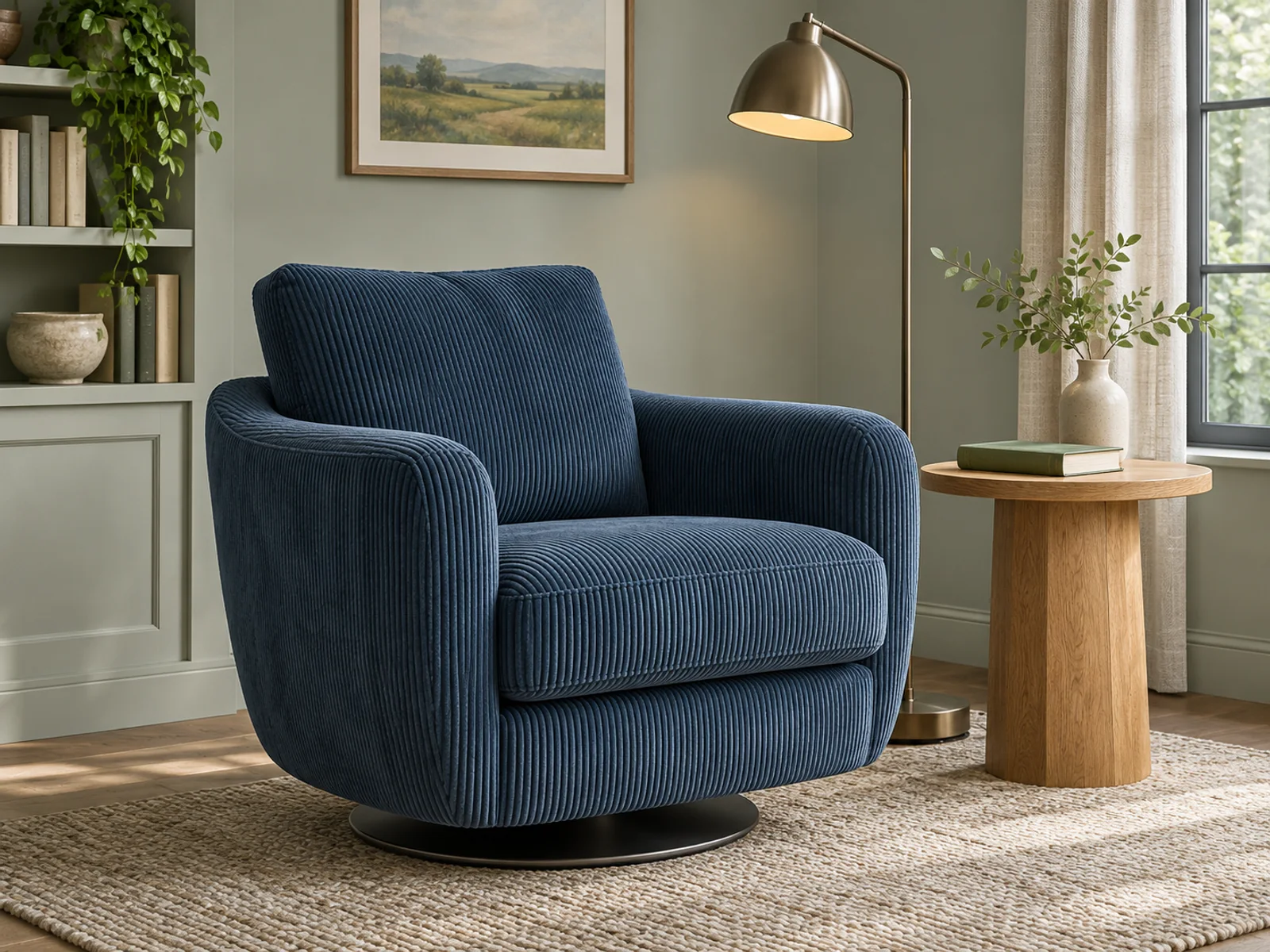
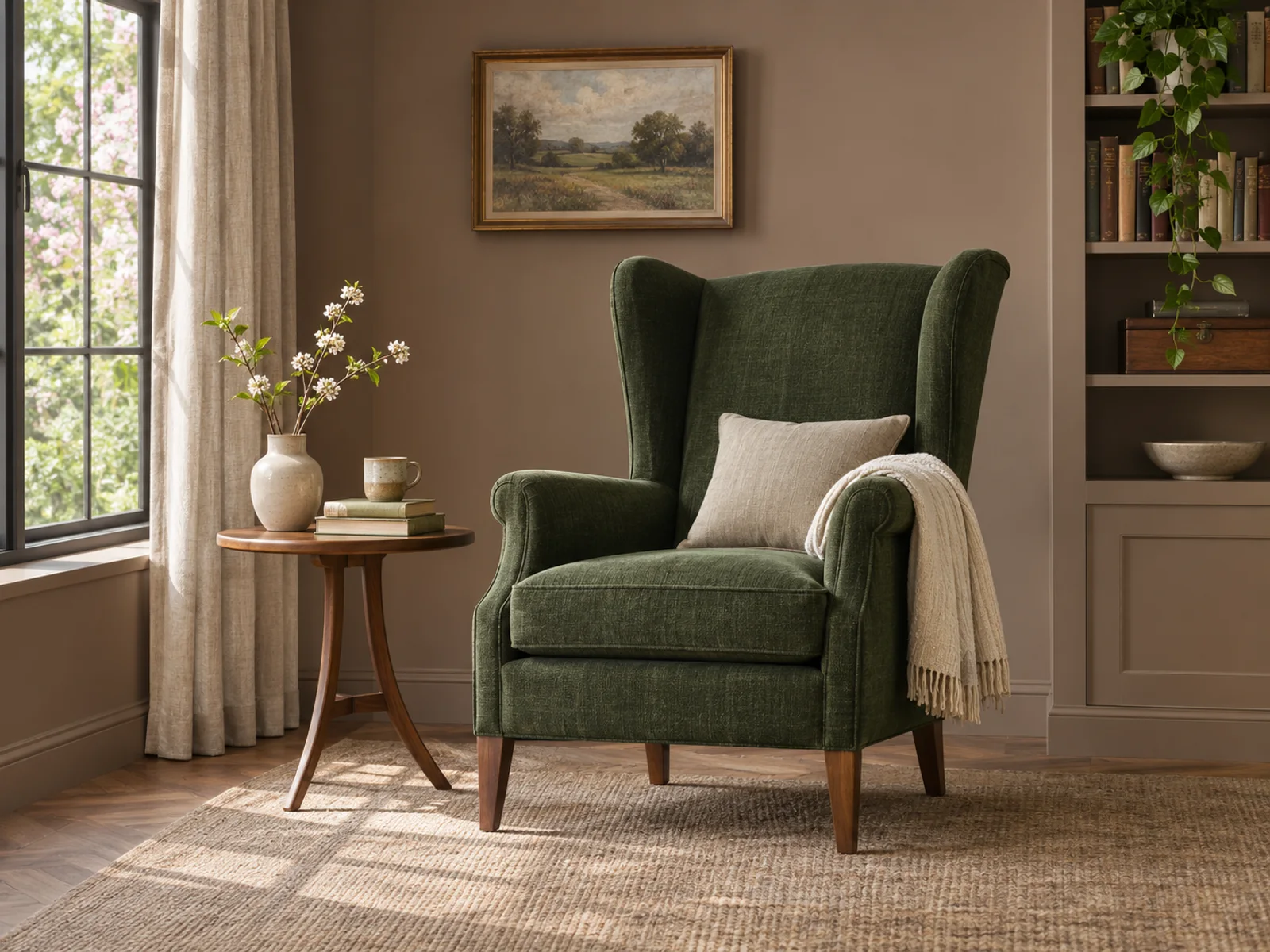
Choose the chair's dimensions from that trial. A deep seat that looks inviting may leave you constantly rearranging cushions. Compare reading chairs by usable seat space and back shape, not the category name alone.
Place the light for the task
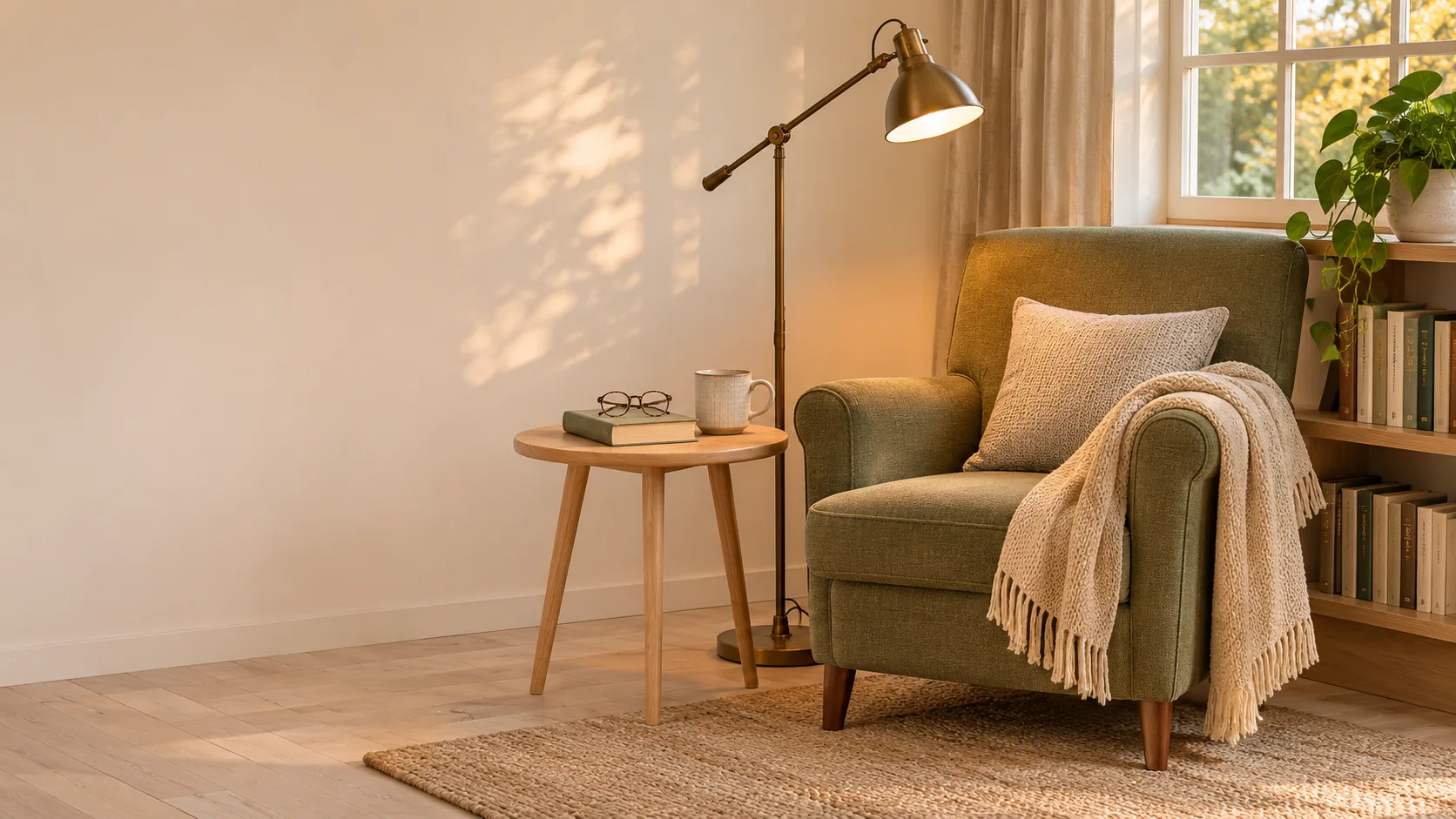
Check the page from your seated position and adjust the lamp within its intended range. Look for shadows cast by your head or hand and for reflections if you read on a screen. Keep the lamp stable and its cord outside walking routes.
IKEA's reading nook collection brings seating, lighting and storage together. Treat those as separate tasks to solve, rather than a shopping list that every corner must contain.
Give everyday objects a landing place
Test where you put glasses, a drink or a book when you stand. A small side table may be enough. Measure its top against the objects you use and check that it remains reachable beside the chair arm.
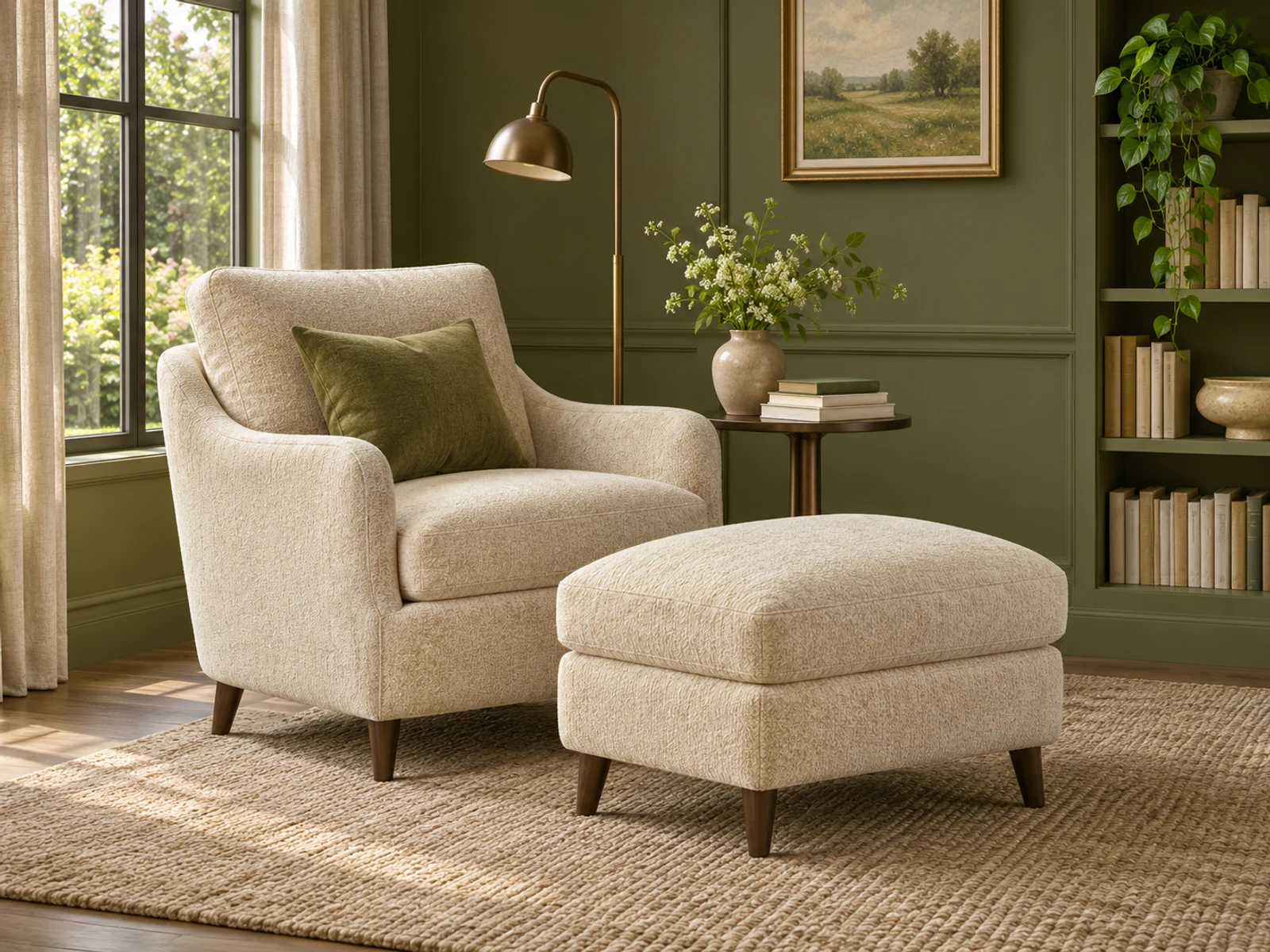
Use the side table height guide for that trial. If adding a footstool, check the route around both pieces and decide where it will sit when you want the floor clear.
Test the corner at the usual reading time
Visit the spot in the evening if that is when you read. Notice nearby activity, glare and whether someone walking through the room interrupts the space. Move the chair slightly before deciding you need another purchase.
Keep book storage proportionate to the corner and install any shelving according to its instructions. Start with a chair, a working light and a clear route. Add a throw or decorative objects only when they improve the way you use the spot.
Place the chair before choosing accessories
Try the intended chair with your usual reading posture. Check seat depth, arm support and how easily you stand up. Measure the chair's full footprint with any footrest extended. Position it so the path through the room remains clear and a side surface is within reach without twisting.
Plan light and power safely
Use a task light that illuminates the page without shining into your eyes. Test it at the time of day you read most often. Route the cord away from foot traffic and follow the lamp maker's instructions. Daylight is useful, but direct sun can cause glare and may fade nearby upholstery. A movable shade can give more control.
Make the space easy to keep using
Add only what supports the habit: a stable place for a book, a drink-safe surface and perhaps a throw with a practical storage spot. Check whether a small rug catches the chair legs or footrest. If the corner is shared with another activity, choose pieces that can be moved without blocking the room. Reassess after a week of actual use.
Common questions
Does a reading corner need a large armchair?
No. The useful size depends on your sitting position and available room. Try the seat and arm arrangement before choosing by width. A smaller chair that fits you can work well.
Can I use a corner without a window?
Yes, if you provide suitable task lighting and the position works for you. Test the page from the seat and plan a safe cord route rather than relying on light from elsewhere in the room.
Should I add an ottoman immediately?
Try the chair first and decide whether you want a footrest. Include its footprint in the route through the room and confirm the intended use before adding it to the arrangement.
Do I need a special reading chair?
No. Use a chair that supports your posture and fits the available space.
Where should the lamp go?
Place it to light the page while avoiding glare; test with your chair and typical reading time.
Is a footrest essential?
No. Try one only if it improves comfort and fits the walking space.
Can I put a chair by a window?
Yes, while considering glare, temperature and possible upholstery fading.