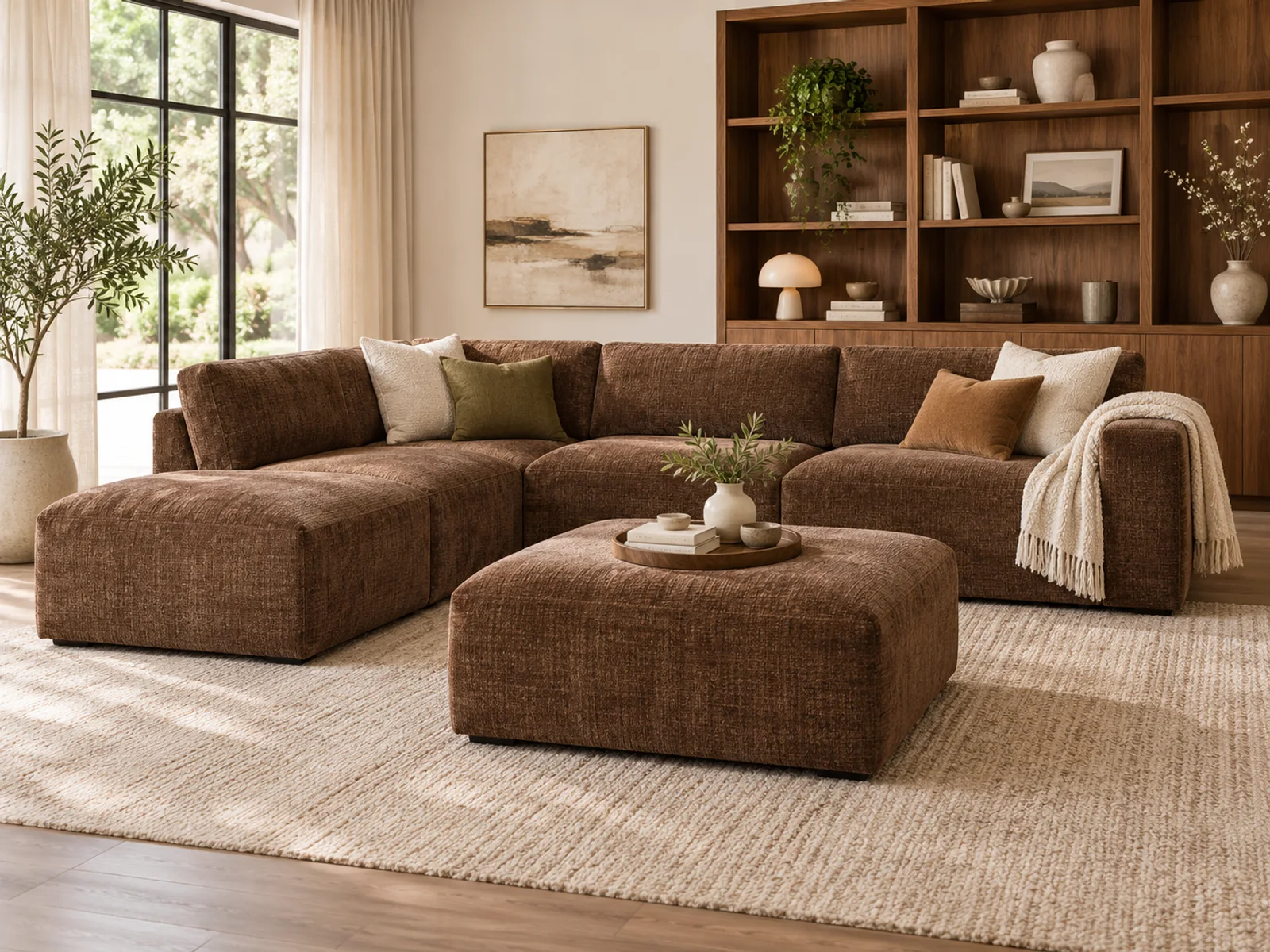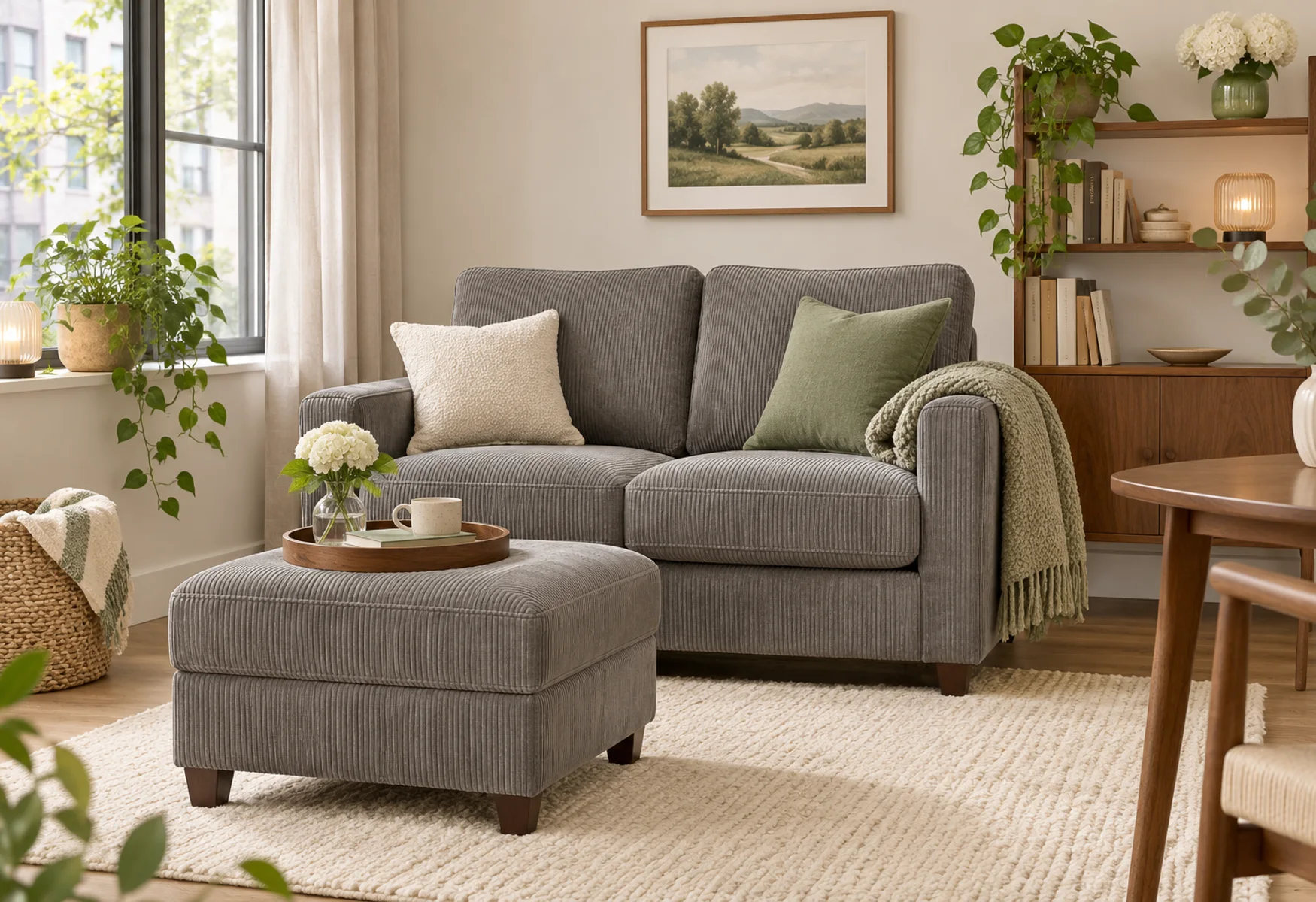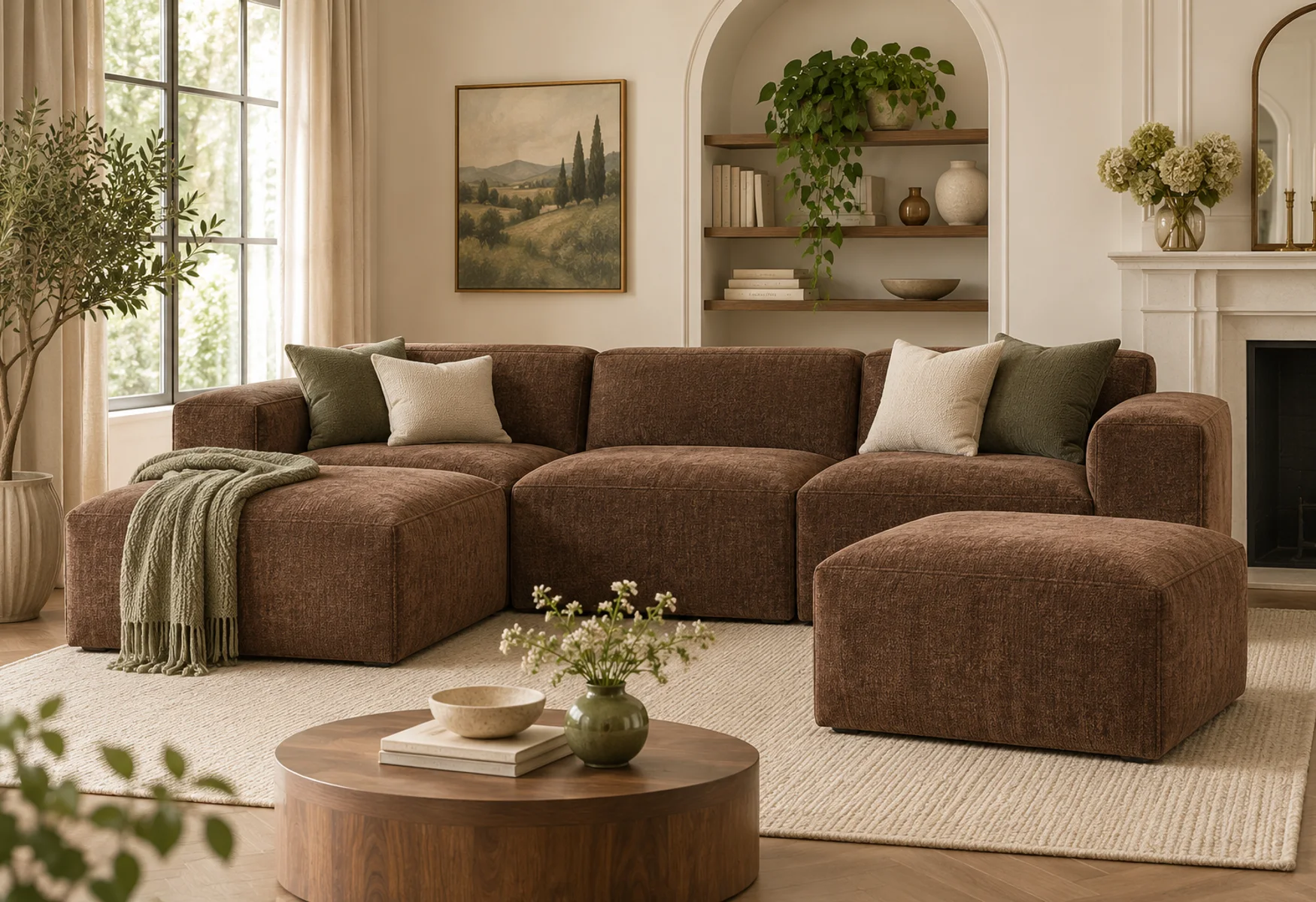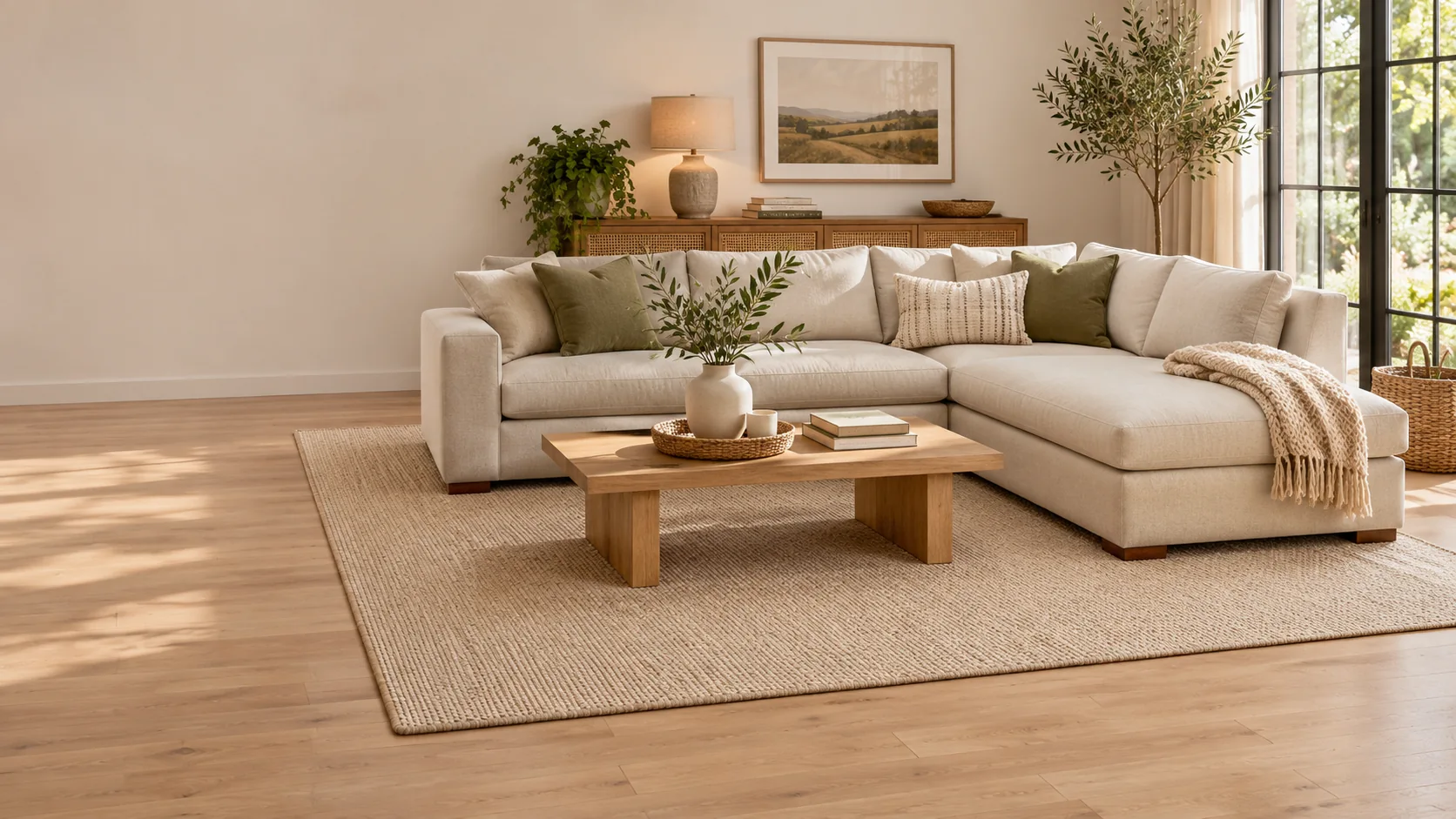
Map the whole sectional
Measure both runs of an L-shaped sectional or the complete U-shaped outline. Include the chaise and any movable ottoman in the arrangement you use most often. The coffee table and other chairs also affect the rug's useful size.
Draw a simple plan or mark the furniture on the floor. Centering a rug on the entire room is not always the same as centering it on the seating group. Decide which arrangement you want it to bring together.
Try two workable placements
One option places the sectional's front supports on the rug while the back remains on the floor. Another uses a larger rug beneath the whole seating group. IKEA's seating-area rug diagrams illustrate several sofa and sectional layouts and suggest a rug at least as wide as the sofa.
Use the diagrams as examples rather than assigning a standard rug size to every sectional. Check the actual supports: a broad plinth or low continuous base behaves differently from four separate legs.
Make the chaise part of the decision
Look at where the chaise ends relative to the rug edge. An edge landing directly beneath an awkward support point may leave the piece sitting unevenly. Test whether a larger rug, a different orientation or a shifted position gives a more coherent result.
If you move an ottoman regularly, include its usual positions in the trial. A layout that looks balanced only when the ottoman is tucked away may be frustrating during everyday use.
Tape out the rug before ordering
Mark the proposed rug rectangle with floor-safe tape or another non-damaging method. Walk to the doors, open storage and pull out any sleeper mechanism. Check that the coffee table sits fully supported and that nearby chairs can move as needed.
Compare two sizes on the floor instead of relying on a photograph. Leave enough visible floor for the proportions you prefer without pushing a rug edge into a frequently used route.
Check thickness and floor compatibility
Include the rug and underlay together when checking doors and furniture stability. Choose an underlay compatible with the rug and floor finish, and follow both manufacturers' care instructions.
If the sectional itself is still undecided, our sofa planning guide helps establish the seating footprint first. Buying the rug after that measurement reduces guesswork.
Choose the seating boundary first
Mark the sectional's full footprint and the walking paths around it. Then try a rug that reaches the front legs of all main seats or one large enough for the whole grouping. The edge should look intentional and avoid catching feet where people stand. IKEA's size guide provides examples, but a chaise, uneven room or unusual sofa depth may need a different arrangement. Use painter's tape to test dimensions before buying.
Account for the chaise and table
The long chaise section can make a standard rug appear short. Check whether the rug supports the chaise's front contact points and still leaves an even border around the coffee table. A table should sit steadily on the rug or fully off it rather than wobble across an edge. Open recliner or sleeper sections during the test if the sectional includes them. A rug that works only while the sofa is closed may not be useful in daily life.
Check floor and rug compatibility
Use a rug pad suited to both the rug backing and floor finish, following the floor maker's instructions. Some backings can mark a surface or trap moisture. Test door clearance and whether the rug edge curls where people walk. A thick pile may make sofa feet unstable or catch a moving mechanism. Keep the rug cleanable for the household's pets and spills; the best size is not useful if the material cannot be maintained.
Review the room from several seats
Stand at the doorway and sit in each main position. The rug should connect the seating group without becoming a trip line across the route to the room. If a larger rug is too expensive or hard to clean, compare a smaller intentional front-leg layout rather than forcing an awkward middle size. Record the tested dimensions and photograph the tape outline so a retailer listing can be compared against the actual room.
Common questions
Must the whole sectional sit on the rug?
No. Front-support placement and full-furniture placement can both work. The important checks are consistent support, a rug that connects the seating group and edges that do not create awkward walking or furniture positions.
What size rug fits an L-shaped sofa?
There is no single size for every L shape. Measure both runs, the chaise and surrounding furniture, then tape out candidate sizes. Standard rug names are less useful than their actual dimensions.
Should I center the rug on the room or the sofa?
Start with the seating group it serves. The most useful position may be offset from the room's center, especially in an open-plan space or where doors dictate the furniture layout.
Can a thick rug affect the sofa?
It can change how supports meet the floor and how nearby doors or mechanisms move. Include the underlay in the thickness check and make sure the furniture remains stable in the final position.