Write down what the sofa must do
Start with the people and activities it needs to accommodate. Do you want upright seats for conversation, a place to stretch out, or an occasional guest bed? Decide which requirements are essential and which are optional.
Separate the number of people from the advertised seat count. Broad arms, a corner and a chaise can reduce the ordinary sitting space. For a sleeper, record the usable flat dimensions rather than assuming a bed-size label tells the whole story.
Write a short brief before looking at styles. Note who uses the sofa most, whether anyone needs a more upright seat, how often guests sleep over and whether pets share the cushions. These details make a compact loveseat, a standard sofa and a sectional different solutions rather than different looks for the same problem.
Set a budget for the delivered order, including taxes, assembly and any protective treatment you actually want. Keep an alternative configuration in mind. A beautiful sofa that needs a special order fabric or misses your delivery deadline may no longer fit the brief.
Measure two routes: around it and into it
Mark the full sofa outline on the floor, including the chaise and any open recliner or sleeper position. Walk through the room and open the nearby doors. Include space for your coffee table, storage access and the way you approach each seat.
Then measure door openings, hallway turns, stairs and landings. Ask for package dimensions and which components detach. A sofa can fit its final wall while still being difficult to deliver.
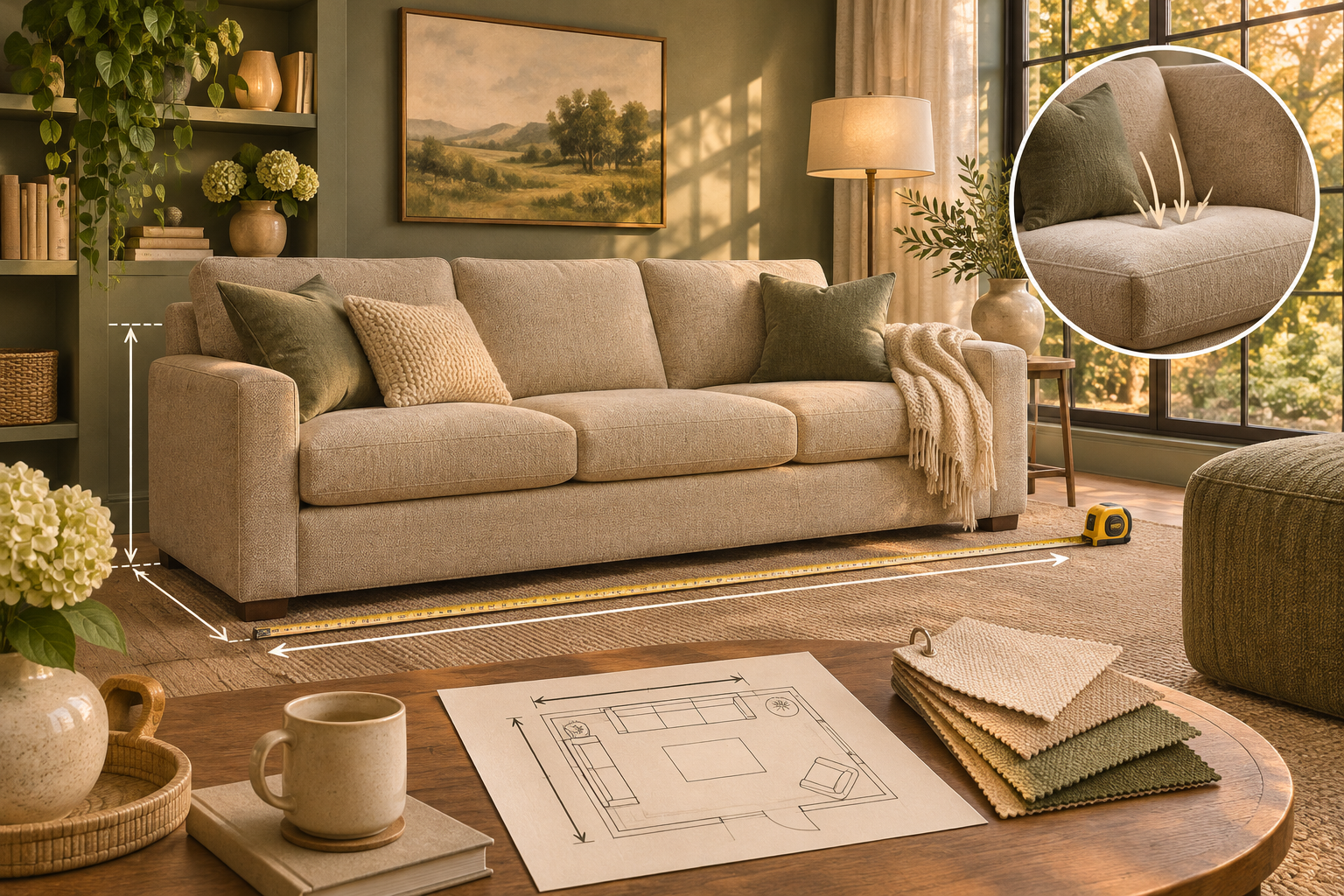
Use painter's tape or a paper floor plan to show the complete footprint. Include arm width, chaise projection and the open depth of a sleeper or recliner. Sit in the remaining space and check whether doors, drawers and walkways still work. IKEA's planning guidance suggests recording outlets, doors and windows alongside room dimensions.
For delivery, measure the narrowest clear opening, the height of the entry, any stairwell turn and the elevator if relevant. Compare those with the packaged dimensions, not just the assembled sofa size. West Elm's delivery measuring guide provides a useful checklist. Ask the seller whether legs, back panels or modules can be removed, and get the answer for the exact model.
Use a familiar seat as your reference
Measure a chair or sofa you already enjoy using. Compare its seat height and usable depth with the candidate, allowing for the back cushion and your usual sitting position.
IKEA's sofa guide distinguishes low, deep seats for a relaxed position from higher, shallower seats for more upright sitting. Treat that as a starting point and try the actual sofa where possible. A firm or soft label is not a standardized comfort score.
Try to sit in the candidate for more than a quick photo. Sit upright, lean back and stand up. If you cannot visit a showroom, compare stated seat height, seat depth and back height with a chair you know. Include the depth taken by back cushions, because the outside depth is not the usable seat depth.
Cushion construction changes how the seat feels over time. Ask which cushions are reversible, whether the covers unzip, and whether replacement inserts are available. A firmness label is subjective; the specification and an ordinary sit tell you more than a marketing adjective. Our sagging-couch guide explains why cushion and support construction matter later.
Choose a care routine you will follow
Request a fabric swatch and the selected cover's instructions. Removable does not automatically mean machine washable. Leather, suede, woven fabric and synthetic leather-look coverings require different treatment.
Ask about replacement covers and cushion cores if those matter to you. If a listing mixes material names or dimensions, resolve the conflict before ordering. Our cushion-cleaning guide explains why the care label is worth checking early.
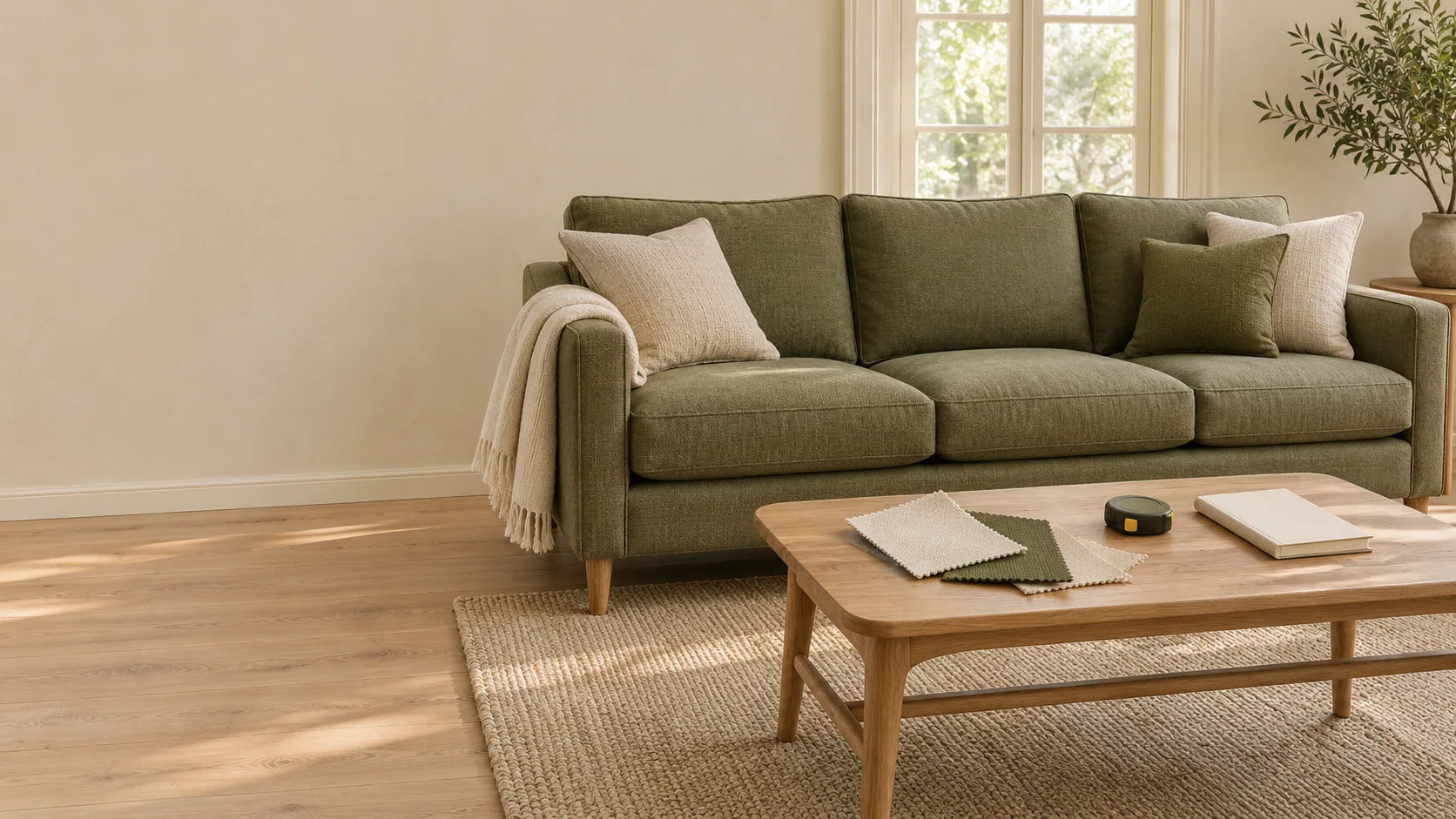
Ask for a physical swatch when possible. Look at it in morning and evening light, rub it gently, and place it next to your rug and wall color. The small photo on a product page cannot reliably show texture or how the color reads in your room.
Read the selected fabric's care code and the maker's instructions. A removable cover may still require professional cleaning. West Elm's upholstery FAQ shows that fabric and treatment options can vary across a furniture range. Choose a care routine you can realistically maintain, especially for a light-colored sofa in a busy household.
Read the final order like a specification
Check orientation, color, module count, included cushions and assembly. Ask which direction the seller uses to describe a left or right chaise. Compare the total after delivery and any assembly charge.
Read return conditions, especially for compressed furniture that cannot easily be repacked. Save the selected listing and the seller's written clarification of important details. A well-defined shortlist makes the final style choice much easier.
Compare the return and cancellation terms for the actual order. Custom fabric, made-to-order modules and clearance stock may have different rules. Ask when the return period starts and whether a restocking or collection fee applies. Save the order summary with the fabric code, orientation and module list.
Before confirming delivery, check access requirements with the seller and building. Crate & Barrel's furniture measuring guide walks through the route from entrance to final placement. Move fragile items and arrange enough clear space for assembly or packaging removal. The best-looking choice on paper should still arrive in the room you planned for it.
Compare frames and cushions without relying on a single label
Product descriptions may emphasize hardwood, kiln drying, springs or high-density foam. Ask what those terms refer to in the specific model. A frame label does not describe the joints, support system or cushion construction by itself. Read the warranty for what is covered, for how long and who pays transport or service costs.
Think about serviceability. Can a damaged leg be replaced? Are covers or inserts sold separately? Can a modular piece be reordered later in the same fabric? The answers matter more for a sofa you expect to keep for years. A short product card rarely contains them, so ask the seller for the full specification.
Choose the shape that works in the room
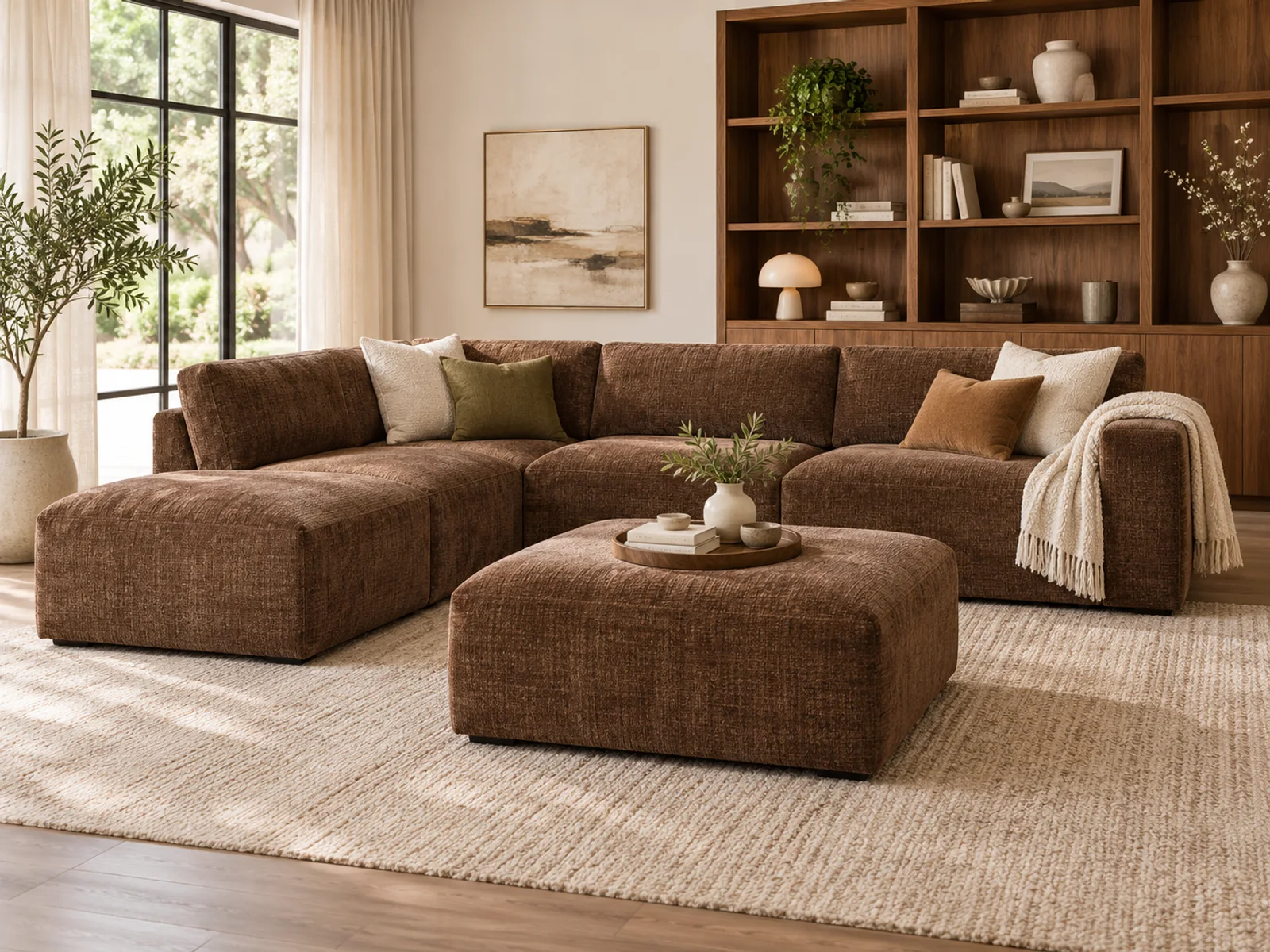
A straight sofa often leaves more flexibility to move chairs and tables around it. A chaise provides a place to stretch out but has a fixed direction unless the design is reversible. A sectional can fill a corner well, yet its end module may block a doorway or make one seat awkward to reach.
Sketch at least two layouts before deciding. Include side tables, lamps and the route people use through the room. Consider the view from the entrance and how the sofa relates to windows and screens. If the room changes often, favor modules that can be rearranged and confirm that their connectors and backs are finished for the layouts you want.
Make a final shortlist you can compare
Put two or three candidates in a simple table. Record overall size, usable seat depth, seat height, fabric and care code, delivery package sizes, warranty, return terms and final price. Leave a blank where a seller has not supplied an answer. That blank is a reason to ask, not a detail to guess.
Choose the candidate that meets your essential needs with the fewest unresolved questions. If none fits, revise one part of the brief, such as length or fabric color, and compare again. A sofa is a large, frequently used purchase; a clear shortlist is more useful than rushing through dozens of similar listings.
Common questions
Should I choose a sectional for a small room?
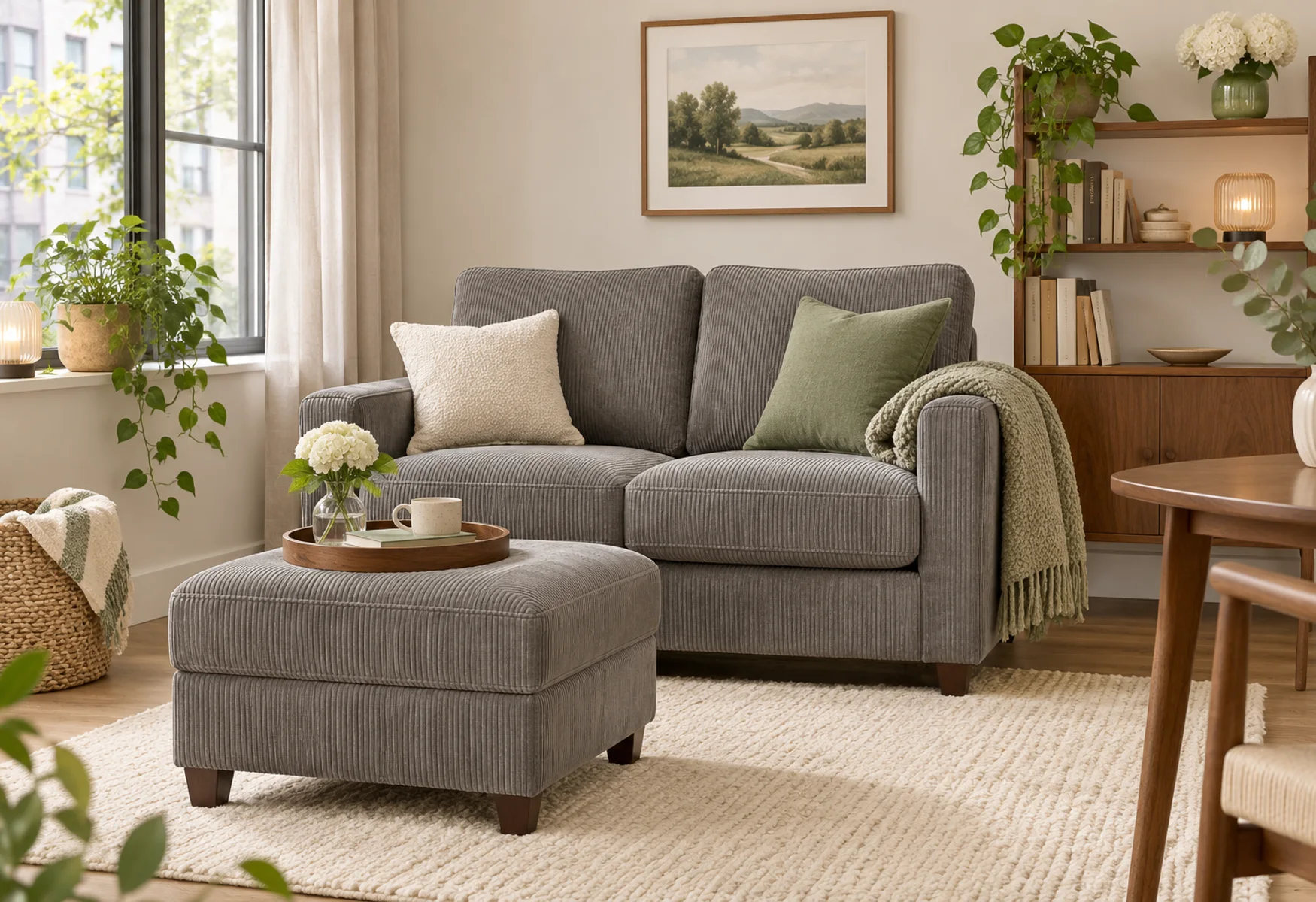
Only if its complete shape leaves the circulation you need. A chaise may use a corner efficiently or block a route. Mark the exact footprint, including doors and nearby storage, rather than assuming every compact sectional saves space.
If you may move soon, compare whether the modules can be rearranged in another room. Check the connector type and whether the backs of each piece are finished.
What is the most useful comfort measurement?
Seat height and usable seat depth are especially useful together. Compare them with furniture you already like, allowing for the back cushion and your normal sitting posture. Overall depth alone does not describe the sitting area.
If possible, sit on the sofa and get up several times. Comfort also depends on cushion firmness, back support and your own body proportions.
Are removable covers always washable?
No. Some covers require professional cleaning or are removable only for servicing. Check the selected fabric's care label and laundering instructions before making washability part of your buying decision.
Ask whether replacement covers are sold for that exact model and color. A swatch and written care instructions are more reliable than a broad claim that a fabric is easy to clean.
What should I confirm for a sofa bed?
Ask for the open footprint, usable sleeping width and length, mechanism instructions and mattress details. A general twin or full-size label can be less useful than a model-specific dimension drawing.
Open and close the mechanism if you can. Check that the room still has a walking route when the bed is open and that the delivery package fits the route into your home.
How do I compare two sofas with different prices?
Compare the delivered configuration, not the starting price. Include fabric grade, modules, assembly, delivery, taxes and any care option you would actually buy. Record warranty and return terms next to the total.
A lower price may still be the better value if the sofa fits well and its care demands suit you. A higher price needs a specific benefit you will use, such as a better seating fit, serviceable cushions or a configuration that solves the room layout.