Decide why the console belongs there
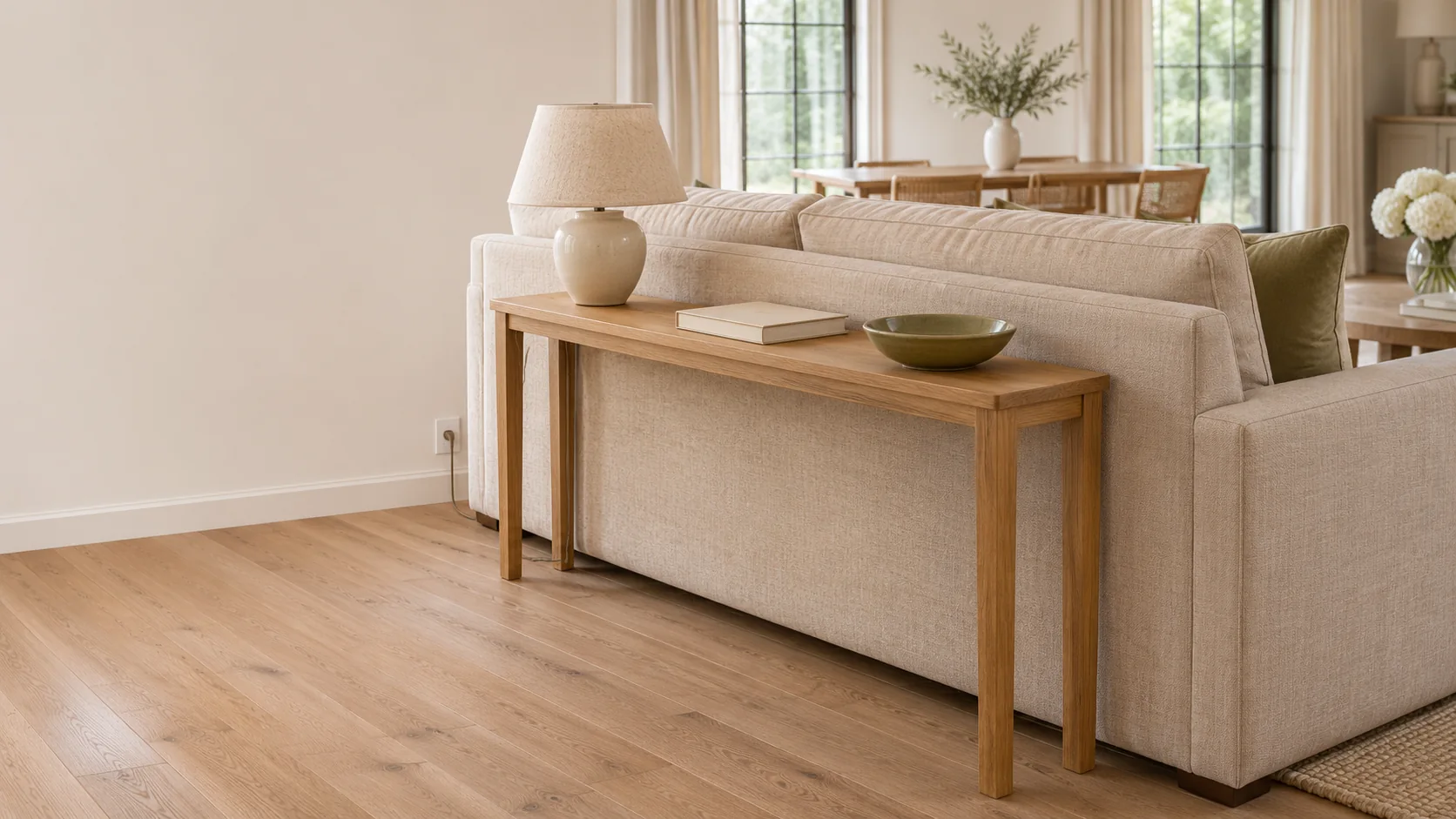
A console can hold a lamp, provide a place for a book or define the back of a seating area. If none of those jobs is needed, leaving the space open may make the room easier to use.
Treat the sofa and console as a combined footprint. A narrow-looking table still adds depth to a floating group. Draw the full arrangement before browsing finishes.
Measure from the sofa frame
Record the back width, height and any slope. A table that looks level with loose back cushions may rise above the fixed frame when those cushions move. Check the view from the entrance and from the seats.
There is no need to force an exact height match. Decide whether the surface should sit quietly below the back or be visible as a separate element. Test that appearance with a stable temporary surface before ordering.
Keep circulation and storage usable
Measure the route behind the console and open any nearby door or drawer. If the table has drawers, include their extension in the plan. Do not hide a pinch point by measuring only between the tabletop and the wall.
Room & Board's measuring advice includes access to outlets and controls in furniture planning. Mark those items before placing a console against the sofa, particularly if a lamp needs power.
Account for moving furniture
Reclining backs, sleeper mechanisms and loose sectional pieces can change the relationship between the sofa and table. Follow the furniture instructions and keep the console outside the required movement area.
For a reclining sofa, start with the operating-space checklist. A static measurement with the sofa upright cannot confirm that the table will stay clear.
Keep the surface practical
Place lamps and other objects fully on the top and plan the cord route. Avoid trailing cables across the walkway or leaving objects where a seated person can easily knock them off the back. Follow any supplied anchoring instructions.
If the console would make the route too tight, compare a reachable narrow side table instead. In an open room, our zoning guide can help define the seating area without adding another piece.
Measure the sofa back and the route
Record the sofa's back height and width, including any recline or movement. A console usually looks calmer when its top does not tower above the sofa, but the useful height depends on what it will hold. Tape its full depth behind the sofa and walk the route to doors or dining space. Leave enough clearance to use drawers and to clean behind both pieces. A narrow console can still make a room feel tight when a chair needs to pass the same route.
Check whether the sofa back is finished for viewing from another part of the room. A console can help organise that view, but it should not hide damaged upholstery or block ventilation.
Plan power and objects safely
If lamps or chargers will sit on the console, identify an accessible socket and a cord path away from feet. Do not trap a power strip behind a moving sofa. Check the top's load rating and the stability of tall objects, especially with children or pets nearby. A shelf can store books or baskets, but the items should remain reachable without pulling the sofa forward. If the console only holds a few small items, a side table may be a simpler use of space.
Common questions
Should the console be taller than the sofa?
It depends on the intended look and use. Compare it with the fixed back as well as loose cushions. A lower surface often looks quieter, but height alone does not establish a good fit.
Can a console touch the sofa back?
Check both furniture instructions and leave any required clearance. Upholstery movement, reclining mechanisms and projecting hardware can make contact unsuitable. Do not use the sofa as a substitute for a table's required support.
Can a side table replace a console?
A side table may solve the need for a lamp or drink surface with less impact on the route behind the sofa. Check seated reach and the top size for its actual job.
Can I use a console behind a reclining sofa?
Only if it clears the sofa's full movement and cords cannot enter the mechanism. Use the exact model's operating dimensions, not just the upright depth.
Should it be as wide as the sofa?
It can be narrower. Align it with the seating area and check that its ends do not become obstacles. The best width supports its function and the room's path.
What if the sofa back is curved?
Measure the deepest point and leave space so the console does not press into upholstery. A narrow curved-back gap can collect dust or make the table look misaligned; test a floor outline first.
Can it hold storage baskets?
Yes, if the shelf height and route let people pull them out without moving the sofa. Check load limits and avoid storing items that need access every few minutes in a tight gap.