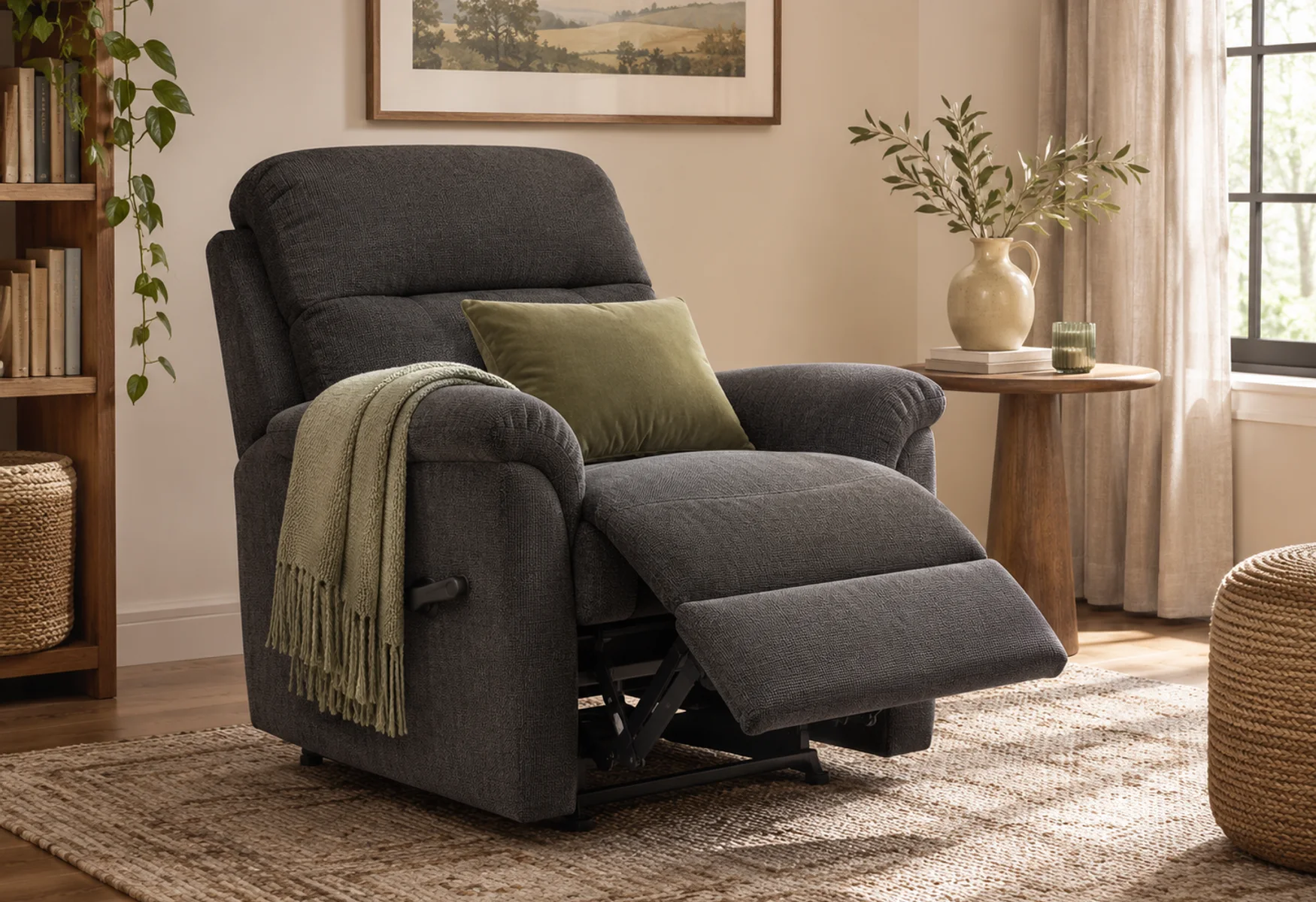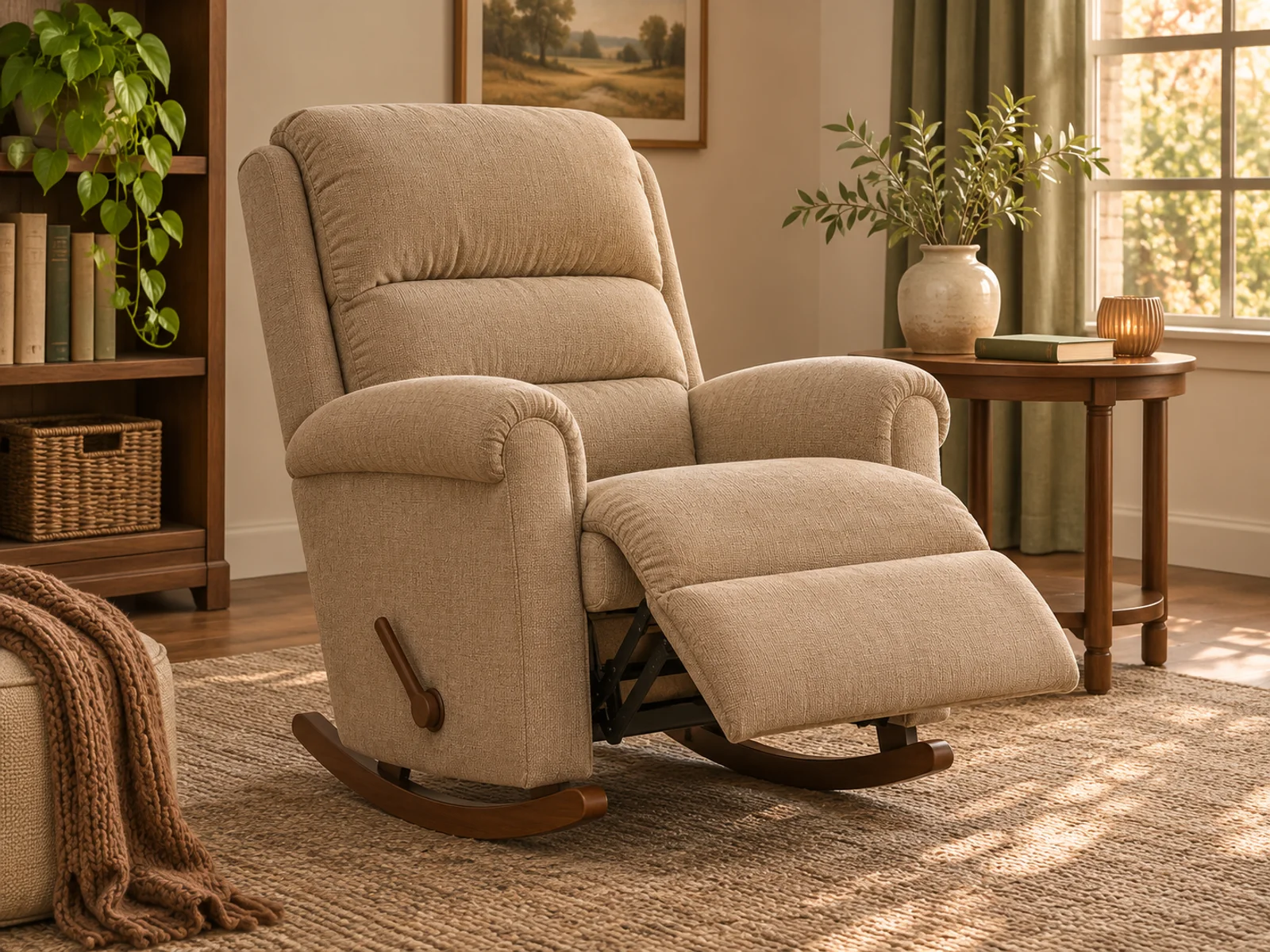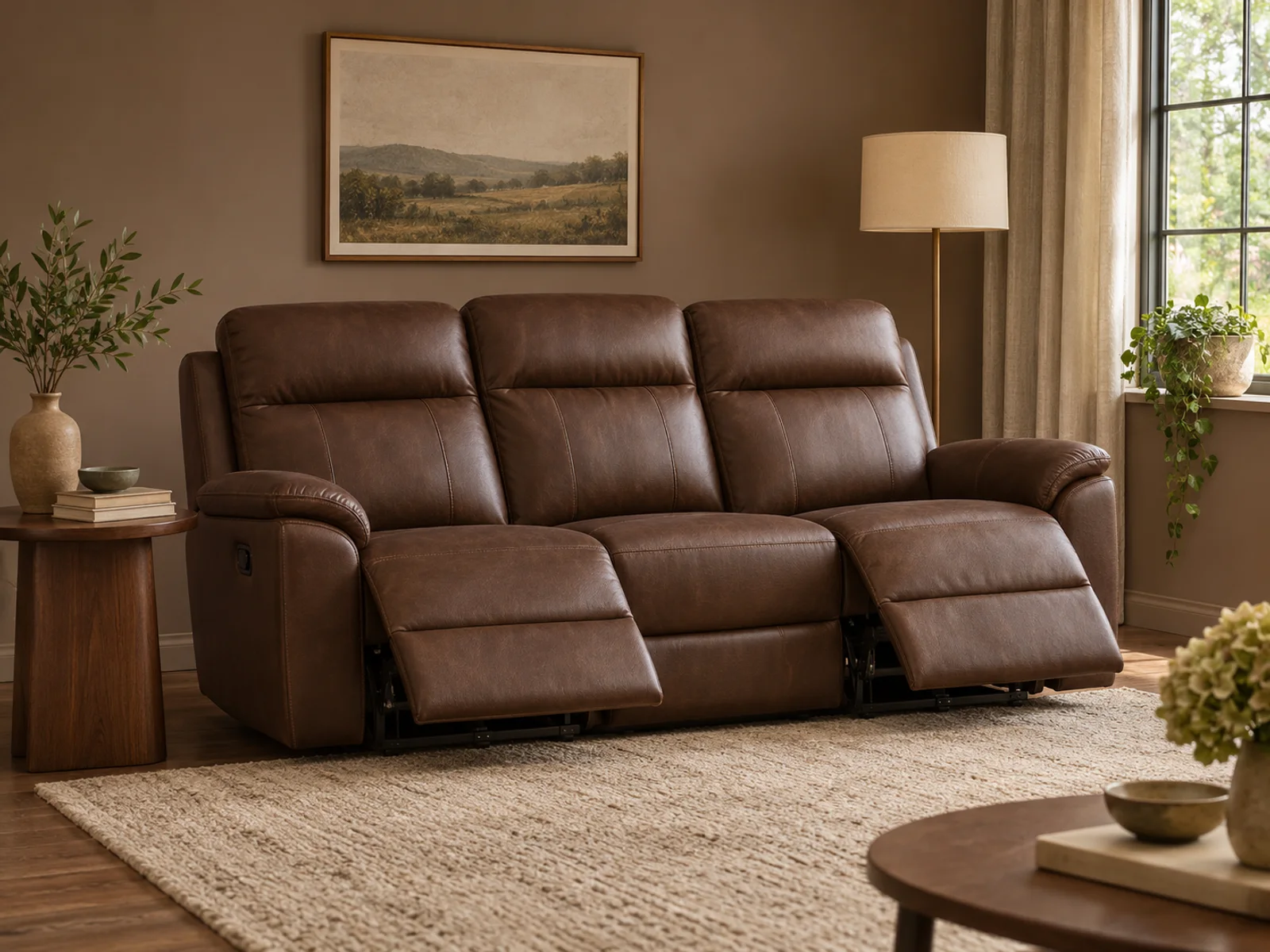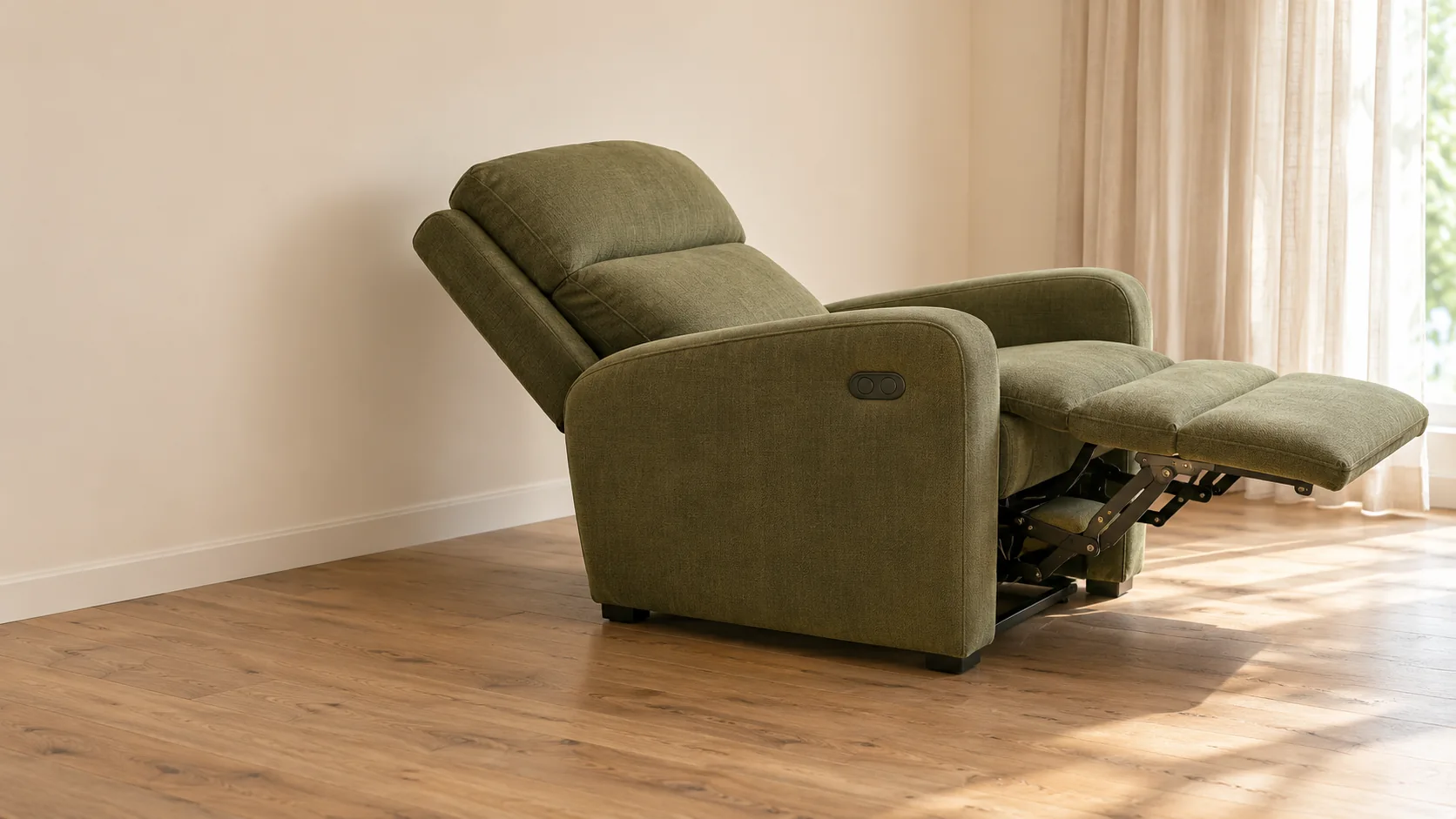
Find the operating dimensions
An upright product photograph hides much of the space a recliner uses. Ask for a side-view diagram showing the chair at full extension and the manufacturer's required position relative to the wall. If the listing supplies only upright depth, request the missing figure.
A wall-saving design may move differently from a traditional recliner. Do not apply one model's advertised clearance to another. La-Z-Boy's power furniture manual includes placement and operating instructions for the models it covers, illustrating why the exact manual matters.
Mark the full movement area
Mark the upright footprint and the extended footprint separately. Include the back movement, footrest and any swivel or rocking travel specified for the model. Try nearby doors, drawers and other seats with that area reserved.
A coffee table should not sit where the footrest needs to move. If you plan to reposition a table whenever you recline, decide whether that routine is realistic. The most convenient layout works without repeatedly moving heavy furniture.
Keep the controls usable
A manual lever needs accessible space beside the chair. Power controls, a remote pocket and charging ports may also affect which side can sit near a wall or table. Check the actual model photographs rather than assuming all controls are on the same side.
Plan the power connection using the manufacturer's instructions. Keep cords clear of moving parts and walking routes. Do not hide a cord under a leg or place it where the mechanism can pinch it.
Try the room while the chair is occupied
Ask someone to sit in the current seating area while you walk the intended route. The chair's open position should not force everyone else to squeeze past the footrest. Confirm that children and pets can be kept clear of the moving mechanism during use.
Compare small recliners by open dimensions, not just their compact upright appearance. Our explanation of motion sofas covers the broader furniture category.
Confirm the final layout with the manual
Keep the placement diagram with the order. After assembly, follow the manufacturer's setup checks before using the mechanism. Stop if any part contacts the wall, furniture or cord during movement.
If the chair only fits when its prescribed clearance is reduced, choose another model or layout. A narrow body cannot compensate for an operating footprint that the room does not have.
Mark every position on the floor
Measure the chair upright, then fully reclined with the footrest extended. Some models move forward as they lean back, while others need more room behind. Use the exact model manual for its minimum clearance and mark that envelope with tape. Sit in the chair during the test and ask someone to walk the usual route around it. Check that the footrest does not hit a coffee table, doorway or another person's legs. The space needed to use the control is part of the footprint too.
If the recliner is powered, include the plug, transformer and cable route. Keep the cord out of the moving frame and away from foot traffic.
Test the room as a system
Try opening the recliner while a nearby sofa, side table and rug are in their normal positions. Check whether the chair remains stable and whether a user can stand up safely after it returns upright. A wall-hugger label does not mean the back can touch the wall; confirm the stated clearance for that model. If a rug edge lies under the moving base, test whether it catches. Compare a smaller reclining chair or fixed seat if the full movement makes the room difficult to use.
Common questions
Does wall-hugger mean it can touch the wall?
No. The term describes a mechanism style, not permission to eliminate clearance. Use the wall spacing specified for the exact model and check the full range of movement.
Should I measure with the footrest open?
Yes. Measure or obtain the dimensions for full recline as well as the upright chair. The footrest-only position may not be the furthest point the mechanism reaches.
Can a side table sit directly against a recliner?
Only if the operating instructions and movement allow it. Check controls, rocking or swivel travel and the table base. Avoid a position where either item can be struck or trapped by the mechanism.
Does a swivel recliner need more room?
It may need a wider turning circle as well as its recline envelope. Mark both movements and check cords, lamps and side tables before ordering.
Can I place it against a window?
Check the full movement, curtain clearance, sunlight exposure and access to the window. A chair that fits upright may press against the glass or fabric when reclined.
What if the manual gives only upright dimensions?
Ask the manufacturer or retailer for the fully open footprint and minimum wall clearance for the exact model. If they cannot provide it, test the chair in a showroom and measure it there. Do not assume another model's dimensions apply.
Does a rug change clearance?
It can affect stability and movement if an edge sits under the base or footrest. Test the chair through its full range on the intended rug and floor. Follow the chair and rug makers' guidance for pads and casters.