Start with the usable outline
Measure the balcony at its narrowest points and mark doors, thresholds and fixed equipment. Check the route in and out with the door open. Do not count space that must remain accessible as furniture storage.
Ask the building manager about permitted furniture, loading and attachments where applicable. Do not estimate structural capacity from appearance or attach a table to a railing without explicit approval and appropriate installation instructions.
Choose one ordinary activity
Decide whether you mainly want a morning coffee, meals for two or a place to sit with a book. A narrow balcony may serve one of those tasks comfortably instead of doing all three poorly.
IKEA's outdoor planning guide separates furniture choices by activity. Apply that principle to your own dimensions: draw the chair in use, including the room needed to sit down and stand up.
Check the furniture between uses
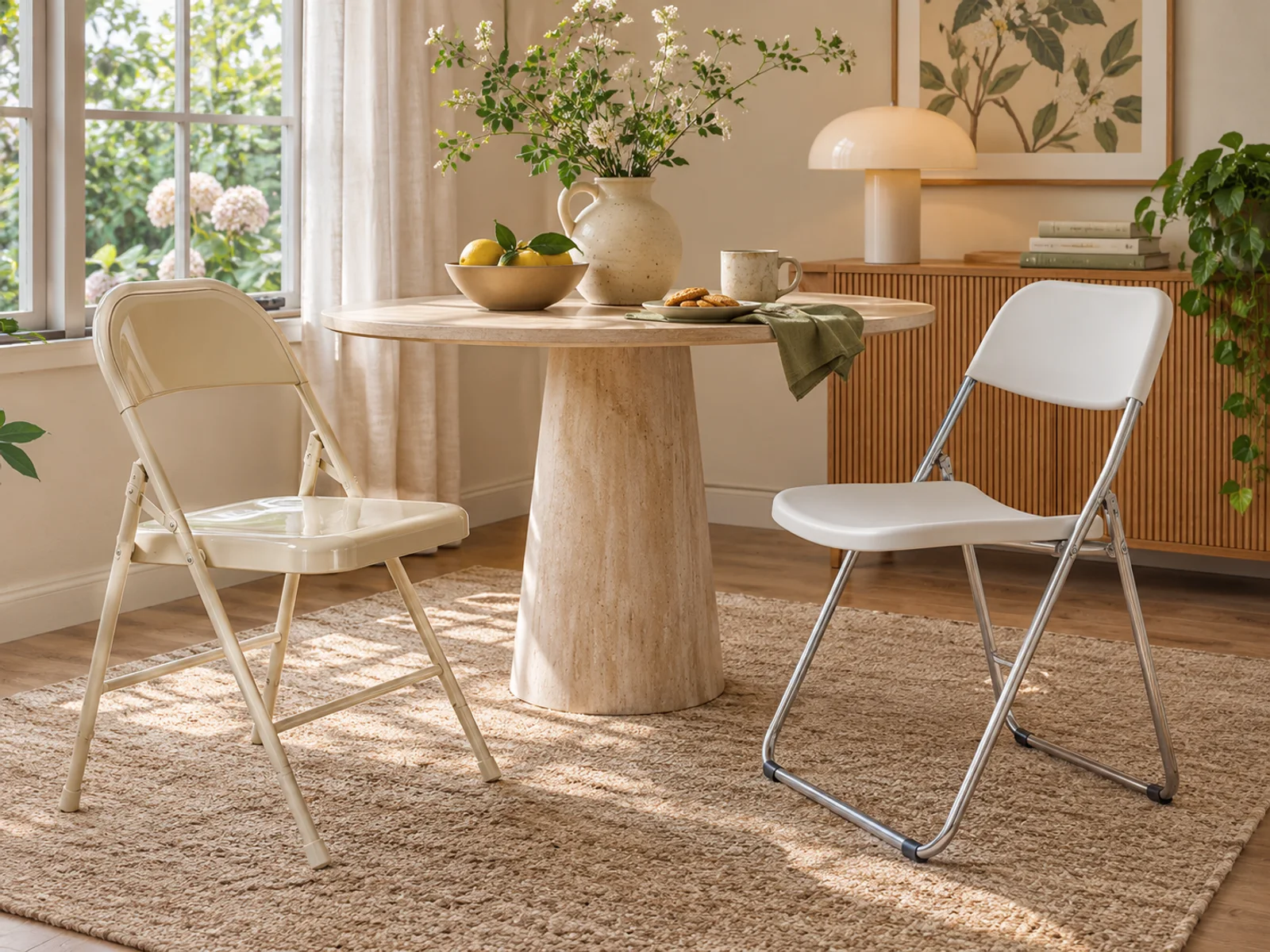
A folding chair needs a secure storage position and space to operate its mechanism. A stackable chair needs the combined stack dimensions, not just the single-chair footprint. Keep the access route clear in both arrangements.
Our folding table checklist helps assess occasional surfaces. Avoid buying a folding design before deciding where it will go once closed.
Plan for the actual exposure
Confirm that furniture and cushions suit the environment described by the manufacturer. Follow building and product guidance for wind and seasonal storage. A covered balcony is not necessarily protected from every direction of rain.
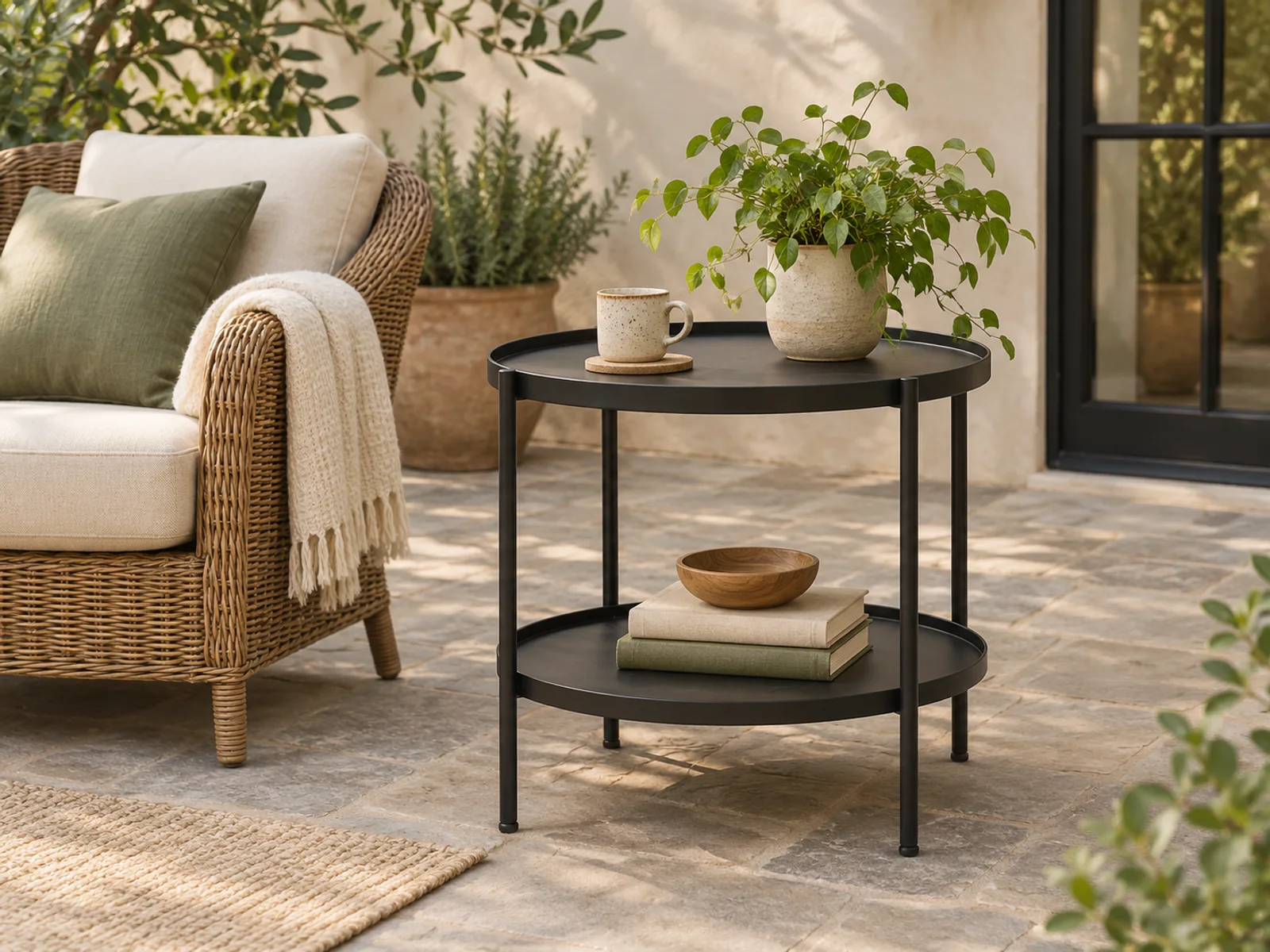
Browse outdoor side tables once the layout works. For furniture that needs bringing inside, read the winter storage guide and reserve the space before ordering.
Confirm the usable dimensions
Measure the clear width after accounting for the door swing, railing and any fixed equipment. Keep the required escape route open and check building rules before placing furniture. A slim table can still block access when a chair is pulled out. Use tape or cardboard to test the full occupied footprint, including legs and people.
Check exposure and weight
Ask the building manager about permitted loads, fixing restrictions and wind exposure where relevant. Choose furniture rated for outdoor use and follow its anchoring or storage guidance; do not attach pieces to the railing without permission. Lightweight items are easy to move but may need particular care in gusts. Foldable designs help only if there is somewhere practical to store them.
Prioritize one activity
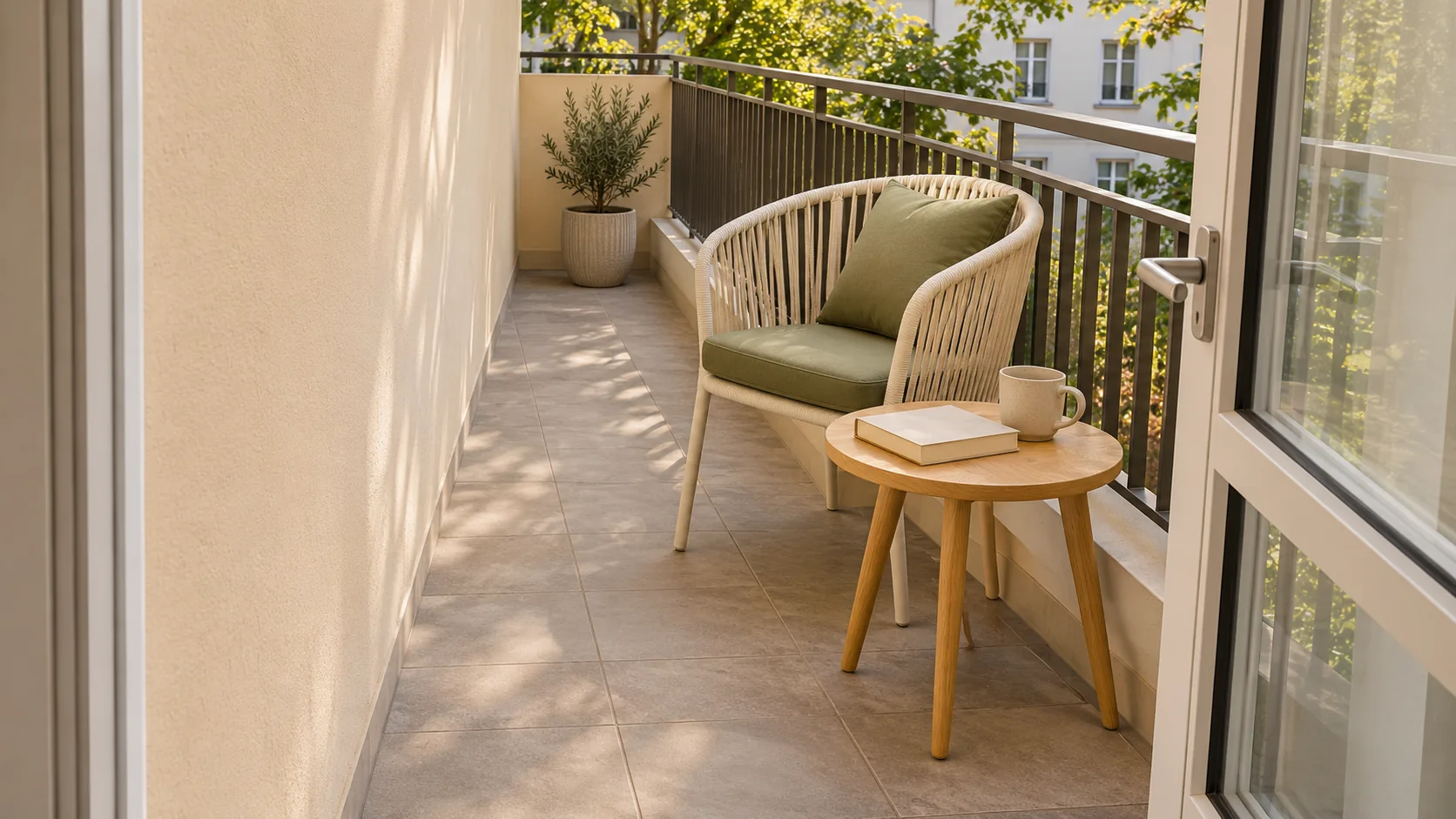
Decide whether the balcony is mainly for a morning drink, plants or sitting with another person. Select dimensions around that use rather than trying to fit every outdoor feature. A single comfortable chair with a small side surface can be more usable than a crowded dining set. Verify that cushions and covers have a dry storage place and that routine cleaning is feasible.
Common questions
Can I choose furniture by balcony width alone?
No. Include the door swing, access route and the room needed to use each seat. The narrowest point and fixed obstacles can matter more than the overall width on a floor plan.
Are railing-mounted tables a good space saver?
They may reduce floor use, but require suitable mounting and explicit permission for the installation. Check the product's compatibility and building requirements. Do not assume a railing can support an attached table.
Should I choose the lightest furniture?
Weight is only one consideration. Handling, stability, exposure and storage all matter. Follow the manufacturer's and building's guidance rather than treating lightness as the sole advantage on a balcony.
Can I hang a table from the railing?
Only if the building permits it and the product is compatible with that railing and load.
Are folding chairs always suitable?
Check their open footprint, stability and storage space, not just folded width.
Can outdoor cushions stay out?
Follow the fabric maker's weather and storage guidance; many need protection or drying.
How much walkway should I leave?
Use applicable building guidance and test comfortable passage with the furniture occupied.