Confirm what suede means on the label
Retail descriptions sometimes use suede to describe an appearance. Genuine suede is leather, while microfiber and other fabrics can imitate its soft raised surface. Nubuck is another leather finish with its own care requirements.
Find the material and care information for the selected model. If it is missing, ask the seller or maker before using water, solvent or a leather conditioner. The same color and texture can conceal different constructions.
Begin with loose soil and the nap
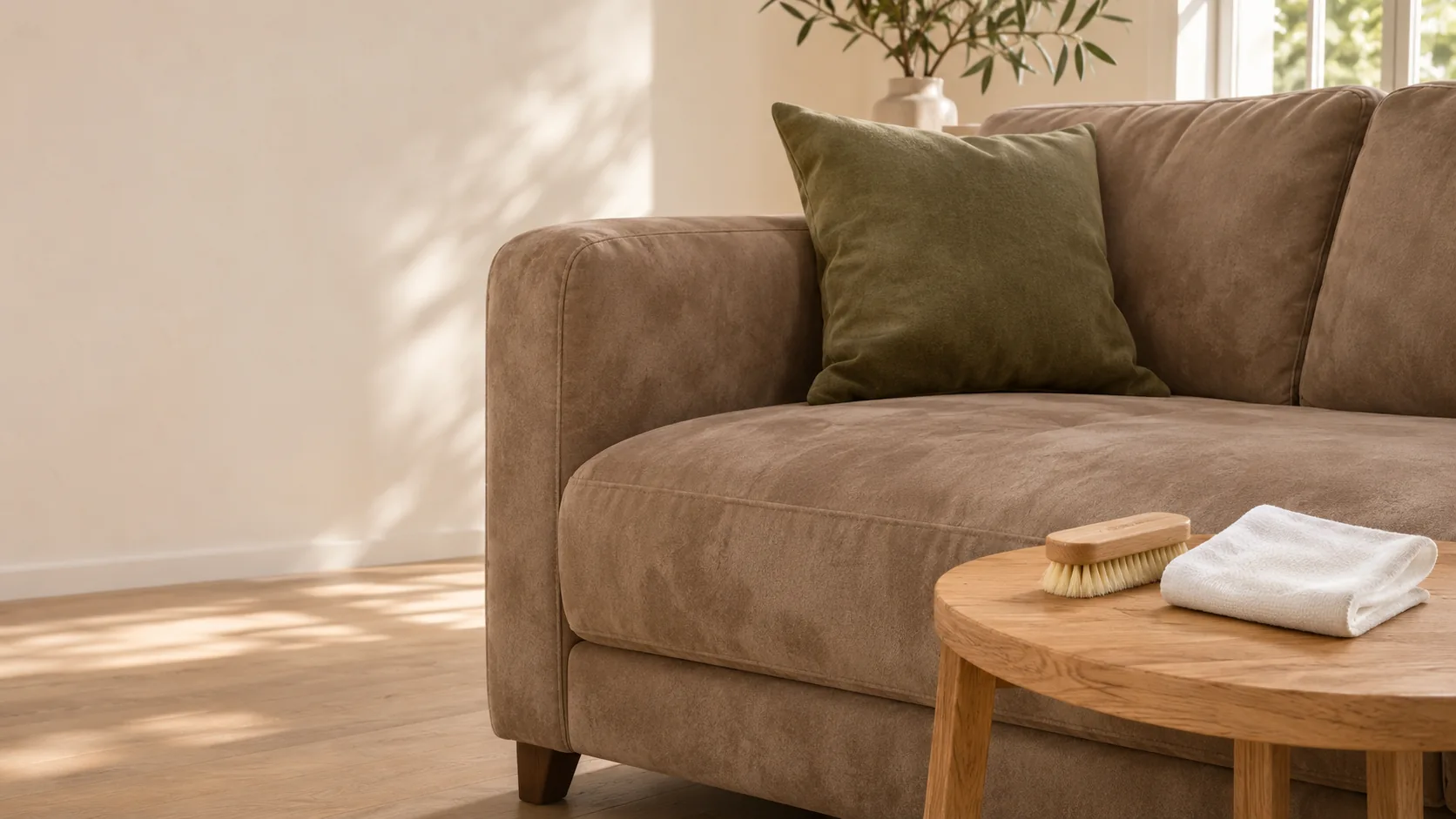
The nap is the raised surface that gives suede its changing appearance. Use the brush or attachment recommended for the cover, gently enough to avoid roughening or flattening it. Do not attack a small mark with a hard general-purpose brush.
Check whether a pale or dark patch changes when the nap is gently aligned as permitted. A change in direction can look different from absorbed dirt. Persistent marks deserve assessment before stronger treatment.
Use a product-specific process
Furniture Clinic's suede-cleaner instructions describe removing loose dirt, applying its foam to a complete panel, removing excess and brushing the nap after drying. That is the maker's process for its product, not a universal method for every suede-look couch.
Confirm compatibility with the furniture instructions and test the complete process out of sight. Let the area dry before inspecting color, texture and the edge of the treated patch.
Avoid the usual shortcuts
Do not assume smooth-leather conditioner, cooking oil, alcohol or a steam cleaner belongs on suede. A method copied from a shoe-cleaning video may also ignore the backing and filling beneath sofa upholstery.
Keep liquid treatment within the permitted amount and area. If a spill has reached the filling or a cleaner changes the color, stop and ask a specialist. For a separate moisture ring, our water-mark guide explains the checks before more wet cleaning.
Make ongoing care specific
Keep the sofa's care directions and an appropriate brush together. Remove loose debris before it accumulates and protect the seating from activities likely to introduce paint, nail polish or oily products.
If comparing a replacement, read our suede-couch comparison with the actual material in mind. A suede-look label alone tells you too little about cleaning.
Identify real suede or a look-alike
Suede, microsuede and other nap fabrics can look similar but have different cleaning limits. Check the label and ask the manufacturer for the precise upholstery type. A product marketed as suede cleaner may be for shoes or another material, not for a couch. Furniture Clinic's suede product is an example with its own instructions; use it only if the supplier confirms upholstery compatibility. Begin with dry dust removal and avoid pressing grit into the nap.
Test the nap after any approved treatment
Use a hidden area and wait until it is fully dry before deciding whether the surface changed colour or texture. A damp patch can look darker and a stiff nap can make a cleaned spot more visible. Follow the maker's recommended brush direction and pressure; aggressive rubbing can flatten fibres. Keep cleaner away from adjoining leather or wood unless it is approved for those surfaces too. If a stain is oily, deep or old, a specialist may offer a safer assessment.
Limit future exposure
Place the couch where prolonged direct sunlight and wet clothing are less likely to affect it. Keep a clean soft brush or upholstery attachment for routine dusting, and handle spills promptly according to the care code. Do not apply a generic waterproofing spray without checking warranty and fabric compatibility. Keep the product label and cleaning history with the furniture record. If the material was misidentified at purchase, resolve that before further cleaning attempts.
Protect the nap after cleaning
When the approved treatment is complete and fully dry, restore the nap only with the tool and direction the maker recommends. Do not use a stiff household brush or a heated dryer to hurry the result. View the fabric from several angles because nap direction can change the apparent shade. If the surface remains patchy, ask a suede or upholstery specialist before another treatment. A second wet attempt may deepen the contrast rather than remove it.
Common questions
Is microfiber the same as suede?
No. A microfiber cover can have a suede-like appearance without being leather. Use the actual composition and care instructions to choose treatment instead of assuming all soft raised surfaces respond alike.
Can I use leather conditioner on suede?
Only if the suede and conditioner manufacturers explicitly approve the combination. Products intended for smooth finished leather can change a raised surface. Identify the cover and choose a suitable care system first.
Does brushing remove every stain?
No. Gentle approved brushing may remove loose dirt or restore the nap, but an absorbed stain is a different problem. Avoid increasing force when the mark remains and seek a material-specific treatment.
Should I clean only the visible spot?
Follow the approved product and furniture instructions for treatment area. Some methods call for a complete panel to avoid uneven results. Test first rather than enlarging a wet patch without a clear process.