Move your viewpoint before moving the fabric
Look at the same patch from the front and each side. Change your position while leaving the lighting unchanged, then compare it under another light. A photograph taken from one angle can exaggerate a difference.
The Soho Home velvet guide identifies the fabric pile as an important part of velvet care. Understanding that surface helps explain why the same upholstery can have several apparent tones in one room.
Compare marks with their context
Check whether the change follows a sitting area, a cushion edge or a known spill. A pressure mark and a liquid stain call for different assessments. Do not assume that every dark area needs cleaning.
Photograph the patch from consistent positions and note when it appeared. If the texture feels changed or a mark does not behave like the surrounding pile, ask the supplier to assess it before applying products.
Avoid a universal brushing or steaming recipe
Velvet can be made from different fibers and finishes. The permitted brush, vacuum setting and cleaning method depend on the exact upholstery. Instructions for a different velvet sofa are not permission to steam yours.
Use the velvet cleaning guide to organize the care-label check. Follow the maker's directions for pile grooming, including direction and pressure, and stop if a test area changes in an unwanted way.
Use the shading when choosing a color
Hold a swatch vertically and horizontally in the intended room. View it beside the wall, rug and other upholstery. Compare daytime and evening light before deciding that the online image is the color you will see at home.
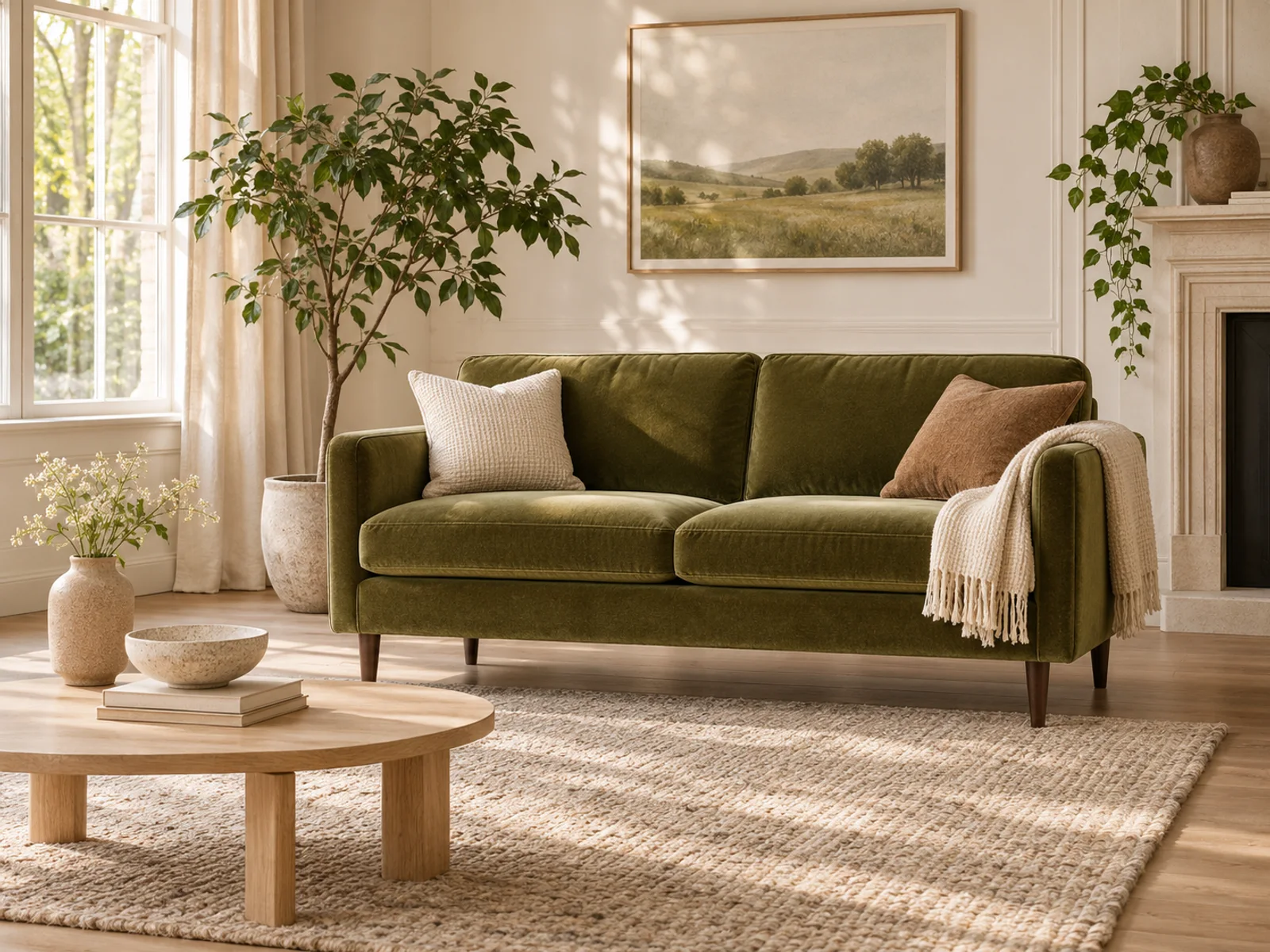
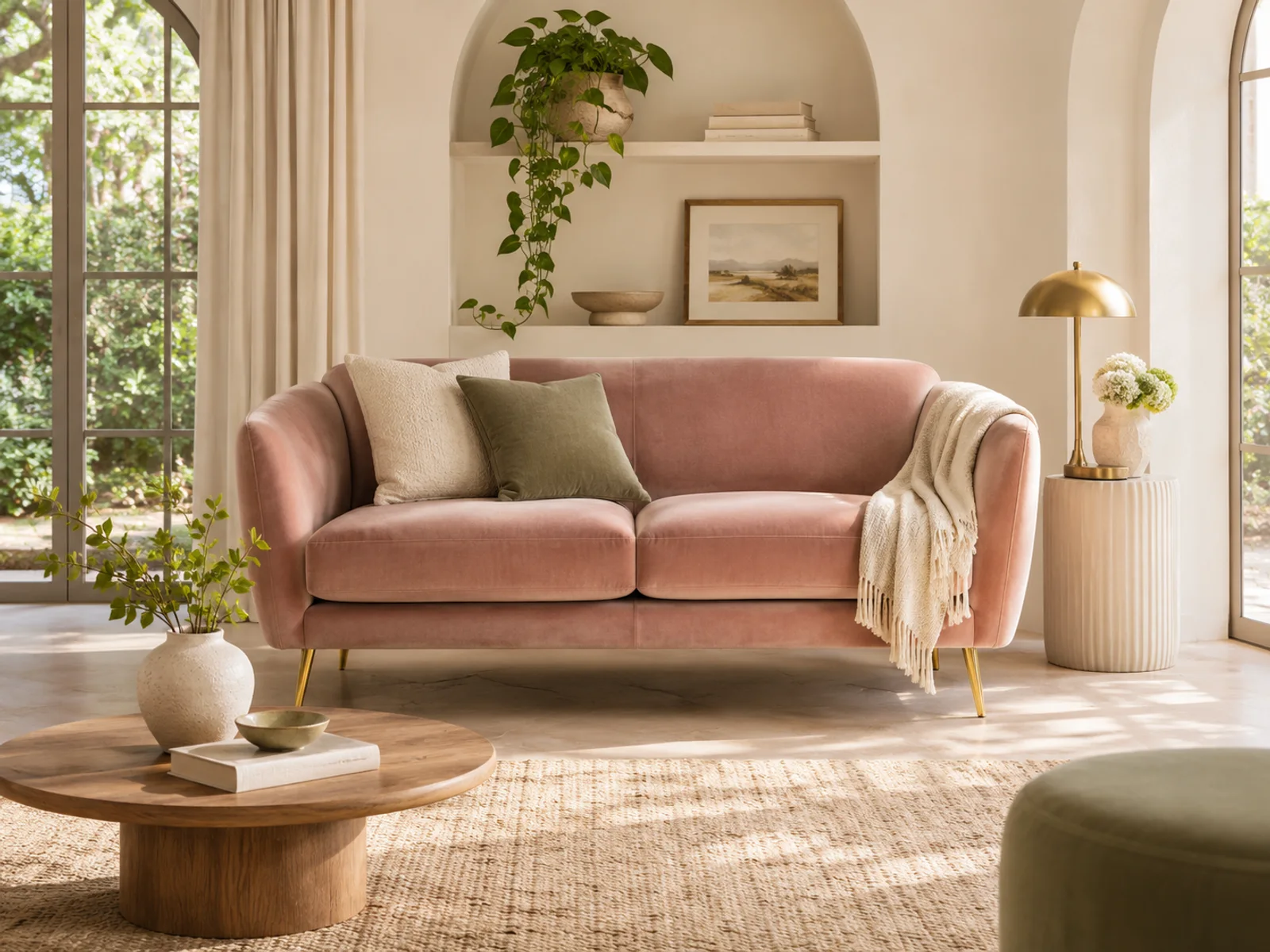
Browse green velvet couches or pink velvet couches with this variation in mind. If you want a very uniform surface, compare a non-pile fabric in the same palette rather than expecting velvet to behave like a flat print.
Understand the pile direction
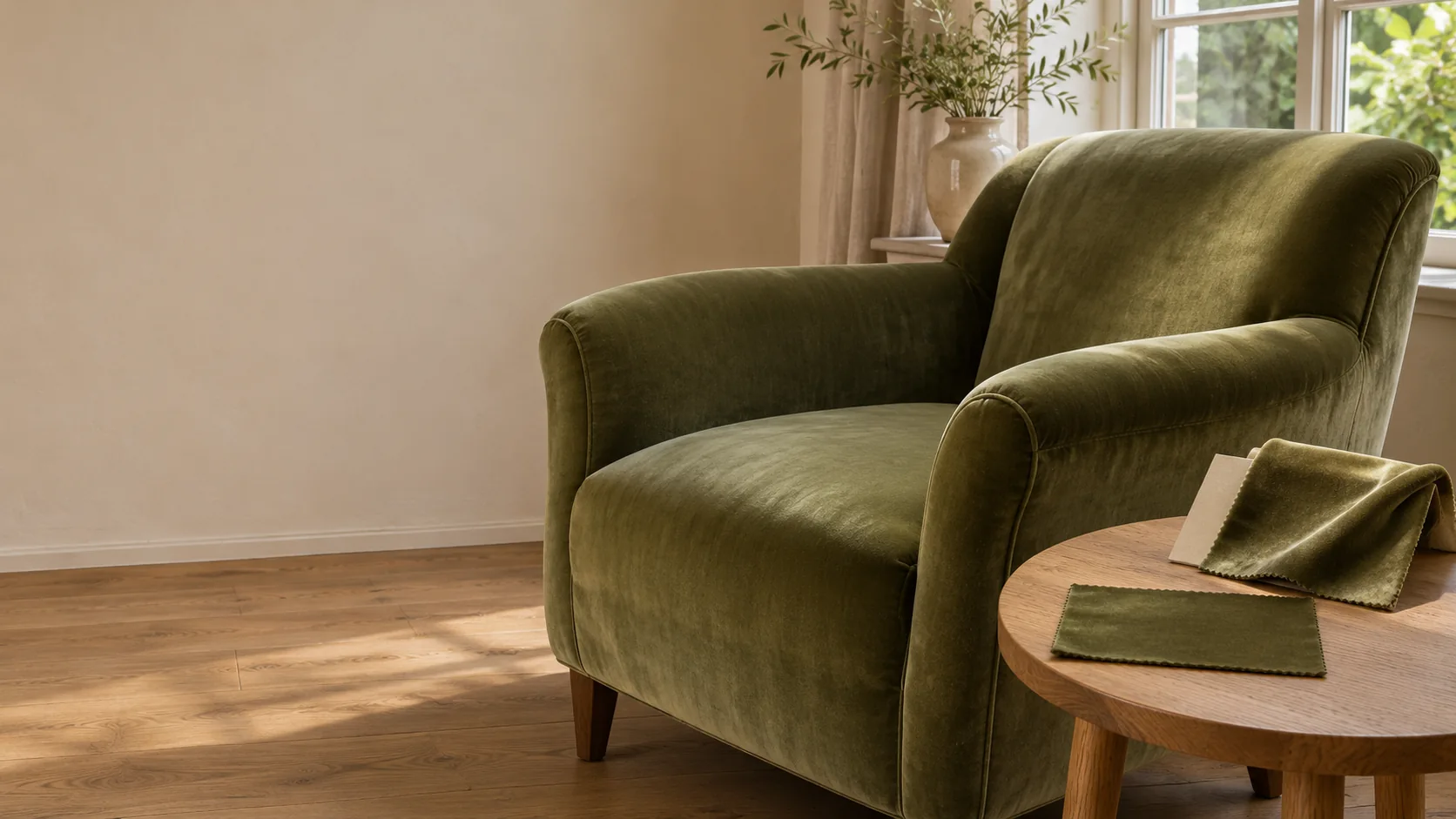
Velvet has a raised pile that reflects light differently as you move around the room or brush it in another direction. That visual change can be part of its intended appearance rather than a stain. View the actual sample from the positions you normally enter and sit. Kvadrat's velvet product information describes the sheen of its pile; the selected fabric's own care sheet remains the practical authority.
Compare the sample at home
Place the sample upright near the intended sofa, then inspect it in morning, evening and artificial light. Rotate it to see how the apparent shade changes with nap direction. Ask whether adjoining pieces will be cut with a consistent pile direction. A small swatch cannot show the full pattern of shading across a large seat, so request a larger display or photographs of the exact upholstery if available.
Handle marks as the maker specifies
Pressure can temporarily change pile orientation. Do not assume every dark patch is dirt or apply liquid to correct it. Check the fabric's cleaning code and ask the maker what brushing or steaming, if any, it permits. Test an approved technique in an inconspicuous area. Record persistent changes before treatment if you think they may be a fault.
Common questions
Is a shaded patch always permanent?
No single answer applies to every velvet or mark. Its cause and the fiber matter. Follow the manufacturer's assessment and care directions rather than assuming that brushing or steam will restore it.
Why do two matching cushions look different?
Pile direction, viewing angle and lighting can affect the apparent tone. Check their intended orientation and compare them under the same conditions before concluding that the fabric colors differ.
Should I choose velvet from a screen?
Use a screen to shortlist, then inspect a physical swatch if available. Turn it under your room lighting and compare it with nearby finishes. A single flat image cannot show the full shading range.
Is the color changing permanently?
Often the apparent shade changes with viewing angle or pile direction. Ask the supplier to assess marks that remain after approved care.
Will velvet look uniform like a flat weave?
Usually not. The pile can show natural shading and pressure marks, which should be considered before ordering.
Can I steam the surface?
Only if the exact fabric maker permits it. Heat and moisture can damage some velvets.
Does a sample show the final effect?
It shows texture and color behavior, but a larger upholstered area may display more variation. View a full piece if possible.