Identify the brown you are working with
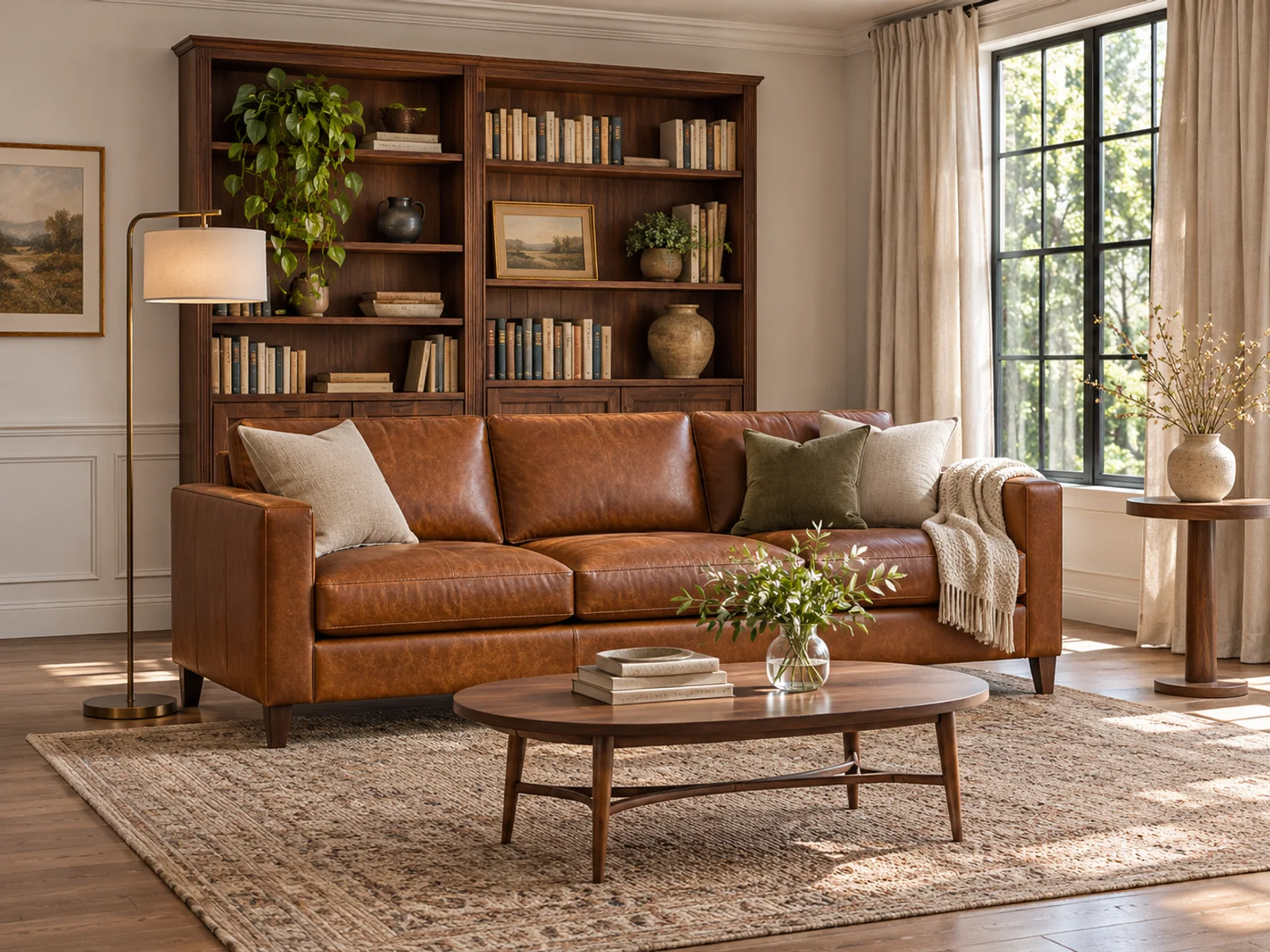
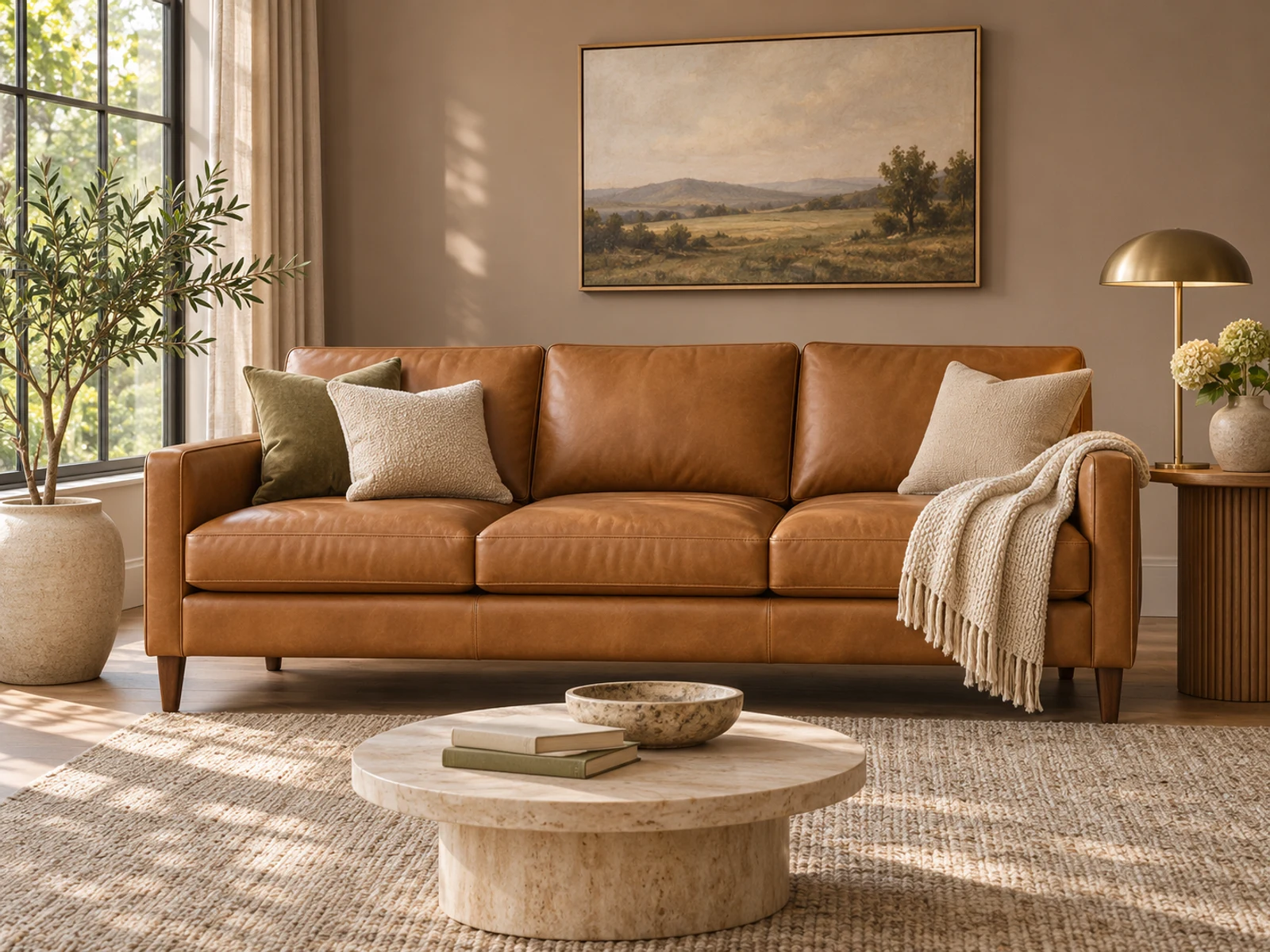
Tan, caramel and dark chocolate leather can suggest different palettes. Look at the sofa in daylight and with the evening lights on. Compare the leather with the floor, since similar browns may blend together or reveal different undertones.
Take photographs for reference, but use a physical sample if available. Camera exposure and screen settings can make a warm brown look cooler or darker than it is in the room.
Set the rug footprint first
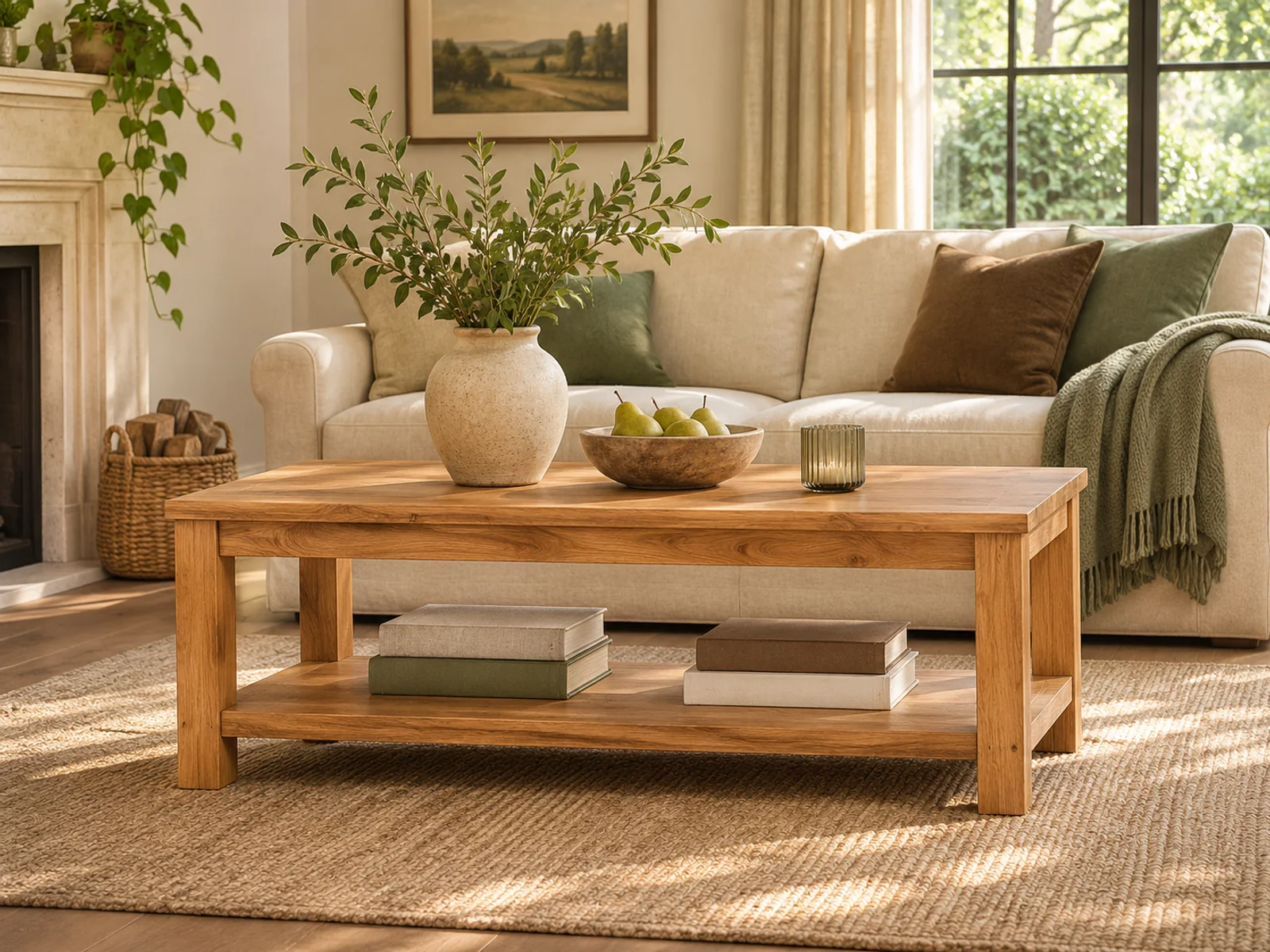
Mark the rug area around the sofa and any chairs. A small rug with an appealing pattern can leave the seating looking disconnected. Use our sofa rug-size guide before narrowing the color.
Keep the outline in place while comparing samples. Imagine the color over the full area, especially if the rug is much lighter or darker than the floor. The visual effect of a large surface is different from a hand-sized swatch.
Compare three palette directions
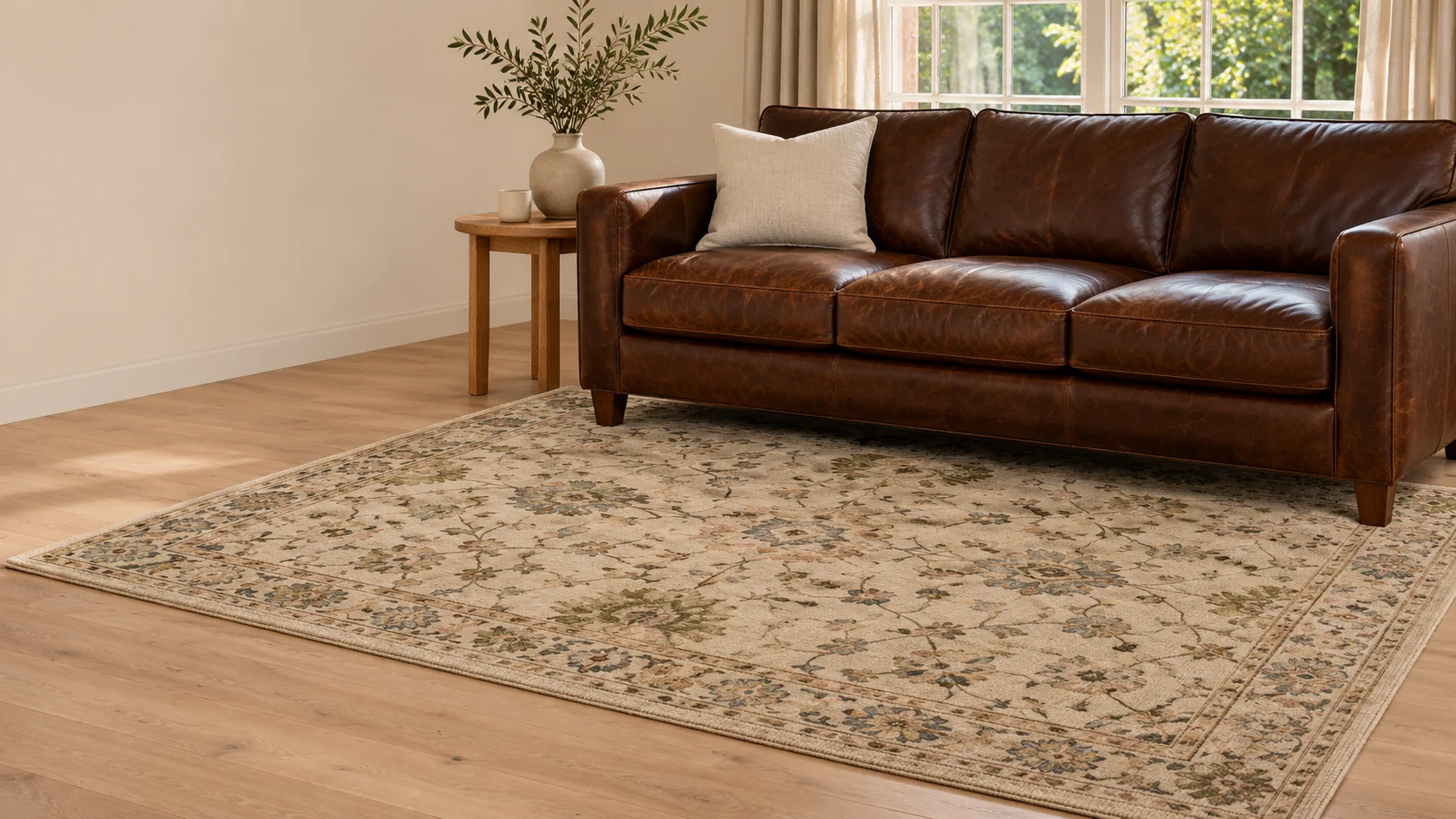
A pale oatmeal or cream rug can separate a dark sofa from the floor. Muted blue or green can provide a color contrast. An earthy patterned rug can repeat some brown while introducing another color for the rest of the room.
These are options to test rather than universal matches. Benjamin Moore's white-color guide explains why pale wall colors can shift with lighting. The same room-level comparison is useful when judging a pale rug beside the existing walls, although rug fibers and paint are different materials.
Balance pattern with the other surfaces
If curtains and chairs already have noticeable patterns, compare a quieter rug first. If the room is mostly plain, a patterned rug can provide a starting point for a small accent color elsewhere.
Look at both the dominant field color and the smaller details. A rug that seems blue in a close-up may read cream from across the room. Ask for a larger sample or room-scale photograph when that distinction matters.
Check practical details before ordering
Review the fiber, pile, care instructions and suitable pad for the flooring. Check whether the thickness works under nearby doors and furniture. Choose based on the household's maintenance needs rather than assuming a dark pattern cannot show dirt.
Our brown leather couch guide and tan leather options can help if the sofa is still undecided. Keep the rug sample alongside the exact upholstery choice before ordering either.
Start with the leather and floor together
Brown leather can lean red, orange, chocolate or taupe. Compare rug samples with the sofa and floor in the actual room. A cream or oatmeal rug can lift a dark seat, while a muted blue or green can add contrast. A brown rug can work if its value and texture differ enough from the sofa. The goal is a seating group that reads clearly, not a precise colour match. Photograph samples in daylight and evening light before ordering a large rug.
Set the rug footprint first. A beautiful small rug that floats between a large sofa and table may not connect the seating area.
Choose a surface for daily use
Leather is often wiped clean differently from a rug, so consider how spills, pets and shoes affect the floor textile. Check pile height under the coffee table and whether a recliner or moving chair will catch. Use a pad compatible with the floor and rug backing. A very light rug may demand more cleaning than the household wants; a subtle pattern can hide ordinary wear without overwhelming the room. Keep the leather maker's care instructions separate from the rug's cleaning method.
Common questions
Can a brown rug work with a brown sofa?
Yes, but compare the shades and textures so you can judge whether they blend more than you want. A difference in lightness or a secondary pattern color can separate the surfaces.
Is a cream rug the safest color choice?
It is one option, not a guarantee. Check the undertone against the leather and floor, and consider the care demands of a pale surface in the room where it will be used.
Should the rug match the leather exactly?
It does not need to. A related shade or deliberate contrast may be easier to coordinate than an almost exact match across different materials. Compare physical samples in the same light.
Should the rug have brown in it?
It can, but it does not need to. Repeat a small warm note elsewhere or choose a contrasting colour with compatible undertones. Test a real sample by the sofa.
Can a patterned rug work with leather?
Yes. Consider the scale of the pattern beside cushions and curtains. A pattern can add texture while making ordinary use less visible. Check cleaning and size before choosing it.
Does the rug need to reach the sofa?
A rug often connects the seating group when the front sofa supports meet it, but room shape can suggest another layout. Tape the proposed footprint and check walking edges.
What if the room has dark wood floors?
Try a rug with enough value contrast to distinguish both sofa and floor. Pattern or texture can help, but check practical cleaning and pad compatibility before choosing a pale material.