An armless chair with a familiar role
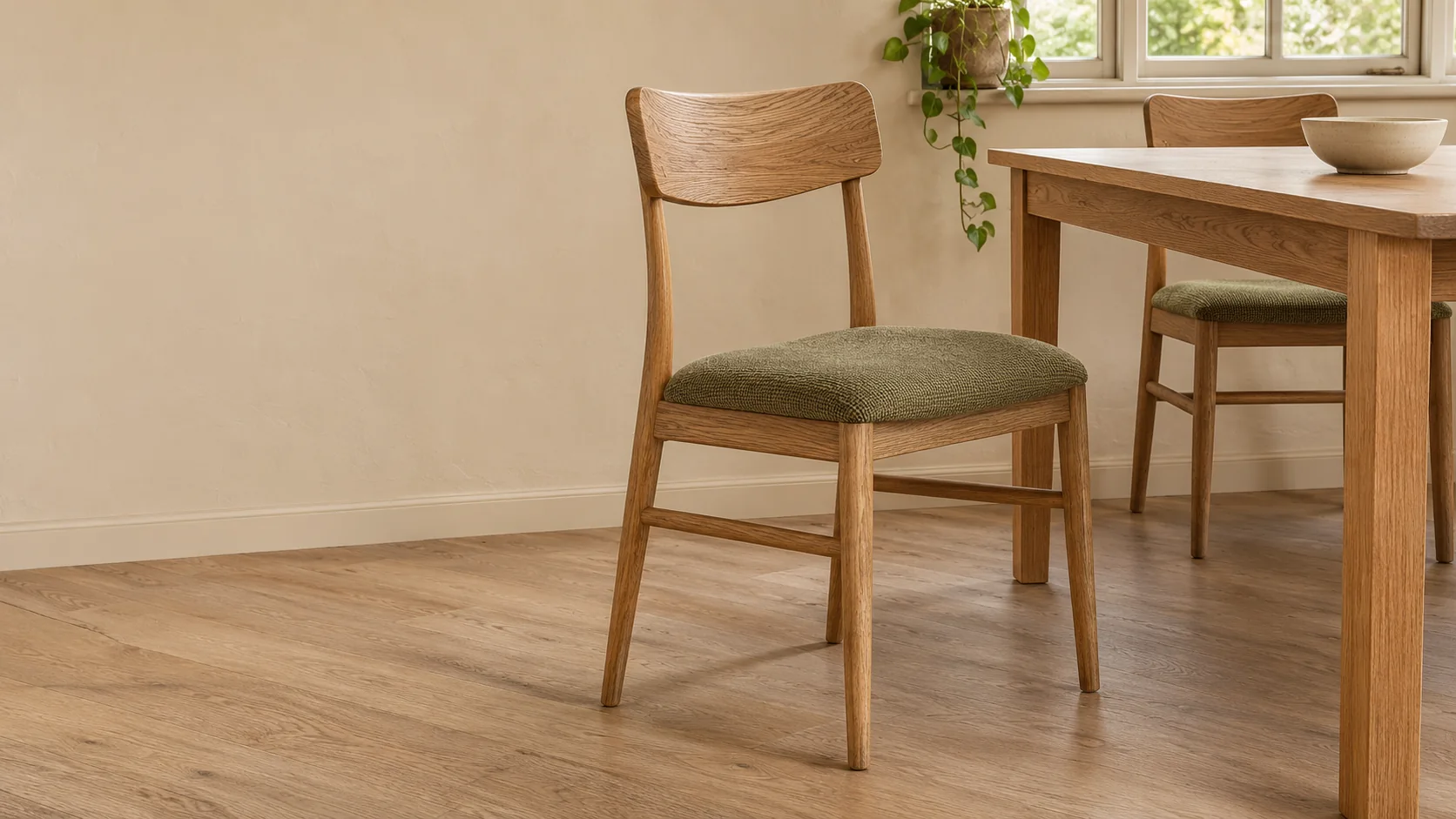
Merriam-Webster defines a side chair as a chair without arms, especially one used at a dining table. The open sides distinguish it from an armchair, although the seat and back can take many forms.
It may be wood, upholstered or a combination of materials. Side chair does not by itself mean folding, stacking, lightweight or narrow, so check those features separately if they matter.
Measure against the table you own
Record the seat height and compare it with the underside of the table, including any apron below the top. Check that the person using it has comfortable legroom, not simply that the chair can slide underneath.
Measure the width between table legs and the full width of the chair. A set that looks evenly spaced in a product photograph may fit differently around a table with thick legs or a central pedestal.
Check the seat during a normal meal
Try the chair at a comparable table if possible. Notice whether the back supports your preferred position and whether the seat edge feels comfortable. Consider the length of meals or conversations you expect it to accommodate.
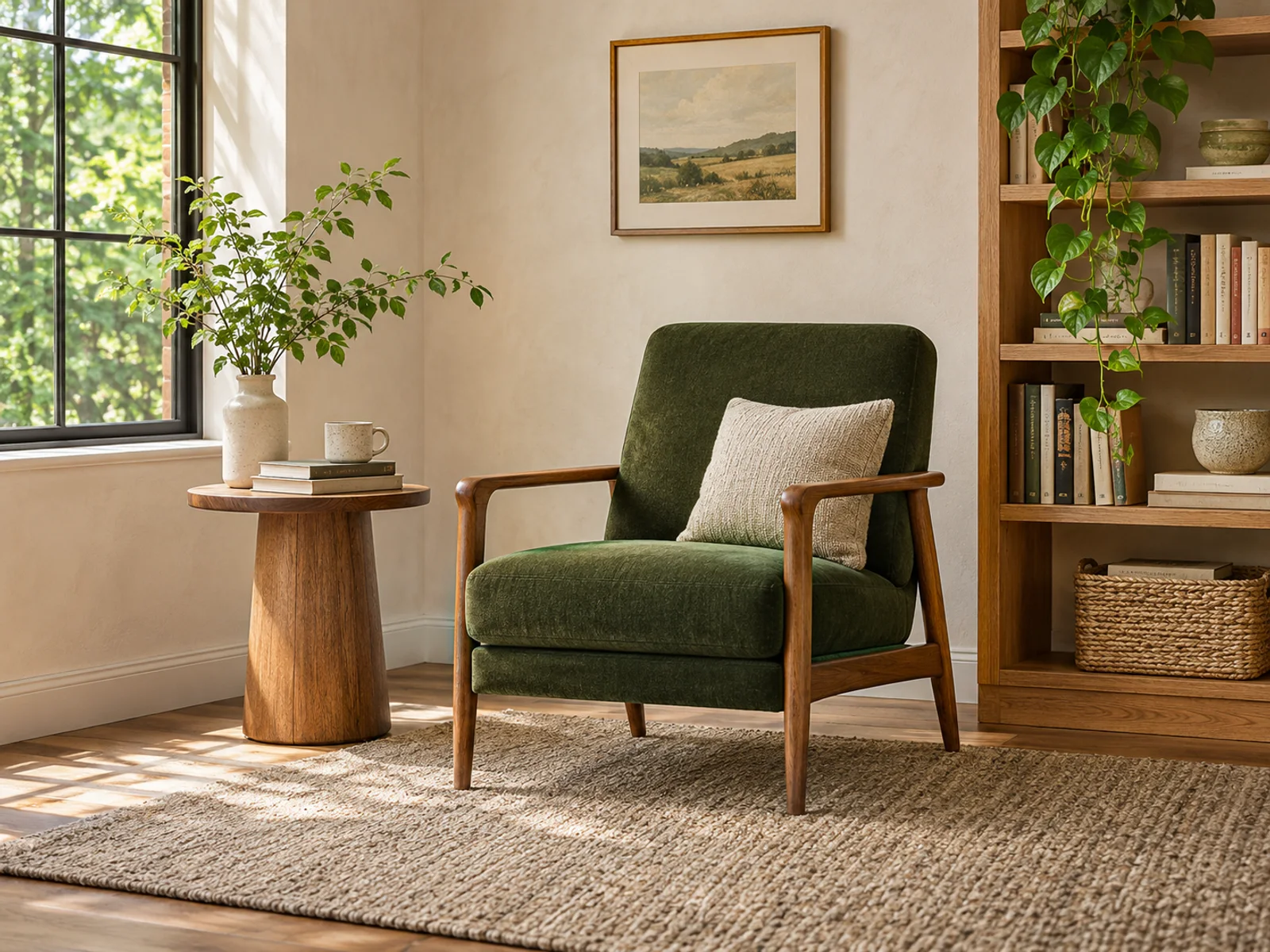
If someone prefers arm support, compare a side chair with an armchair at the end of the table. Check the arm height carefully, since that changes how far the chair can tuck in.
Allow room to pull it out
Mark the chair position with someone seated, then check the space needed to get in and out. Include a nearby wall, cabinet or door in that test. The footprint of an empty chair is not the whole dining arrangement.
For mixed seating, keep comfort and table fit consistent even if the finishes differ. Matching one element, such as wood tone or upholstery color, can give the set a connection without requiring identical chairs.
Choose maintenance you can manage
Read the upholstery or finish-care instructions before ordering. Look at exposed edges, foot glides and how the chair will move across your floor. Confirm assembly requirements and the specified use.
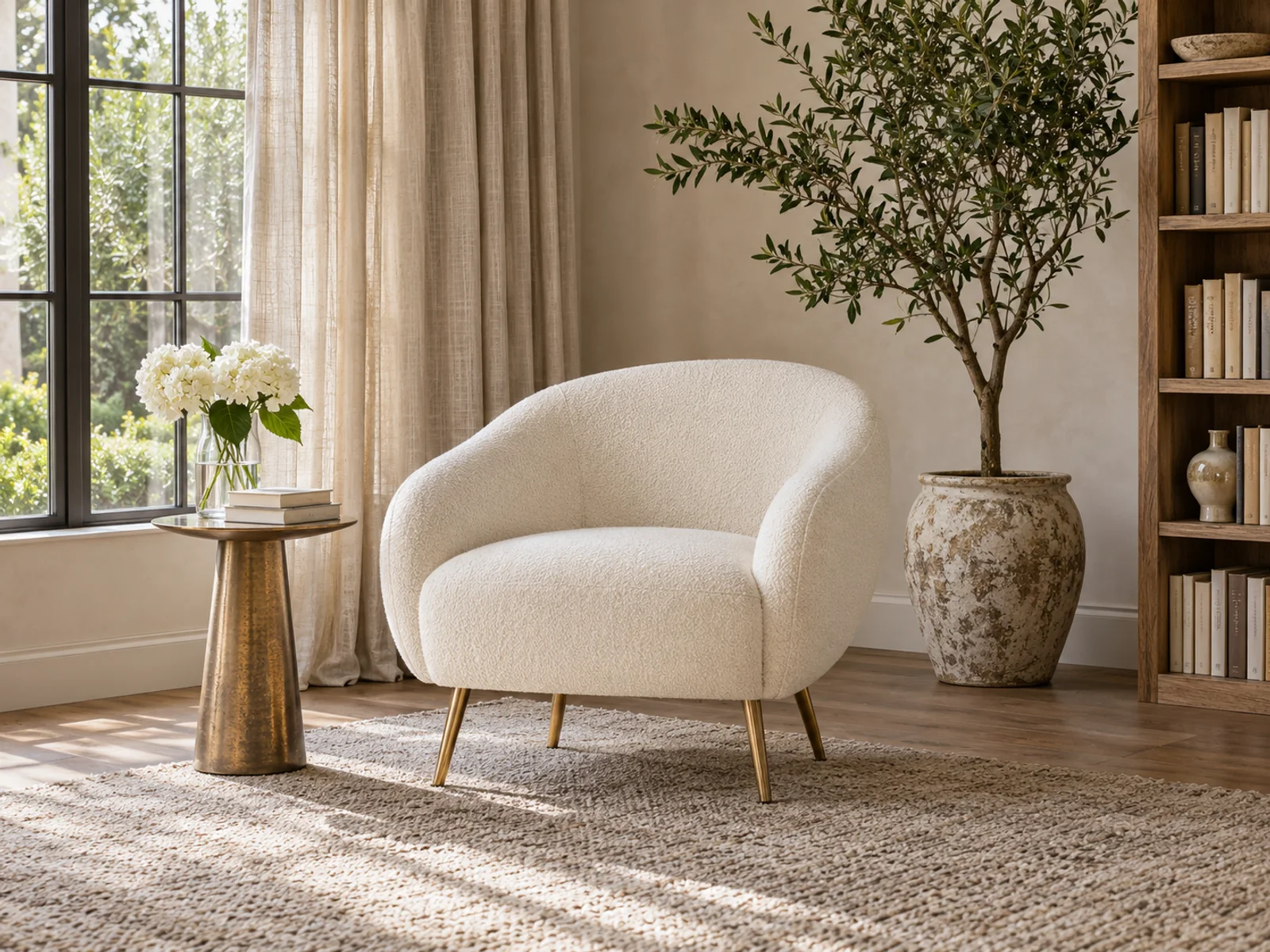
A low upholstered slipper chair is also armless but serves a different purpose. Do not substitute one for dining merely because both designs lack arms.
Check the armless shape at your table
A side chair is commonly an armless dining chair, but the dimensions and back shape vary. Measure its seat height against your table's underside and apron, then sit at a place setting. An armless design can tuck in neatly, yet a wide back can still prevent chairs from fitting side by side. Check whether the chair can be pulled out without hitting a wall or another piece of furniture. Use a full room plan rather than judging fit from a product photograph.
Test comfort for a normal meal
Check the seat depth, back angle and edge pressure after more than a few seconds. A chair that looks elegant at the table may feel hard through a long dinner or desk session. If children use it, assess stability and whether the seat height lets them sit safely with suitable support. Look at leg joints and floor contact. Add appropriate floor protectors without making the chair slide unexpectedly. A dining set needs to work for the people who sit in it every day.
Choose a surface you can maintain
Upholstery, wood, metal and cane have different cleaning and repair needs. Read the maker's care guide and ask whether a cushion or cover can be replaced. A pale fabric near a busy table may require more care than the household wants to give. If you mix side chairs with armchairs at the table ends, compare seat heights so the group still works together. Try one chair at home if the retailer allows returns before committing to a full set.
Check the set as a whole
When buying several chairs, confirm that they all have consistent seat height and finish. A dining table may fit four chairs pushed in but not four people seated with elbows and serving dishes. Mark the pulled-out position for each chair before ordering. If the chairs are stacked for storage, check that the maker permits stacking and states a limit. A side chair should be easy to move without scraping the floor or making the table difficult to use.
Common questions
Does a side chair belong at the side of a room?
No. The term describes an armless chair and is commonly used for dining seating. You can place one elsewhere if its height, support and intended use fit the task.
Can side chairs go at the ends of a table?
Yes. There is no requirement to use armchairs at the ends. Check the table base, legroom and space to pull the chair out, just as you would for the other positions.
Are side chairs smaller than armchairs?
They can be, but the name does not guarantee a smaller footprint. Compare the actual width and depth. A broad upholstered side chair may take more space than a compact chair with arms.
Can I use one as a desk chair?
It may suit occasional use if it fits the desk and your sitting position. For regular computer work, compare the adjustability and support discussed in our task-chair article rather than assuming dining dimensions will work.