Read the test name beside the number
Ask whether the figure comes from Martindale, Wyzenbeek or another stated method. Save the test name with the result. Comparing bare numbers from different methods can create a misleading ranking.
Kvadrat explains the Martindale method on its Base fabric specification and cautions against treating high abrasion results as a product-lifespan indicator. Use the number as one recorded test result, not a countdown for your sofa.
Keep separate properties separate
Abrasion concerns wear from rubbing. It does not by itself tell you whether a spill will leave a mark, whether the surface will form pills or how its color will behave in sunlight. Look for each relevant property individually.
For example, a reader choosing fabric for a bright room should ask about lightfastness and placement instructions even when the abrasion number looks impressive. Someone concerned about surface fuzz needs pilling information too.
Check the exact upholstery option
A sofa range may offer fabrics with different test results. Match the specification to the selected fabric name and color where the supplier distinguishes them. Do not transfer a headline claim from another collection.
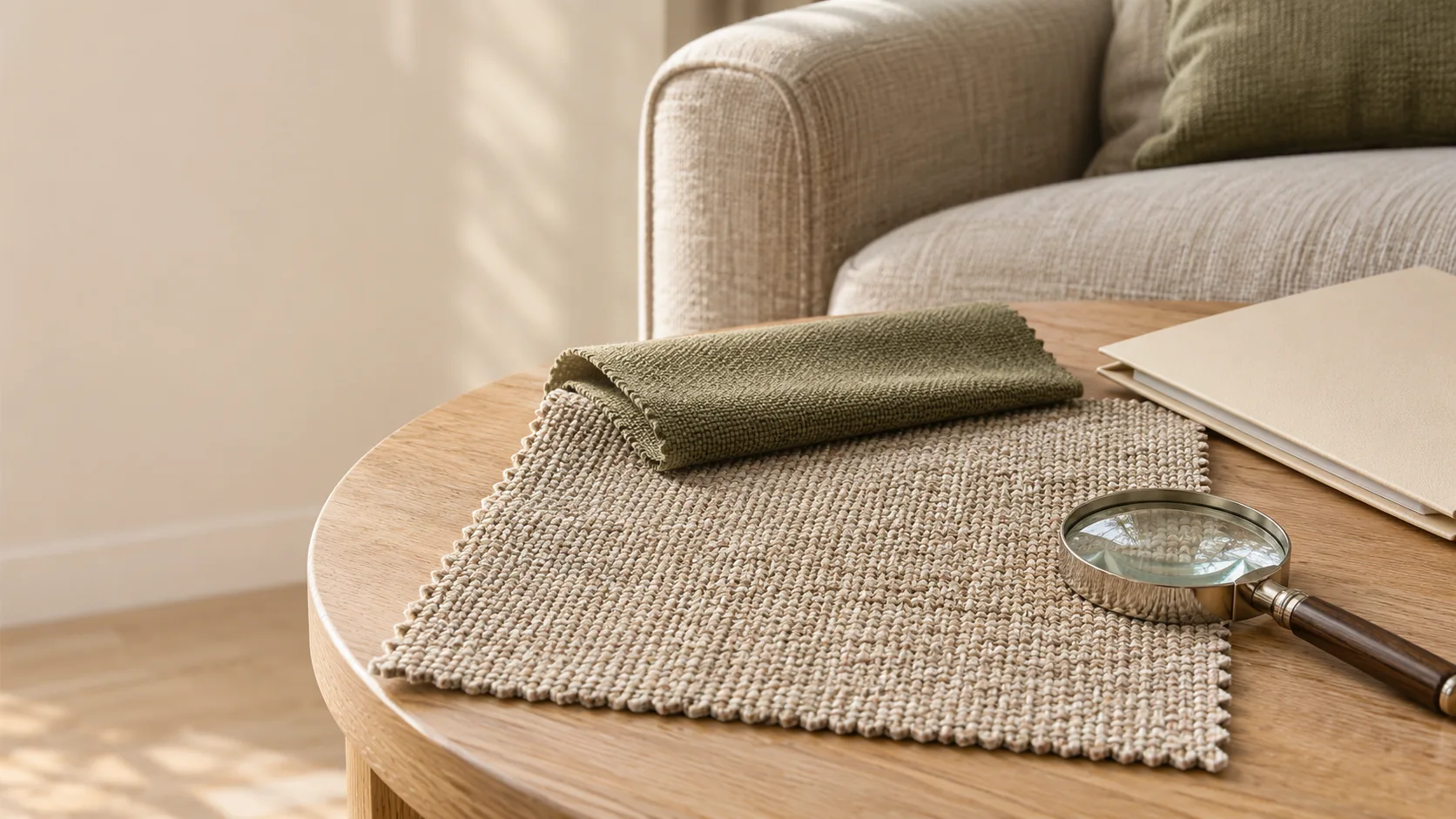
Keep a physical swatch beside the data. Feel the texture and inspect the weave in your own room. Our swatch comparison guide explains how to organize that practical check without treating a tiny sample as a complete sit test.
Ask questions that change the decision
Write down the likely sources of wear in your home and ask the retailer which fabrics it supports for those conditions. Request the care instructions before ordering and compare any relevant exclusions.
If two fabrics both meet your needs, color, feel and maintenance may decide between them. Read our pilling explanation if surface texture is your main concern. A larger number is not a substitute for choosing a fabric you can live with.
Read the test name and conditions
A rub count comes from a laboratory abrasion method, not a direct count of how many times a person can sit. Different tests and endpoints cannot always be compared as one number. Ask for the specific method, result and fabric version. The Association for Contract Textiles' disclaimer explains why abrasion ratings alone do not predict a fabric's useful life. A published Kvadrat fabric specification shows how one supplier presents tests alongside other details.
Keep other wear mechanisms visible
Pilling, seam stress, sunlight fading, stains and cleaning damage are different from abrasion. A high rub number does not guarantee resistance to pet claws or a household cleaner. Compare weave, backing, finish and the sofa's construction. Read the care code and warranty for the exact upholstery option. A sample can show texture and colour under your light, but it cannot reproduce years of use. Choose the complete fabric and maintenance route, not the largest single test figure.
Ask for decision-useful evidence
If a retailer promotes one impressive number, ask what standard it used, whether the result applies to the colour you want and which other properties were assessed. Keep a copy of the specification with the order. For a busy family, clarity about cleaning and replacement covers may matter more than a small difference between two abrasion results. If the maker cannot identify the exact fabric code, treat broad performance claims cautiously.
Common questions
Can I convert rub counts into years?
No reliable personal-use lifespan follows from the number alone. The test uses controlled conditions, while furniture use and care vary. Ask the supplier what the result does and does not support.
Does a high rub count mean stain-proof?
No. Abrasion and staining are different questions. Request the stain-treatment and cleaning information for the exact fabric, and avoid assuming that a performance label makes every spill removable.
Should every color have the same rating?
Check the supplier documentation rather than assuming it. A fabric family may share a result, but finish or specification differences can matter. Record the exact option to which the published data applies.
Does a higher count always mean better?
No. It measures one form of abrasion under a stated method. Compare other wear, cleaning and construction properties too.
Can I compare Martindale and Wyzenbeek directly?
They use different methods and results should not be treated as identical. Ask for the test name and interpretation from the supplier.
Will it predict pet damage?
No. Claws, snagging and chewing are different from controlled abrasion. Assess weave and the household's pet routine separately.
What should I keep from the listing?
Save the exact fabric code, test method, care instructions and warranty claims with the receipt.