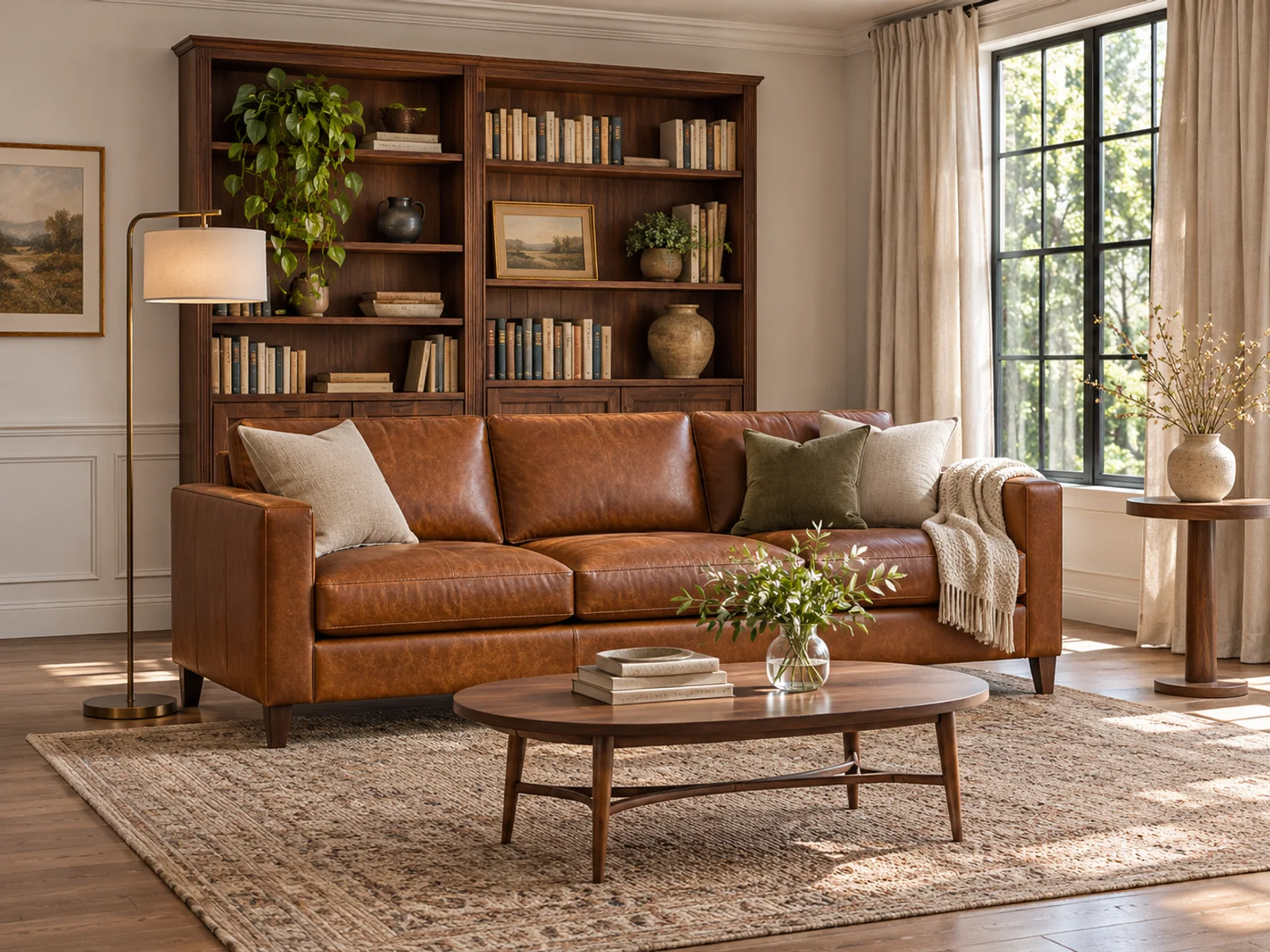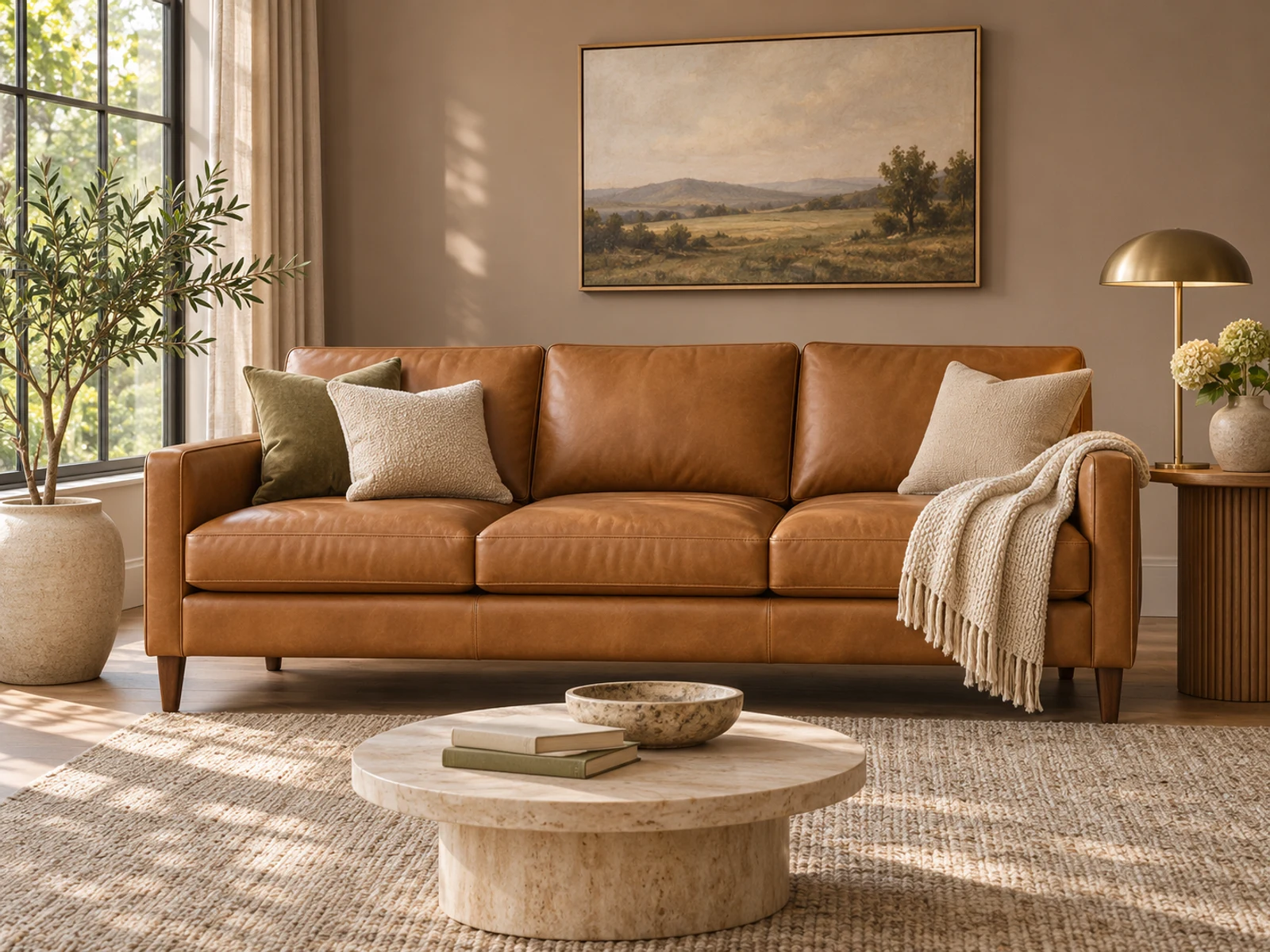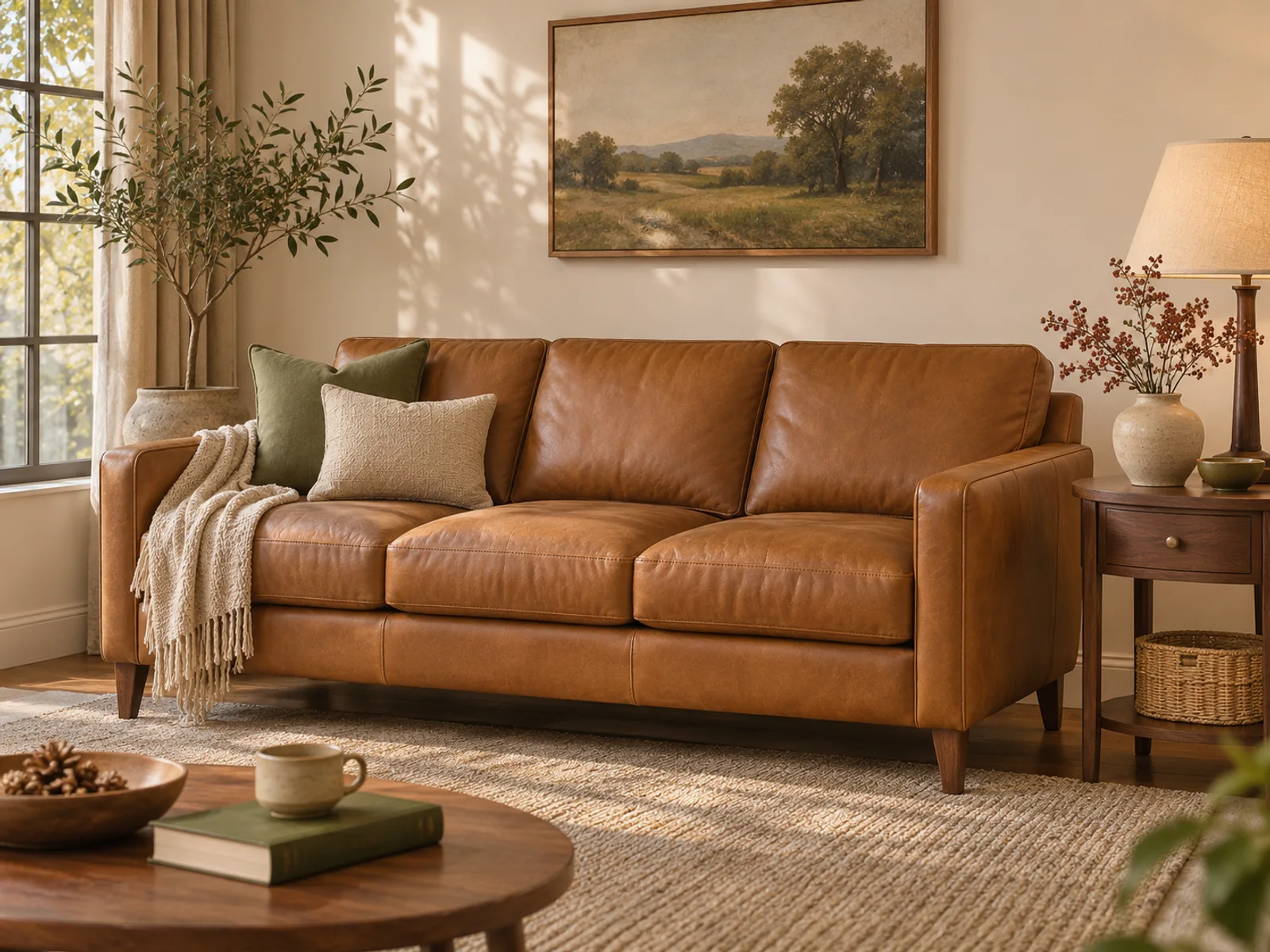
Identify the brown before choosing a neutral
A caramel sofa, a red-brown leather sofa and a cool espresso fabric do not make the same starting palette. Place curtain swatches directly beside the upholstery, then step back to see the walls and floor at the same time.
For different upholstery examples, compare our brown leather couch guide. Use the product images to identify possibilities, then make the color decision with real samples.
Use ivory or oatmeal for light contrast
Ivory is a useful starting point if you want the window to feel lighter than the sofa. Oatmeal adds a little more depth and can sit comfortably with wood furniture and textured rugs. Compare both with the wall paint and trim before deciding.
A bright white curtain is another option if a crisper contrast suits the room. Do not assume it will look softer simply because it is light. The weave, lining and amount of fabric also affect how the window reads.
Keep a warm palette with taupe
Try taupe or a soft warm beige when you want a quieter transition between sofa and curtains. Choose enough difference that the pairing looks intentional rather than like an unsuccessful attempt to match the brown exactly.
If the sofa and floor are already dark, test a lighter fabric first. A full-length dark curtain occupies a large area when closed, so evaluate the evening arrangement as carefully as the open daytime view.
Bring in green or blue selectively
Muted olive can extend an earthy palette, while dusty blue offers a cooler contrast. Choose one as a direction to sample rather than adding both automatically. Repeat a small amount in art or a cushion if that helps connect the window to the seat.
Keep existing patterns in view. A plain curtain can leave a patterned rug in charge, while a restrained stripe can add structure when the rest of the room is mostly solid.
Test fabric at the window
Benjamin Moore advises assessing neutral colors in changing light. Apply the same sampling discipline to the room as a whole, while remembering that fabric also filters and reflects light differently from a painted surface.
Hold the curtain sample vertically at the window and beside the sofa. Ask for a larger sample if possible, and check the proposed lining and opacity. Finalize the fabric only after considering privacy, daylight and how the curtains look closed.
Identify the brown in the room
Brown can lean red, yellow, grey or nearly black. Compare a curtain sample against the actual sofa fabric, wall and floor in daylight. Benjamin Moore's neutral palette shows how many undertones hide under a simple colour name, but a digital image is only a starting point. An ivory curtain may brighten a dark sofa; warm taupe can create a quieter look; muted green or blue can add contrast. Test real fabric at the window before ordering full panels.
Include opacity and lighting
Choose the curtain for privacy, glare control and insulation as well as colour. A sheer ivory panel and a lined ivory panel can look very different when backlit. Hold the sample at the window in the morning and evening. Check whether it makes the brown sofa appear warmer or duller. If the room receives strong sun, ask the fabric seller about fading and lining options. A good colour combination should still serve the window's practical job.
Measure the finished installation
Decide where the rod will sit and how far panels should extend beyond the window so they can open without blocking much light. Measure length from the installed rod, not from a guessed ceiling point. Check whether curtains will clear radiators, furniture and pets. A floor-length panel can soften a room with a substantial sofa, but it should not drag into a walking path. Confirm the return policy for made-to-measure fabric before placing the order.
Keep the palette easy to change
Use cushions, a throw or artwork to connect the curtain colour to the seating area. You do not need an exact match to the sofa. If the room may be repainted, a versatile curtain can outlast a more precise colour choice. Photograph two sample options beside the sofa from the main viewing position and choose the one that works under both daylight and lamps. Then check cleaning instructions so the chosen fabric remains practical.
Common questions
Do brown curtains match a brown sofa?
They can, especially when the shades differ deliberately. Compare both against the floor and walls so the room does not become darker than intended. A lighter brown or a different texture can help separate the surfaces.
Is white or cream better?
White can create a sharper contrast, while cream may feel warmer. Neither is automatically better. Compare samples with the sofa undertone and wall paint, including the trim immediately beside the window.
Can I use patterned curtains?
Yes. Start with a pattern whose main background works with the sofa and walls. Look at the repeat at a realistic scale and keep other large patterns in view before deciding how much visual activity you want.
Should I choose color before blackout lining?
Decide the practical requirements early. Lining and opacity can change how a fabric appears at the window. Ask to see the chosen fabric with the intended backing before making the final color decision.