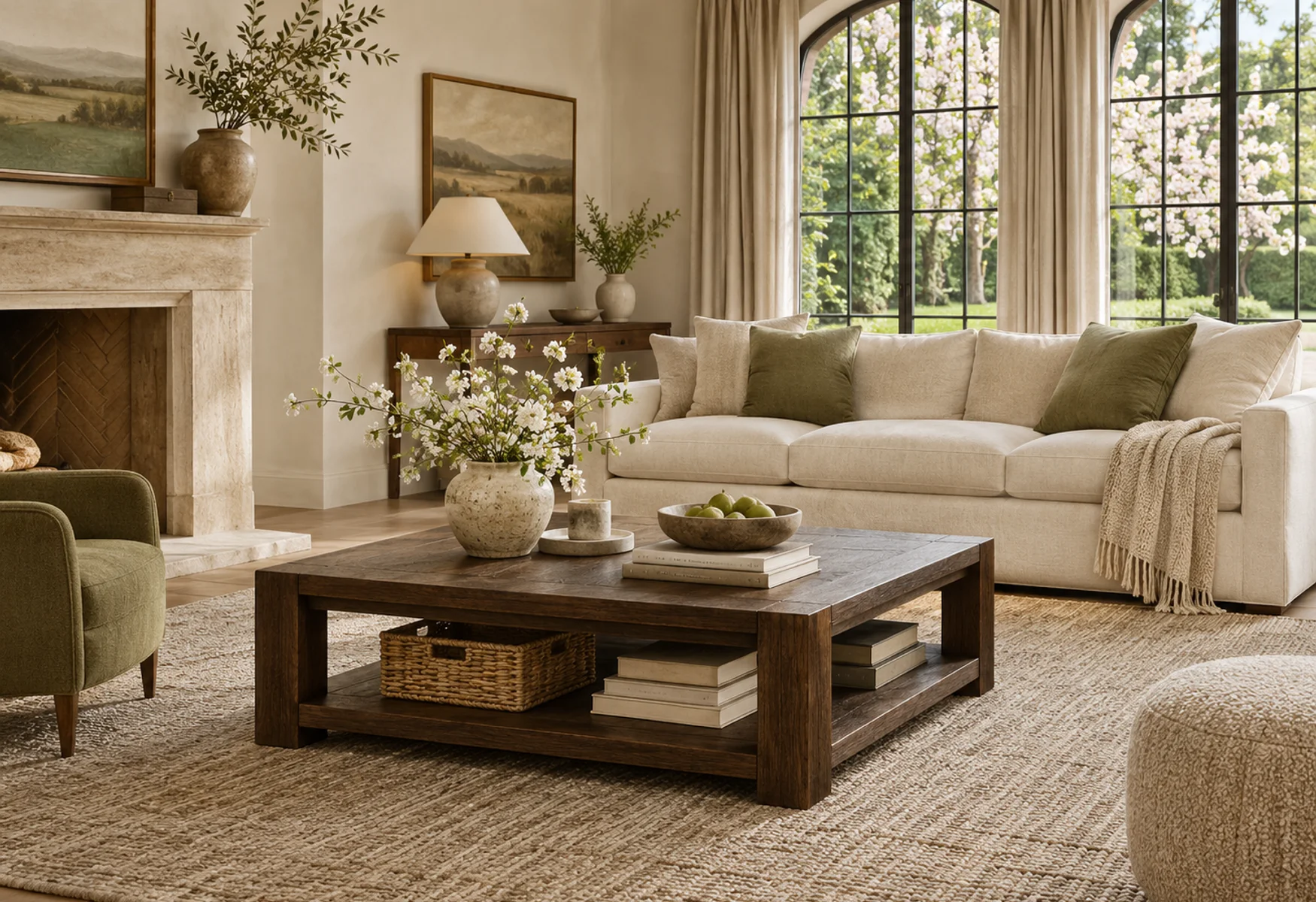
Draw the sectional before the table
Mark the full seating outline, including the chaise and any projecting arms. Then mark the space needed to enter and leave the seating area. The remaining gap is the starting point for the table.
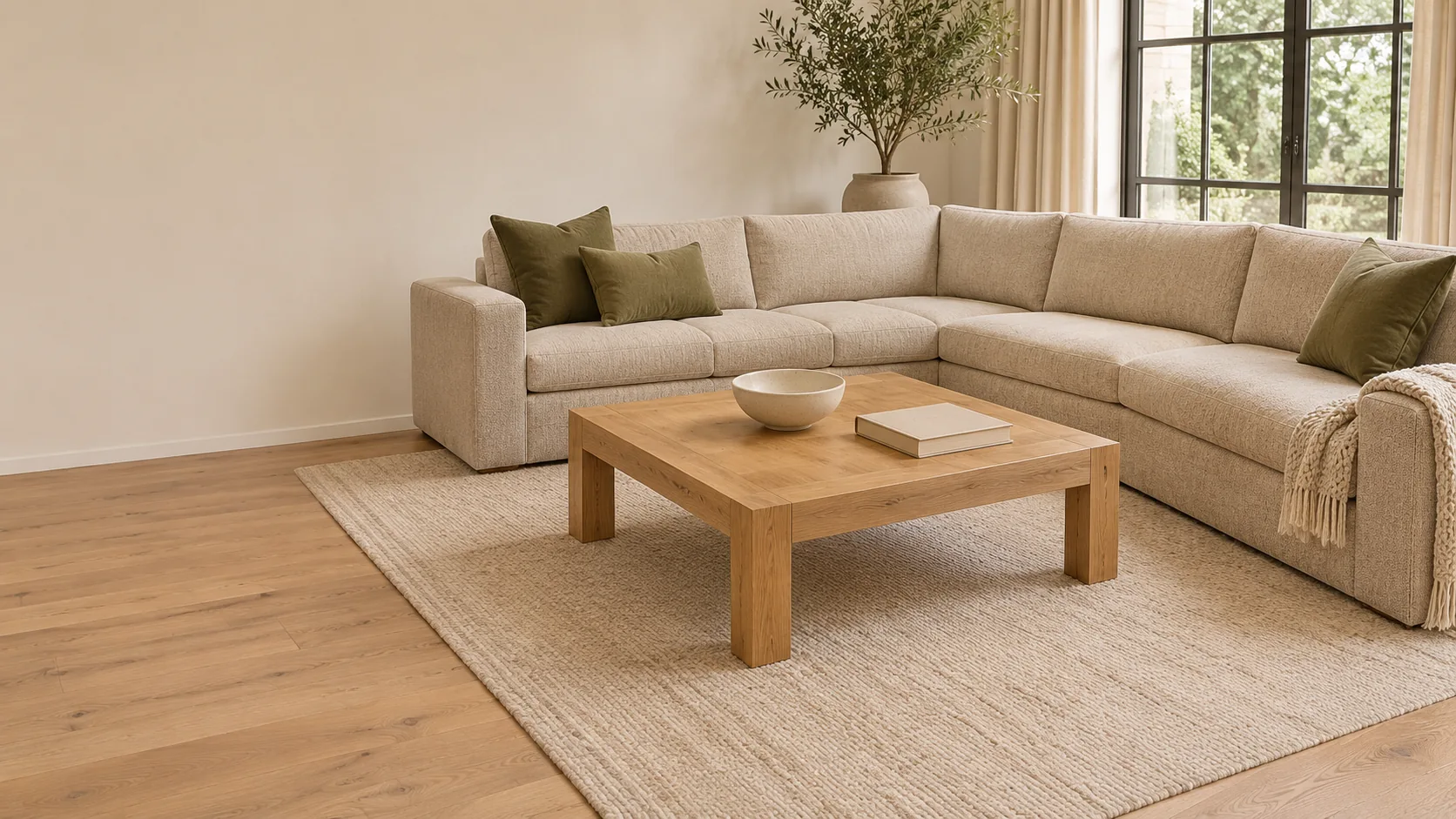
An L-shaped sectional with unequal sides creates a different gap from a nearly square corner group. A centered table may be close to one seat and far from another. Decide which seats need reliable access rather than centering it only for appearance.
Compare the usable surfaces
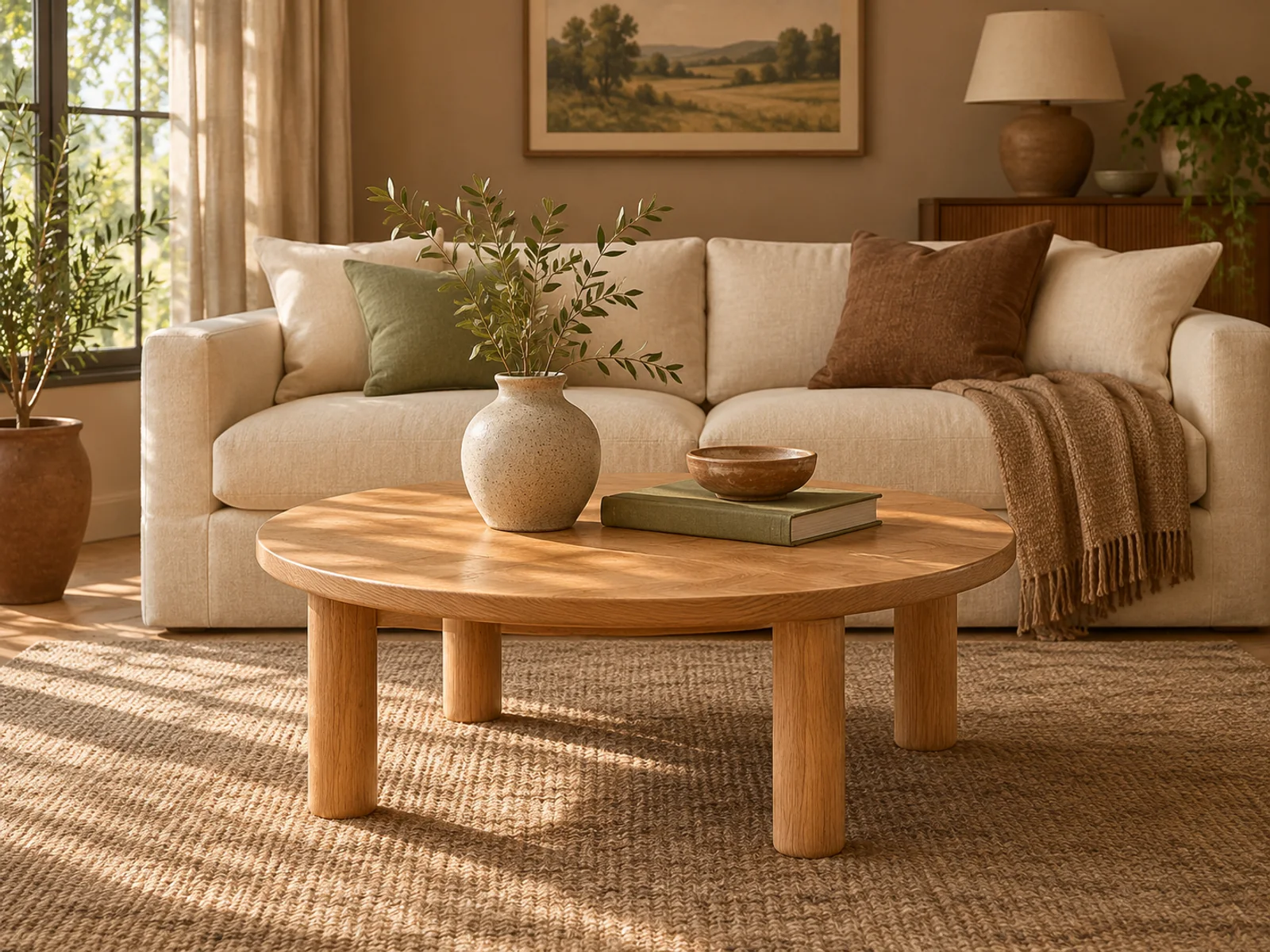
A square top can place more surface near the corners of a broad seating group. A round top removes projecting tabletop corners but may bring its center farther from some seats. Neither shape automatically suits every sectional.
Crate & Barrel's coffee table guide relates square tables to L-shaped seating and round tables to movement around them. Use those as layouts to test, then compare the exact widths and bases of your shortlist.
Test the route beside the chaise
Use paper or floor-safe tape to mark each candidate. Sit on the chaise, stand up and walk to the room exit. Try the same movement while another person occupies the adjacent seat.
A pedestal, lower shelf or outward-facing feet can change the available space beneath the top. Include them in the trial. Our coffee table sizing guide also covers height, which can matter as much as shape when reaching from a deep cushion.
Allow a different answer if both feel awkward
An oval, a narrower rectangle or separate side tables may serve the room better. Do not force a square or circle into an arrangement simply because a showroom used one.
Compare square tables and round tables with the measurements visible. If either option only works by narrowing the main route, reduce the size or reconsider the central table altogether.
Compare reach from every seat
Draw the sectional's sofa, corner and chaise positions, then place a round and square table outline in the middle. Sit in each place and check whether a drink is reachable without leaning over another person. A square top offers corners and more defined surface; a round one can soften the route beside the chaise. Neither shape fixes a table that is too large or far from the seats. Crate & Barrel's table guide is a visual starting point; use your room's actual dimensions.
Walk around the fully used sectional
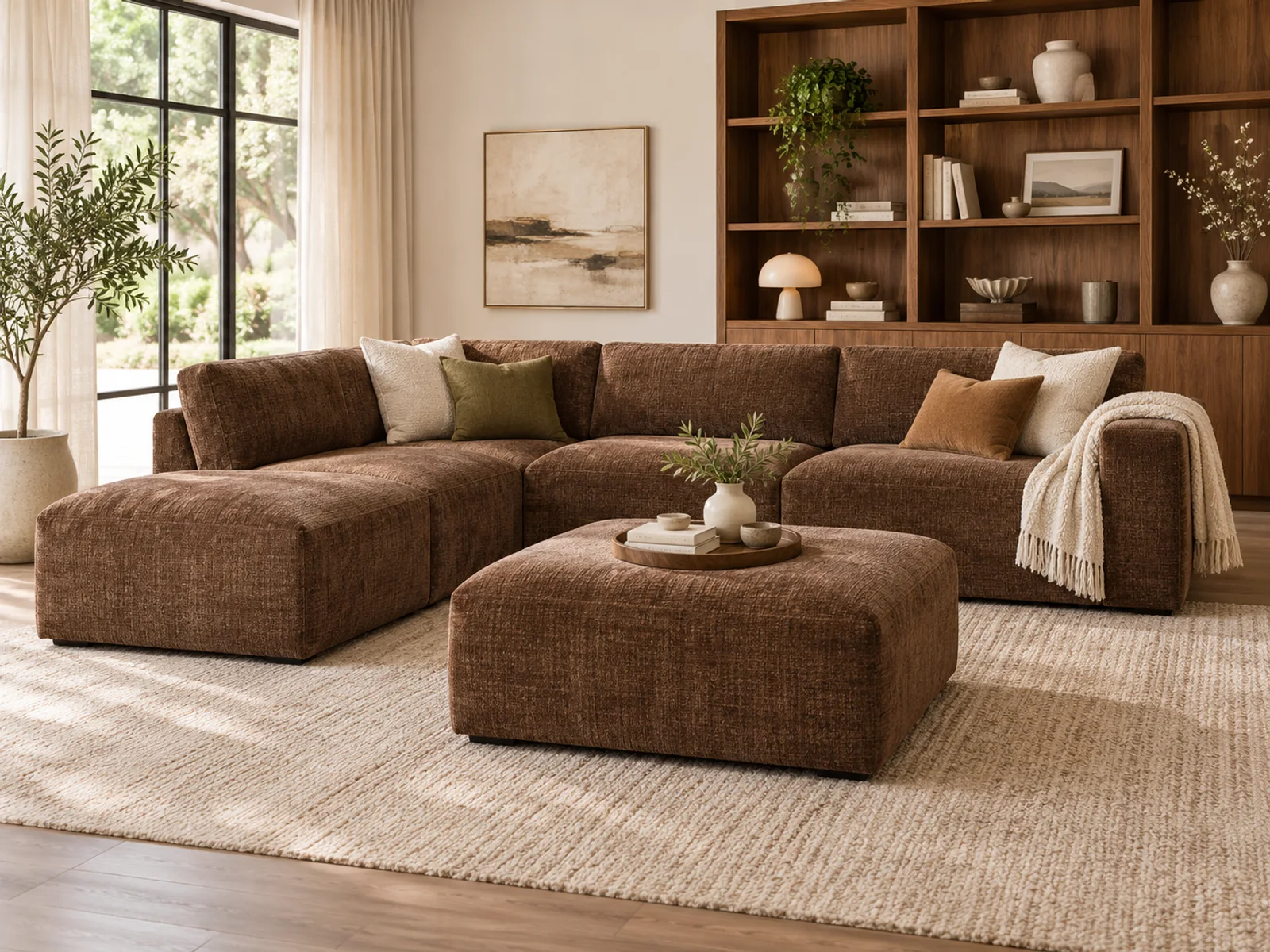
Check the passage when someone reclines, stretches along the chaise or pulls out a sleeper section. A round table can ease a tight corner, but its base may still occupy the same space as a square table. Mark the legs as well as the top. If one large table leaves a poor route, try two smaller movable pieces or an ottoman with a tray. Choose a stable material and height for the household's daily objects, not just the top shape in a catalogue photo.
Keep the table proportionate
A large sectional can make a small table look lost, but filling the central opening with one oversized piece can make seating hard to enter. Tape two candidate diameters or widths and sit at each section. Check the base position because a pedestal can leave different foot space from four legs. Note whether a tray, remote and books fit without crowding. A table that serves daily use and keeps the route clear is better than one chosen only to match the sofa's outline.
Common questions
Should the table sit in the center of the sectional?
Center it around use rather than geometry alone. Check reach from the seats used most often and preserve access beside the chaise. A slightly offset position may work better than an exact visual center.
Is a round table safer for children?
A round top removes corners but does not remove risks from height, material, instability or impact. Assess the complete product and household needs rather than treating the shape as a safety guarantee.
Can two smaller tables replace one large one?
Possibly. Check stability and the routes around each piece in both their grouped and separated positions. Extra flexibility can also mean more items to move and more bases on the floor.
Is a round table automatically safer for children?
It may avoid sharp corners, but stability, glass, height and loose objects also matter. Check the complete model and the household's normal use.
Should the table be centred on the sofa?
Not if that leaves some seats unable to reach it or blocks a route. Place it for the whole seating group and test from each position.
Can two small tables look coherent?
Yes. Repeat a material or finish and give each a clear place. Check that they do not drift into the walking path when moved.
What if the chaise is very long?
A single central table may be far from its end. Test a side table near the chaise and keep the main route open.