Choose the task before the silhouette
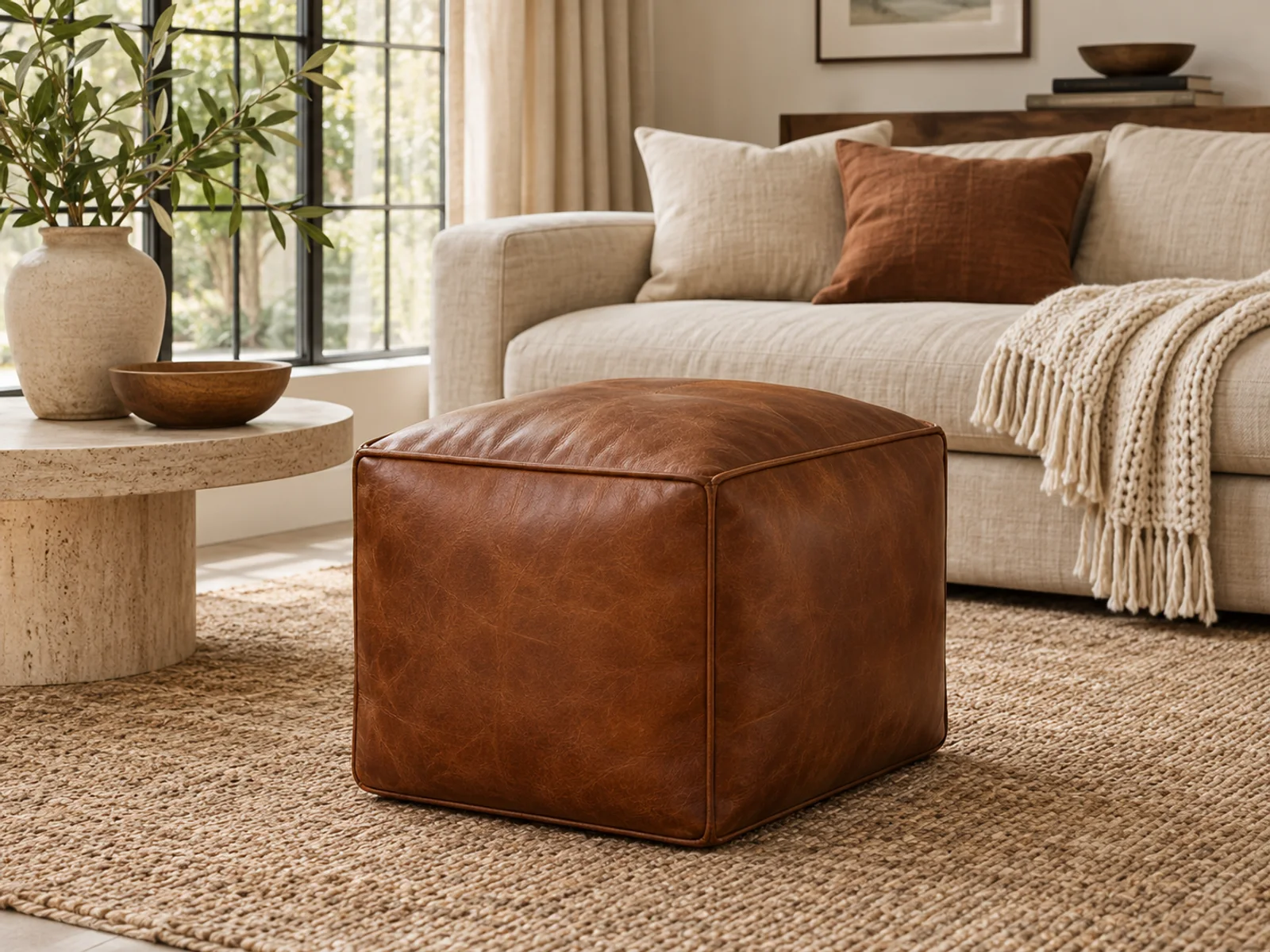
List what normally happens in the middle of the room. Drinks, puzzles and board games favor a firm surface. Putting your feet up may favor an ottoman designed for that use. A tray can change the surface but does not make every upholstered piece stable enough for hot drinks.
Crate & Barrel's coffee table guide suggests considering an ottoman when resting your feet is a priority. Treat that as a starting distinction and check the construction of the exact piece.
Check what the ottoman is rated to do
Some ottomans are intended for sitting as well as supporting feet. Others have different limits. Read the stated use and load information rather than counting every ottoman as a guest seat.
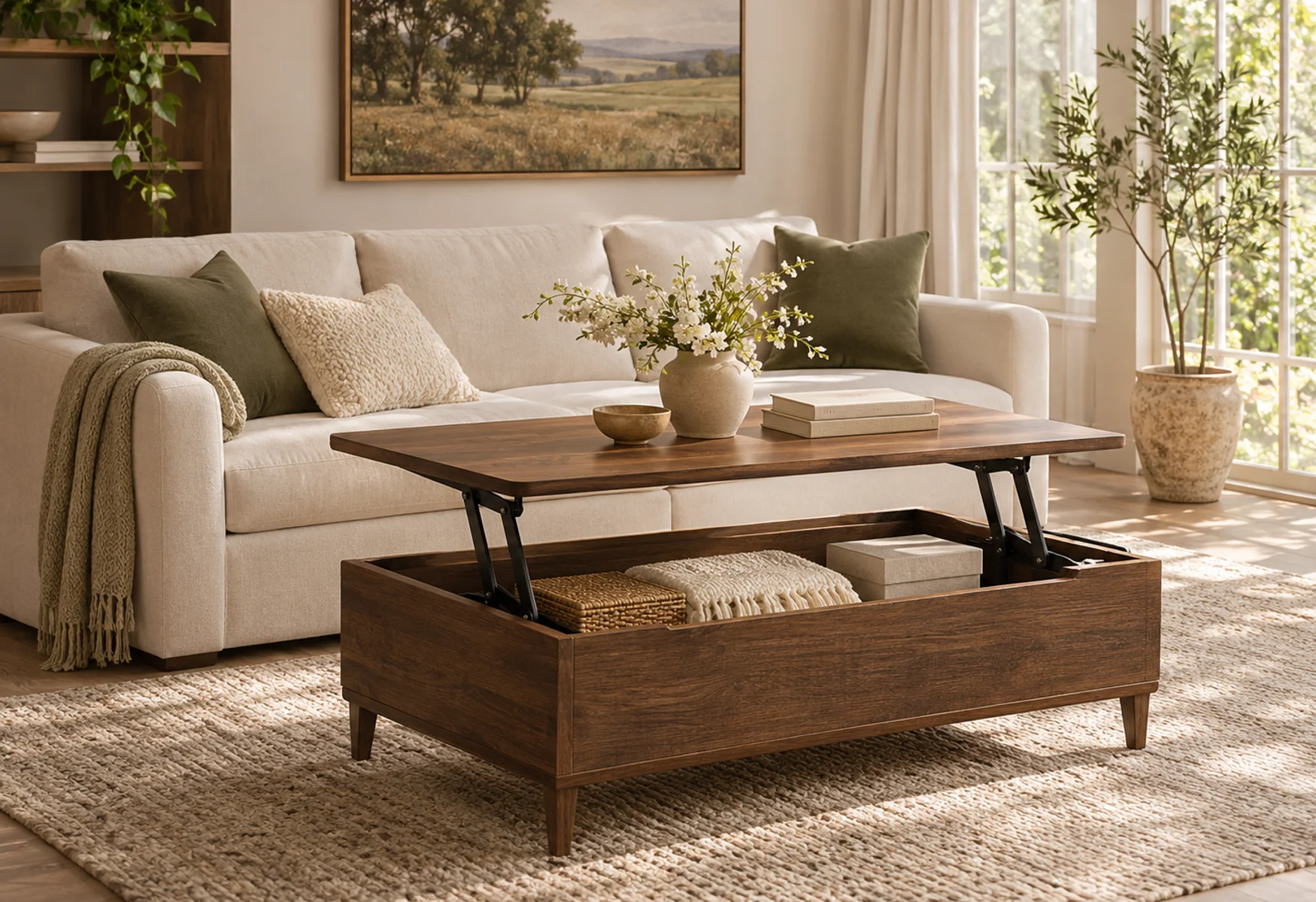
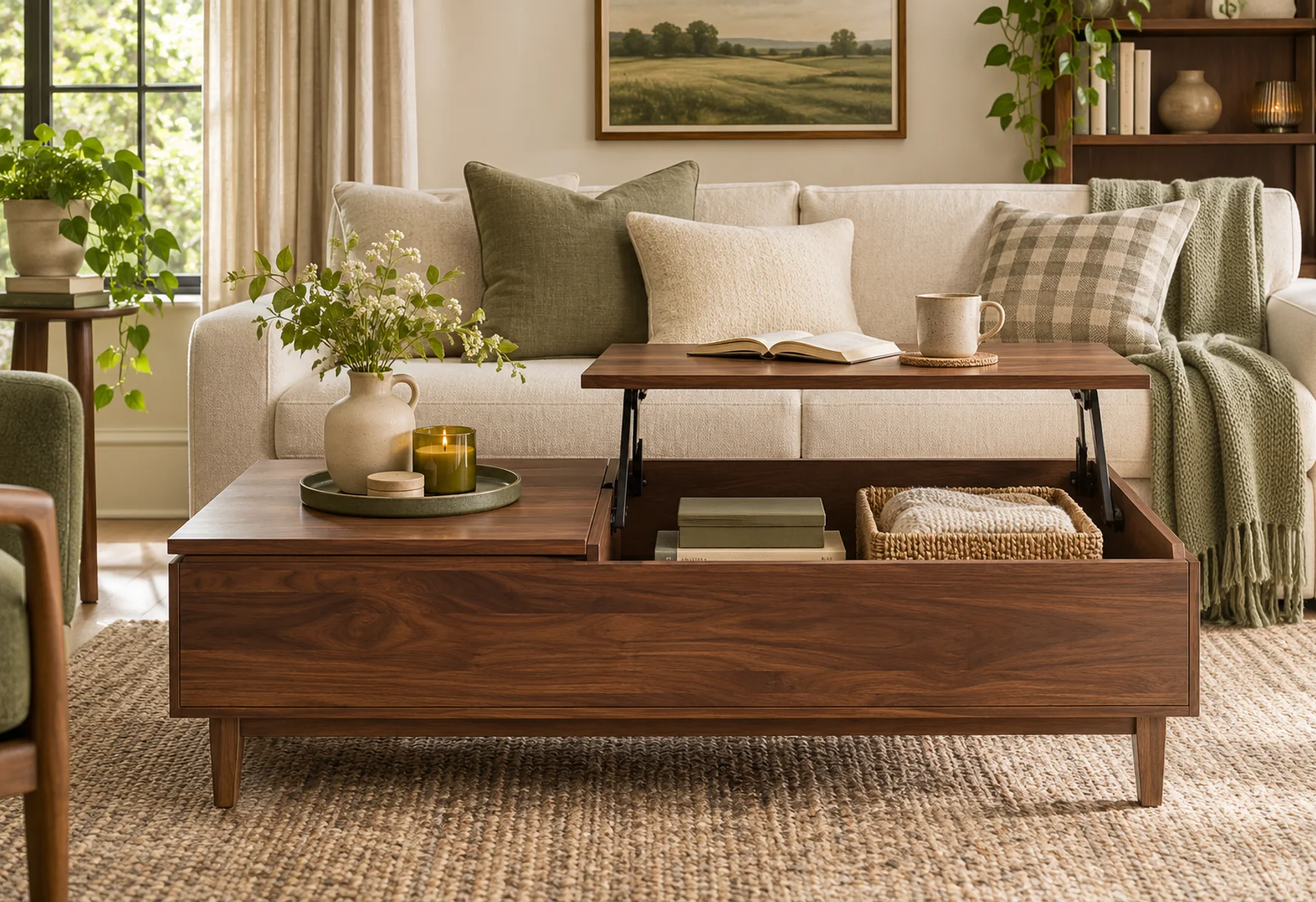
If storage is included, inspect the opening mechanism and the instructions. Ask whether the lid stays supported and whether the contents must stay below a particular level. Do not assume a decorative storage piece is suitable for children to operate.
Test the height with the sofa
Compare the top height with your seat position. A footrest that is too high or far away may not suit how you sit. A coffee table at an awkward height can make reaching a drink inconvenient.
Use our table sizing guide to check the central footprint. An upholstered surface still occupies floor space, and rounded corners do not remove the need for a clear route.
Think through spills and everyday care
A hard surface may have finish-specific restrictions around heat and moisture. Upholstery has its own care instructions and may need more attention after a spill. Compare those requirements with the way the room is used.
If you plan to use a tray, check that it rests securely on the top without rocking or sliding. Keep it within the usable surface. A soft domed cushion is a different base from a firm, flat ottoman top.
Consider two smaller functions
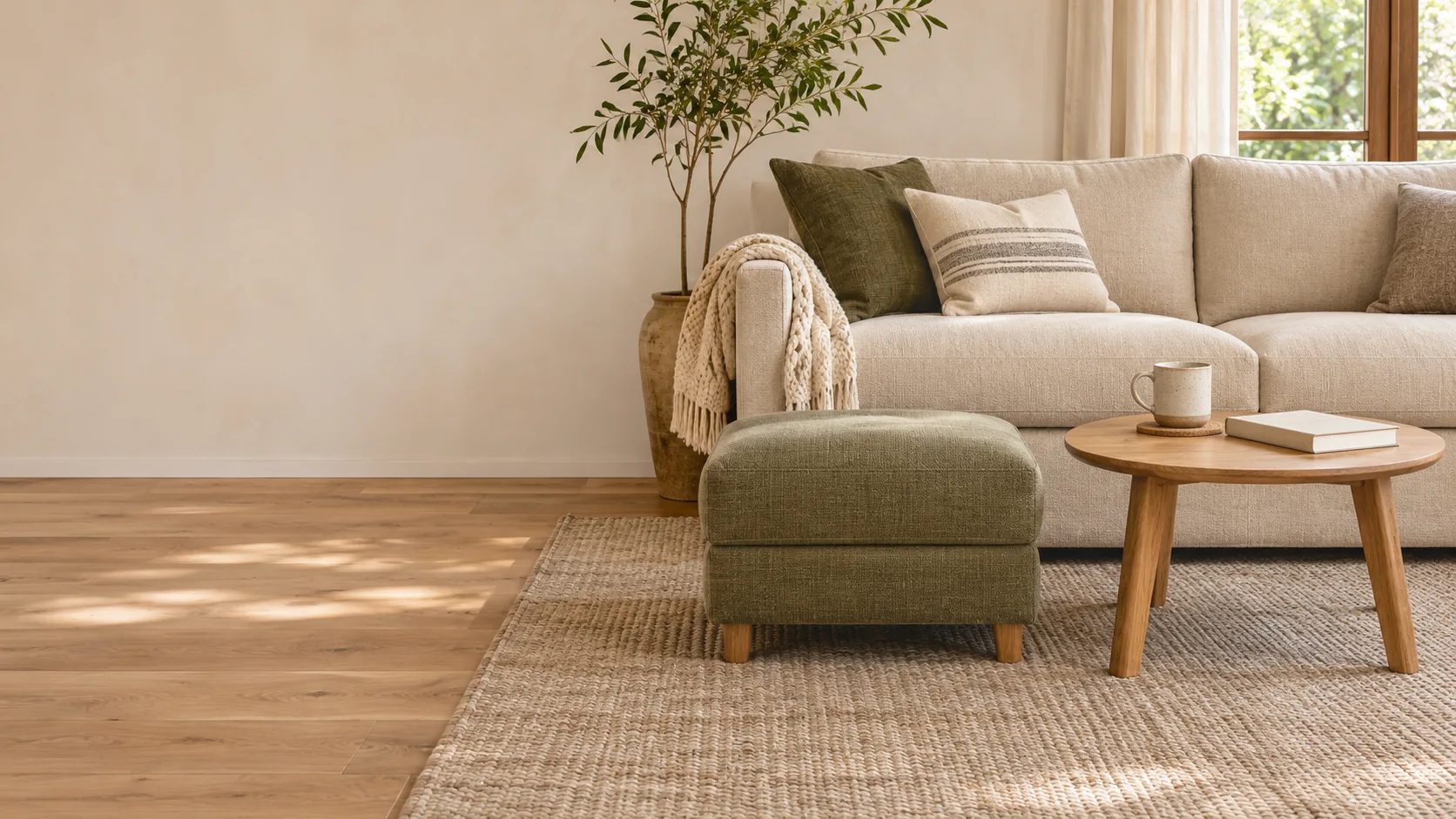
You may not need one piece to do everything. A footrest beside the main seat and a reachable side table can serve a small room better than a large central object. The tradeoff is having two items to place and move.
Compare ottoman poufs with storage coffee tables using the actual intended use, dimensions and care information. Avoid buying extra storage that makes the room harder to walk through.
Decide what must be supported
List the objects normally placed in front of the sofa: drinks, books, meals, feet or a laptop. A rigid coffee table provides a stable surface, while an ottoman can offer softer edges and extra seating if the maker rates it for that use. A tray can help with cups but must sit securely and should not carry a hot drink where it can tip. Measure the height from the sofa seat and test reach from each position. The choice is about the household's routine, not a universal winner.
If a sleeper sofa opens into the same area, note where either piece would move. Weight and ease of lifting matter as much as footprint.
Compare care and safety
Ottoman upholstery may collect spills and pet hair; a wood or glass table may need coasters and edge protection. Read the maker's cleaning and weight instructions. Storage inside an ottoman can be useful, but test the lid and hinges with the objects you will keep there. Check whether small children can reach hot drinks on a tray. For a tight room, two smaller movable surfaces might serve better than either large piece. Mark each option on the floor for a week before ordering.
Common questions
Can a coffee table be used as a footrest?
Do not assume the top or frame is intended for that load or contact. Follow the manufacturer's stated use. An ottoman designed for feet is the more direct category to investigate.
Does an ottoman count as an extra seat?
Only when the manufacturer permits seating and supplies an appropriate load limit. A decorative footrest or pouf may not have the same support as a purpose-made seat.
Can I put hot drinks on an ottoman tray?
Only if the complete setup is stable and the tray and upholstery are suitable. Test with empty items first. If the top is soft, sloped or easily displaced, use a firm table instead.
Can I use a tray on any ottoman?
Only if the tray sits flat and stable on the cushion. Check the ottoman's firmness and whether people or pets may knock it. Keep hot liquids away from an unstable setup.
Which is better for a small room?
Compare the full footprint and how each moves when someone stands or a sleeper opens. A compact table may preserve more usable surface; an ottoman may provide an extra seat. Test the actual room.
Can an ottoman hold a laptop?
Only when its surface, tray and maker's load guidance make the setup stable. Check ventilation around the laptop and whether the screen height is comfortable. A desk may be better for long work.
What if the coffee table has sharp edges?
Compare rounded designs or edge protection appropriate to the household. An ottoman may soften the centre of the room, but it also needs cleaning and can become unstable with a tray.