Give the chair a specific job
Decide whether the chair is for reading, conversation or occasional guests. That choice affects the position and the features worth comparing. A chair facing a window has different needs from one that must turn toward both a sofa and television.
Our explanation of accent chairs covers the category. Use the intended activity to narrow the shape before choosing upholstery.
Compare the seats at the same time
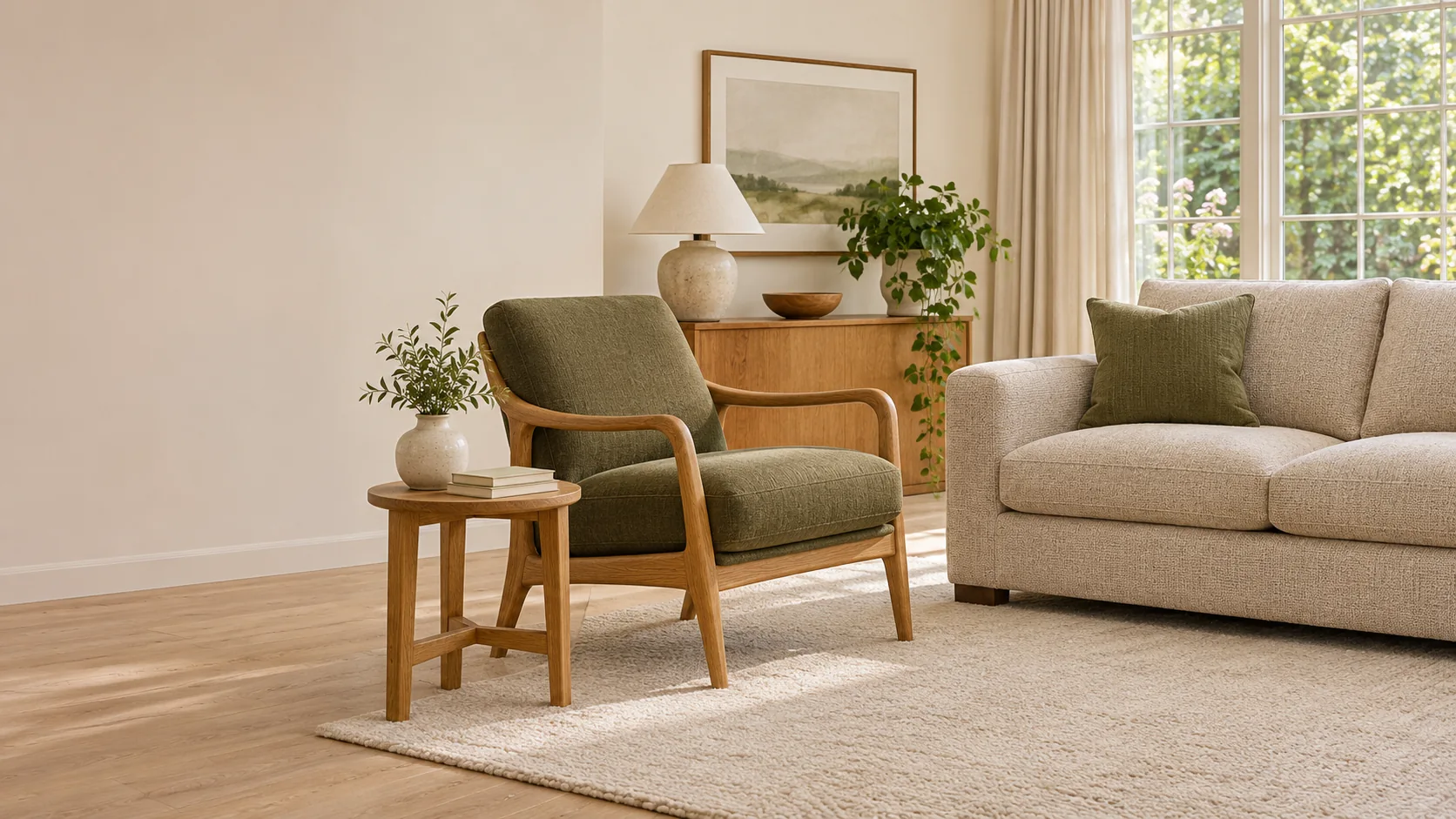
Measure the sofa seat height and approximate visual bulk. A very low chair can feel detached from a tall, upright sofa during conversation. That may be acceptable for a separate reading corner, but it is worth trying before purchase.
Check the chair width including arms, not only the seat. In a tight room, a broad chair can occupy as much useful space as a compact loveseat. Mark any swivel or reclining movement on the floor plan.
Choose one strong connection
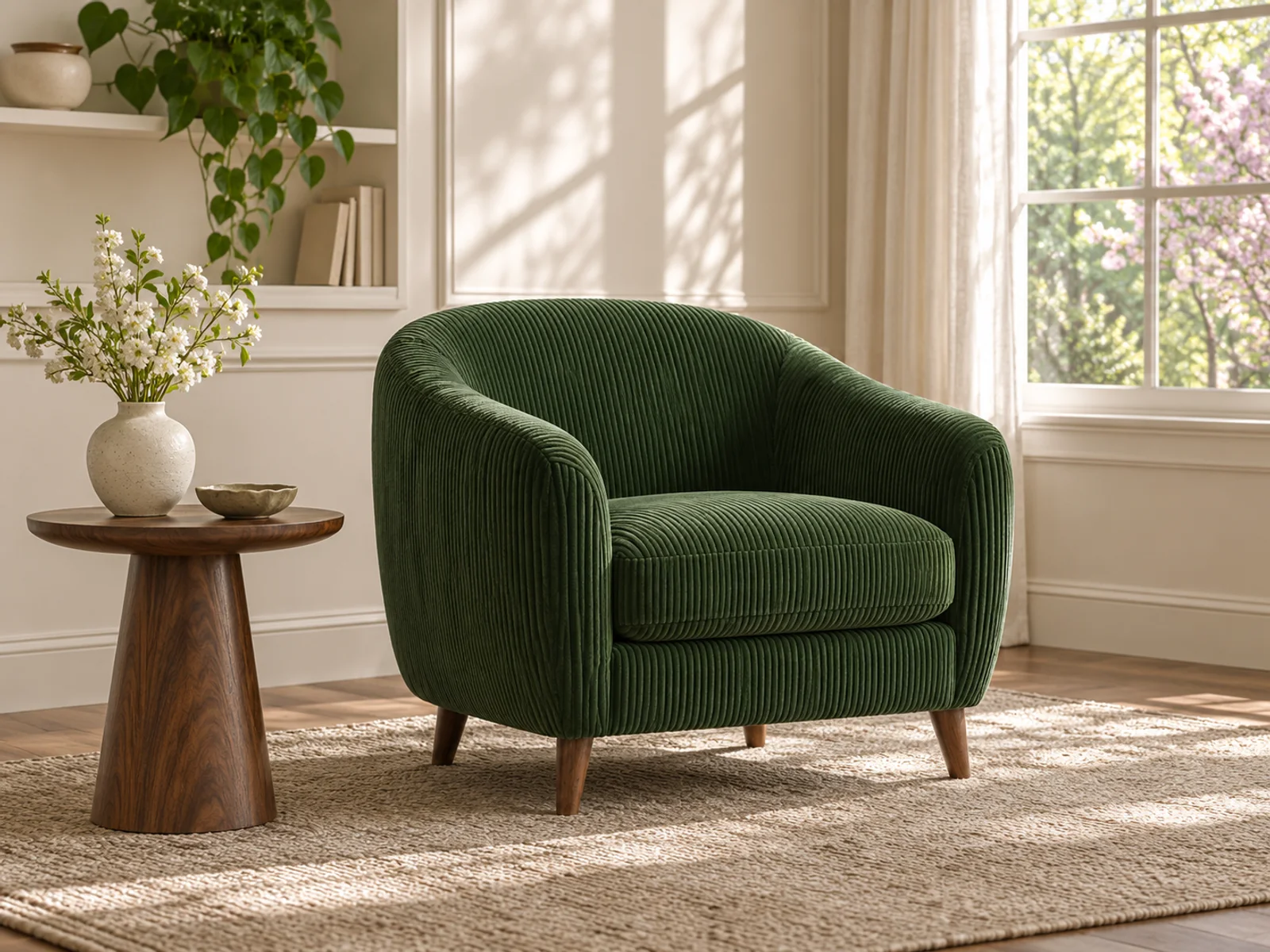
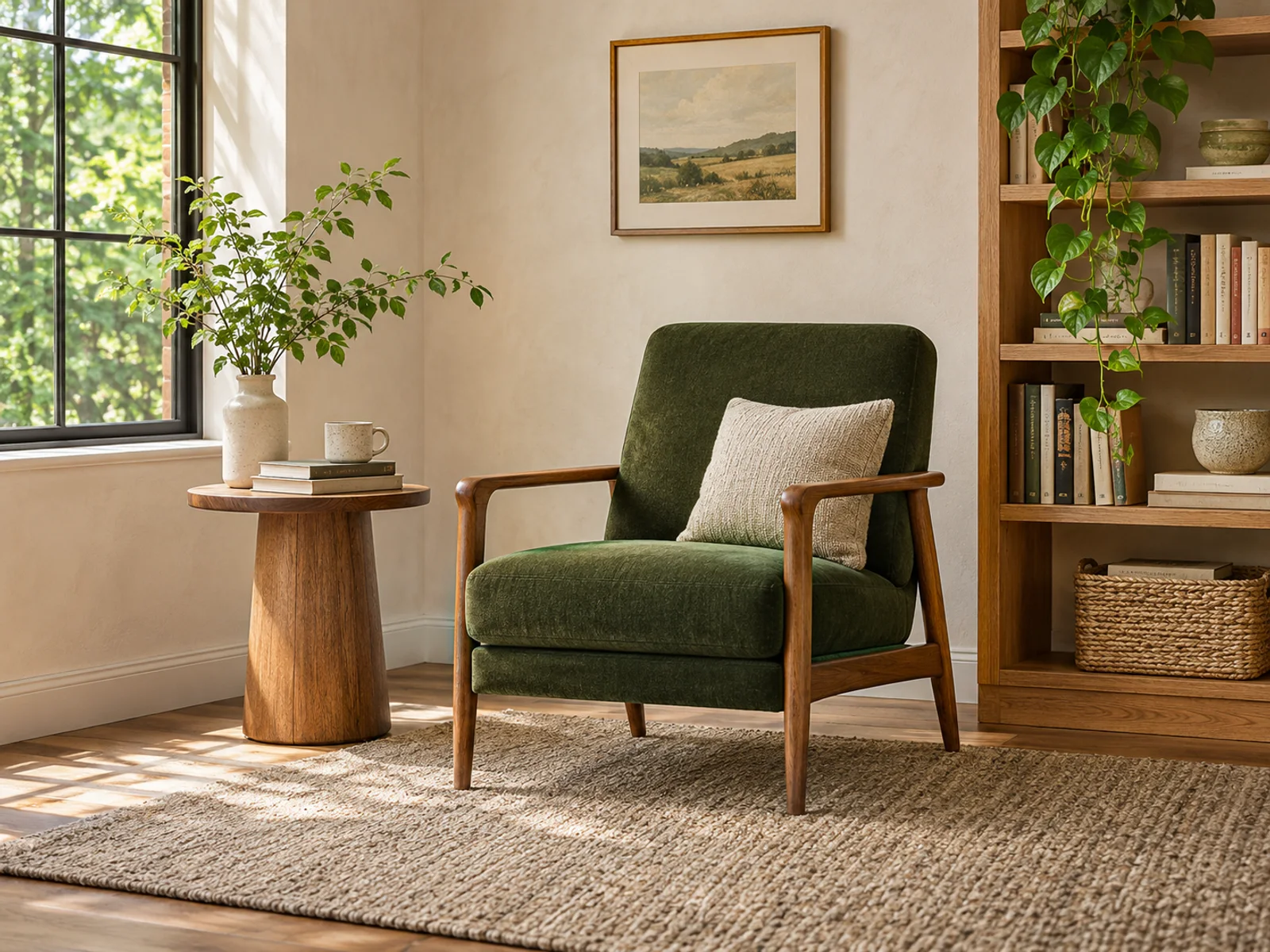
A green chair might relate to a color in the rug, while its wood legs connect with the table. Alternatively, a chair can share the sofa's curved shape in a different material. Pick one or two connections rather than requiring every finish to match.
These are styling options, not rules about which colors belong together. Lay the actual samples beside the sofa and view them from across the room. A small swatch held in your hand can look different from a large upholstered shape.
Compare the material as well as the color
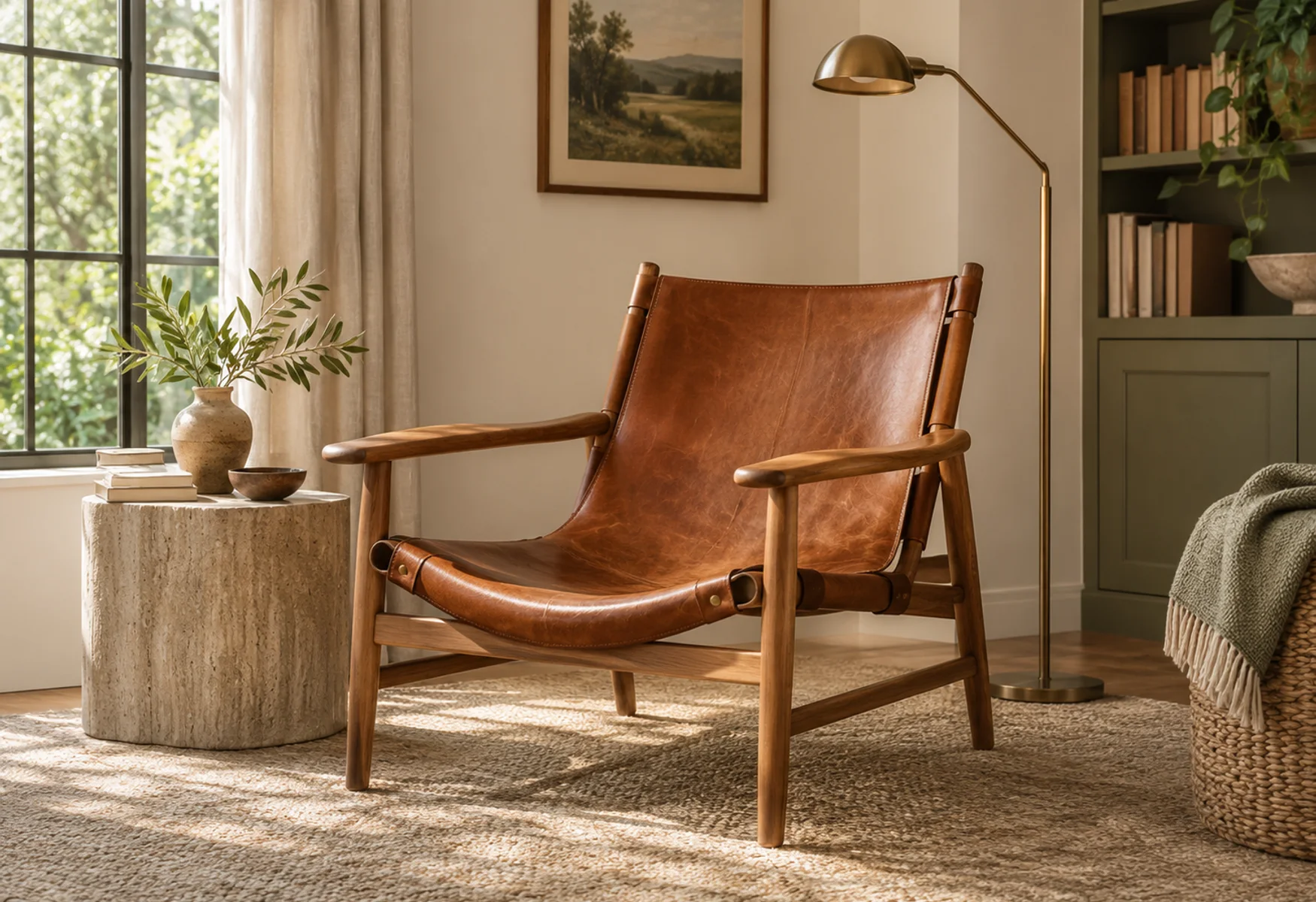
A smooth leather chair and a textured fabric sofa can create a deliberate contrast. Check the care requirements for each rather than assuming similar colors mean similar upkeep.
Room & Board's materials guide separates fabric, leather and wood information and offers swatch resources. Use comparable material details from the manufacturer of your own shortlist, especially when names such as performance fabric are used.
Place a useful surface within reach
Once the chair position works, add a side table or shared surface that the seated person can reach. Check that the table does not trap the chair against another piece or block its movement.
Browse green chairs or leather accent chairs after deciding the size and material direction. A visually interesting chair still needs to be a usable seat.
Match the seating experience first
Check the chair's seat height, depth and back support beside the sofa. An accent chair can look striking but feel disconnected if its user sits much lower than everyone else. Decide whether it is for reading, conversation or occasional overflow, then place a table and light within reach. Mark the chair's full footprint, including a swivel circle if it turns. Leave a path behind it for people to enter and stand up without brushing past the sofa arm.
If the chair is used daily, sit in it for a realistic period before letting colour decide. Comfort is harder to change than a cushion.
Choose a link without copying
A chair can contrast with the sofa in colour while sharing a wood tone, fabric texture or leg shape. Bring a large swatch into the room and compare it with the rug and walls in daylight and lamplight. If the sofa is patterned, a quieter chair may let it remain the focus; if the sofa is plain, the chair can carry more character. Check the upholstery care code and whether both pieces suit the household's pets and spills. A beautiful pairing still needs practical maintenance.
Common questions
Can the chair be a brighter color than the sofa?
Yes. A smaller piece can carry a stronger color while the sofa stays quiet. Test a physical sample with the existing rug and curtains so the contrast looks deliberate in the room.
Should chair and sofa legs match?
They can, but they do not have to. A repeated wood tone or metal finish elsewhere may connect the pieces. Compare the whole group rather than judging the legs in isolation.
Can I use a dining chair as an accent chair?
It may serve occasional seating if its size and intended use suit the room. It will not necessarily offer the depth, arm support or lounging position of a living-room chair.
Should both pieces be the same height?
They need not match exactly, but seats that are very different can make conversation feel uneven. Test both from a seated position and check how people stand up.
Can a swivel chair work beside a sofa?
Yes, if its full turning circle clears the sofa, table and lamp. Mark the sweep on the floor and check that cords or rugs do not catch the base.
Must the fabrics have the same care code?
No, but both should suit the household's use. Keep the care instructions for each piece and consider whether one seat will receive more pets or spills.
Where should the chair face?
Angle it toward the activity it serves while keeping a route to enter and stand up. A chair can face conversation most days and turn toward a view if the base and space allow.