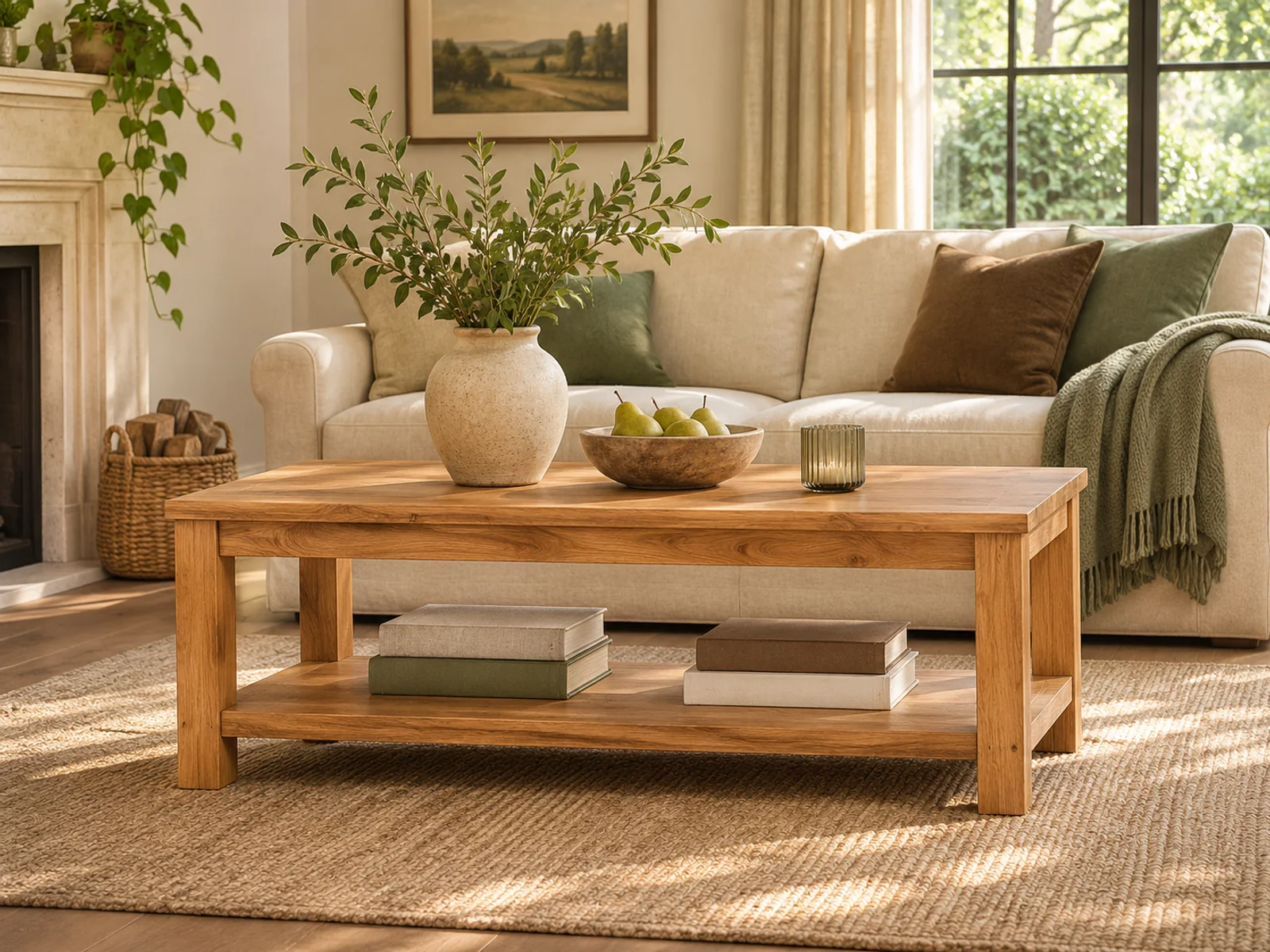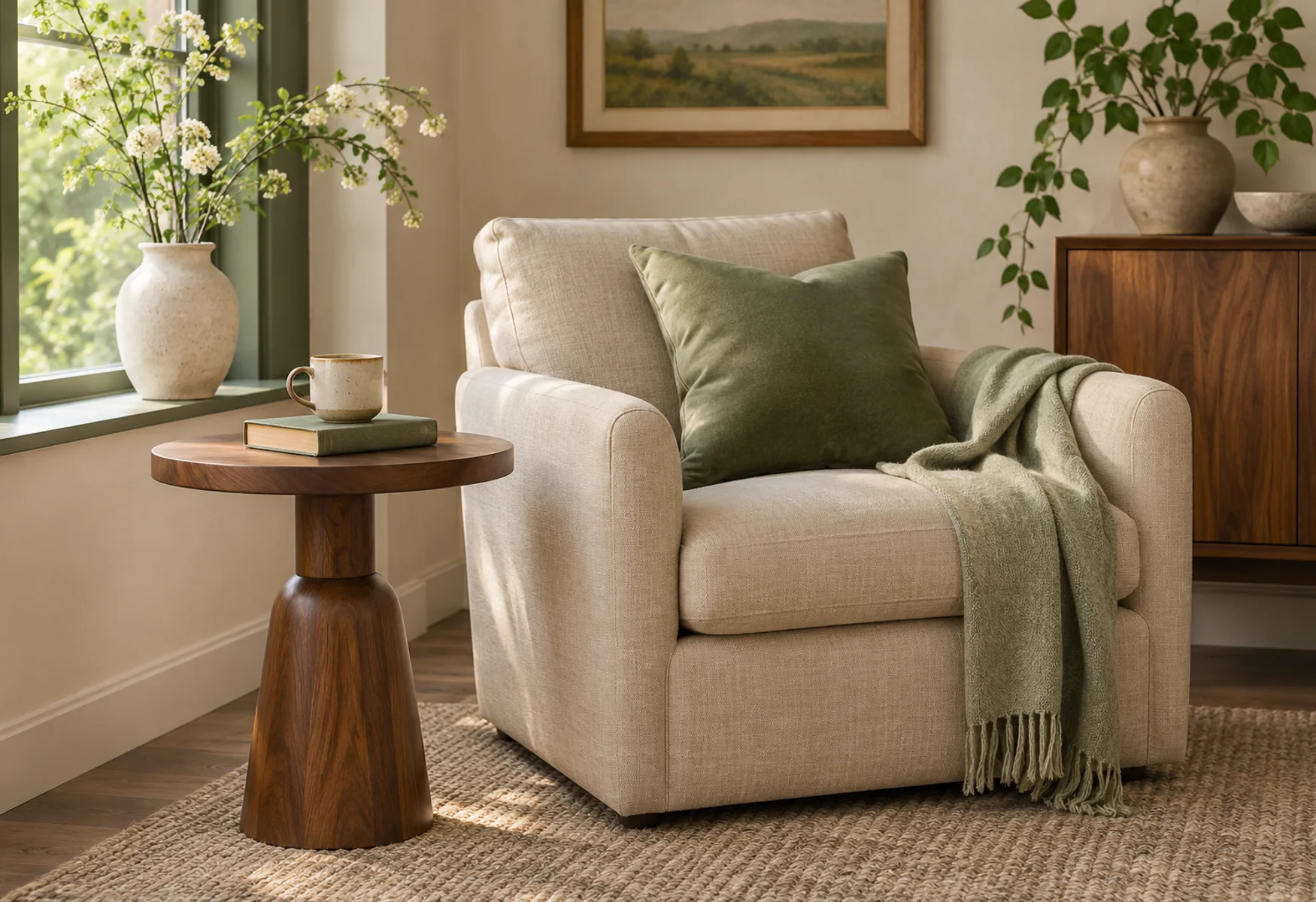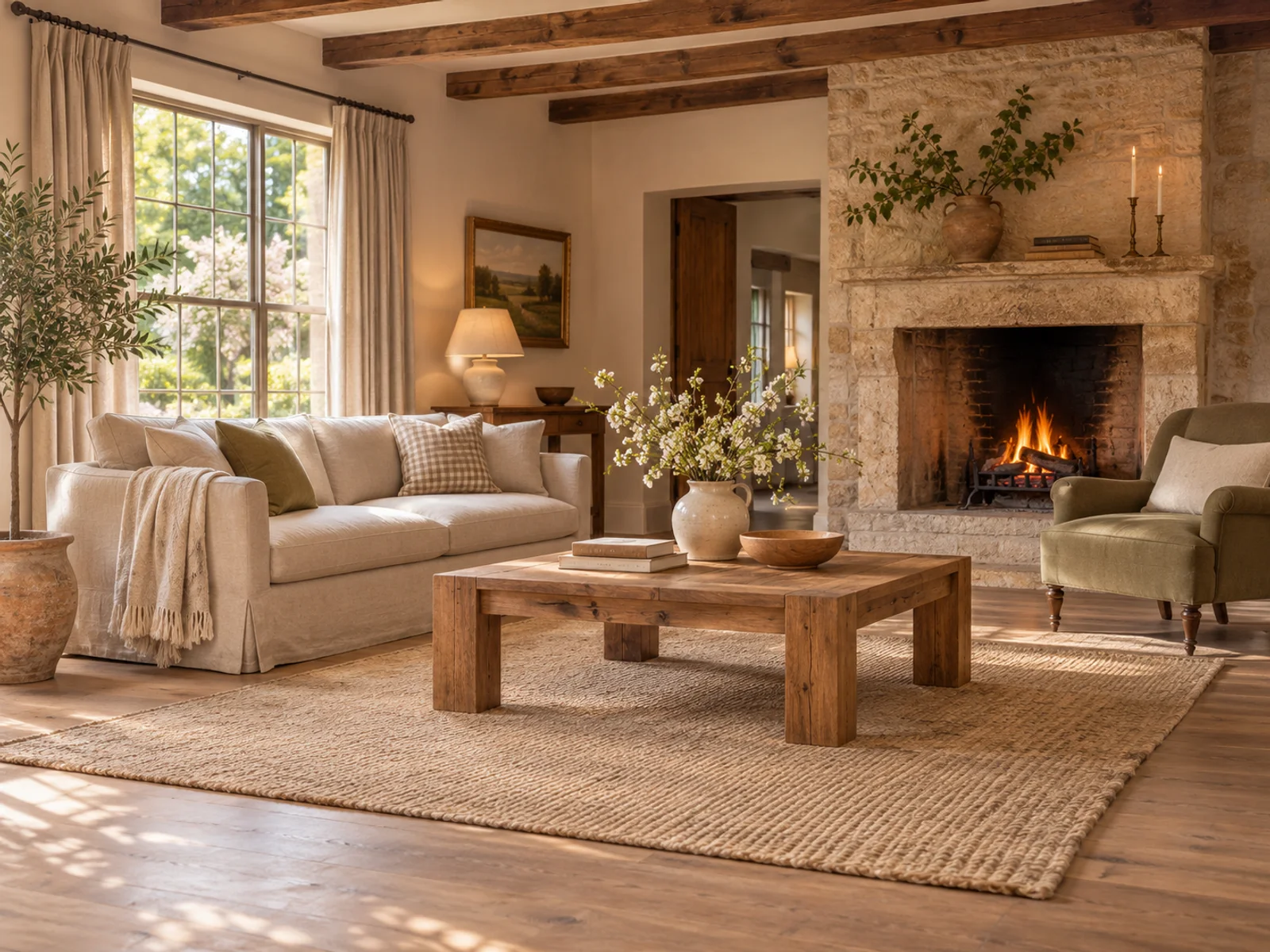
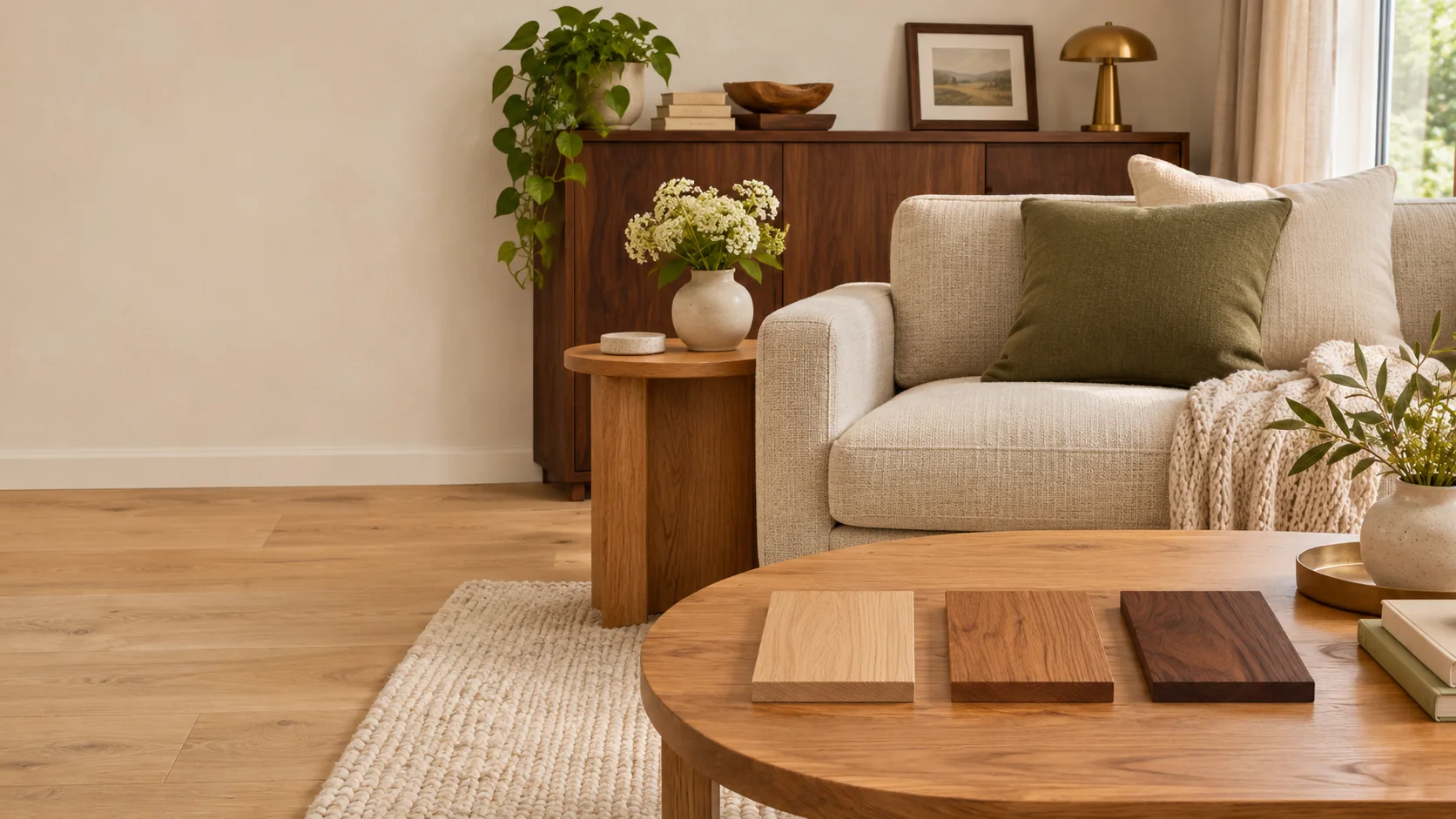
Use the floor as an existing reference
If the floor is staying, include it in every sample comparison. Note whether it looks light or dark and which warm or cool tones become visible beside another wood. The label oak or walnut does not tell you the final color after finishing.
Room & Board's wood-mixing advice presents several ways to combine different woods rather than requiring one matching finish. Use that flexibility to work with the pieces you already own.
Try contrast and related tones separately
Lay a lighter sample and a darker sample beside the floor and your largest existing furniture. Decide whether a clear contrast looks more intentional than an almost match. Then compare a related tone if you prefer a quieter change.
These are styling trials, not rules that one undertone is always correct. View the samples in daylight and evening light. A table photograph against a white studio background cannot show how its finish will relate to your floor.
Repeat selectively
One small connection can help a new finish feel deliberate. A table and a picture frame might share a tone, while the larger cabinet remains different. Avoid adding unnecessary furniture solely to repeat a finish.
Also compare the sheen and grain. Two brown pieces can look very different if one has a glossy, strongly patterned surface and the other is matte and plain. A rug or upholstered seat can provide a visual break between adjacent wood surfaces.
Keep construction separate from color
A finish sample does not tell you whether the piece is solid wood, veneer or a printed surface. Check the material description and care instructions before ordering. Our wood construction comparison explains those differences.
Compare wood coffee tables and wood side tables using a sample set in the room. Keep the shortlist small enough that you can identify why each finish belongs, rather than trying to coordinate every possible shade.
Identify the fixed wood first
Start with the floor, built-in shelving and any large table that will remain. Note whether each looks warm, cool or neutral under the room's actual light. Bring a wood sample or clear product photo beside the fixed pieces. Similar but slightly mismatched tones can look accidental, while a clear contrast often feels deliberate. Grain and finish sheen matter too. A dark walnut-like table and pale oak-like chair can work when another material, such as a rug, gives them a shared setting.
Repeat a tone without matching everything
Choose one dominant wood and echo it in a smaller piece or frame. A second tone can add depth when it appears more than once or has a clear role. Avoid buying several near-identical stains from different sellers based on online photographs. Compare real samples in daylight and evening light. If a piece is painted or veneered, read its actual material and care details; a name such as oak finish may describe colour rather than solid timber.
Use other materials as a bridge
A rug, upholstery, metal or ceramic surface can make different woods feel related without forcing a stain match. Keep the number of large visual patterns manageable. Check that the furniture dimensions and use work before solving colour: a table too wide for the sofa will still be wrong in the perfect shade. Photograph the room from the doorway and seating positions after placing samples. That view helps decide whether the contrast looks balanced rather than random.
Common questions
Do all oak pieces have the same color?
No. Species variation, finish, stain and lighting affect appearance. Compare the actual product samples rather than assuming that two pieces labeled oak will visually match.
Can dark and light wood work together?
Yes. A deliberate contrast can be easier to judge than an almost match. Compare the samples with the floor and upholstery, then decide whether you want the darker piece to draw attention.
Should metal finishes match the wood?
Metal does not need to imitate the wood color. Compare its sheen and tone with the whole group. A repeated metal finish can provide another connection between pieces with different wood surfaces.
Can I combine light and dark wood?
Yes. Repeat one tone in a small detail and use the room's floor and light as context. A clear contrast often looks more intentional than a near match.
Should all legs match?
No. Scale and shape can connect pieces even when wood tones differ. Compare the room as a whole rather than each leg alone.
Does a rug help?
It can separate wood furniture from a wood floor and provide a shared colour base. Choose its size and cleaning needs first.
What if I cannot get a sample?
Check a generous return policy and view the piece in the room before discarding packaging. Online colour rendering may be inaccurate.