Treat scratching as a normal need
Cats Protection explains that scratching is normal behavior. A sofa can become an appealing surface because it is sturdy and conveniently placed. The useful goal is to offer a better outlet in the place your cat wants to use.
Observe the pattern before buying accessories. Is the cat stretching vertically on an arm, working horizontally on a seat edge or returning to a particular corner? That helps you choose the alternative.
Put the alternative where it matters
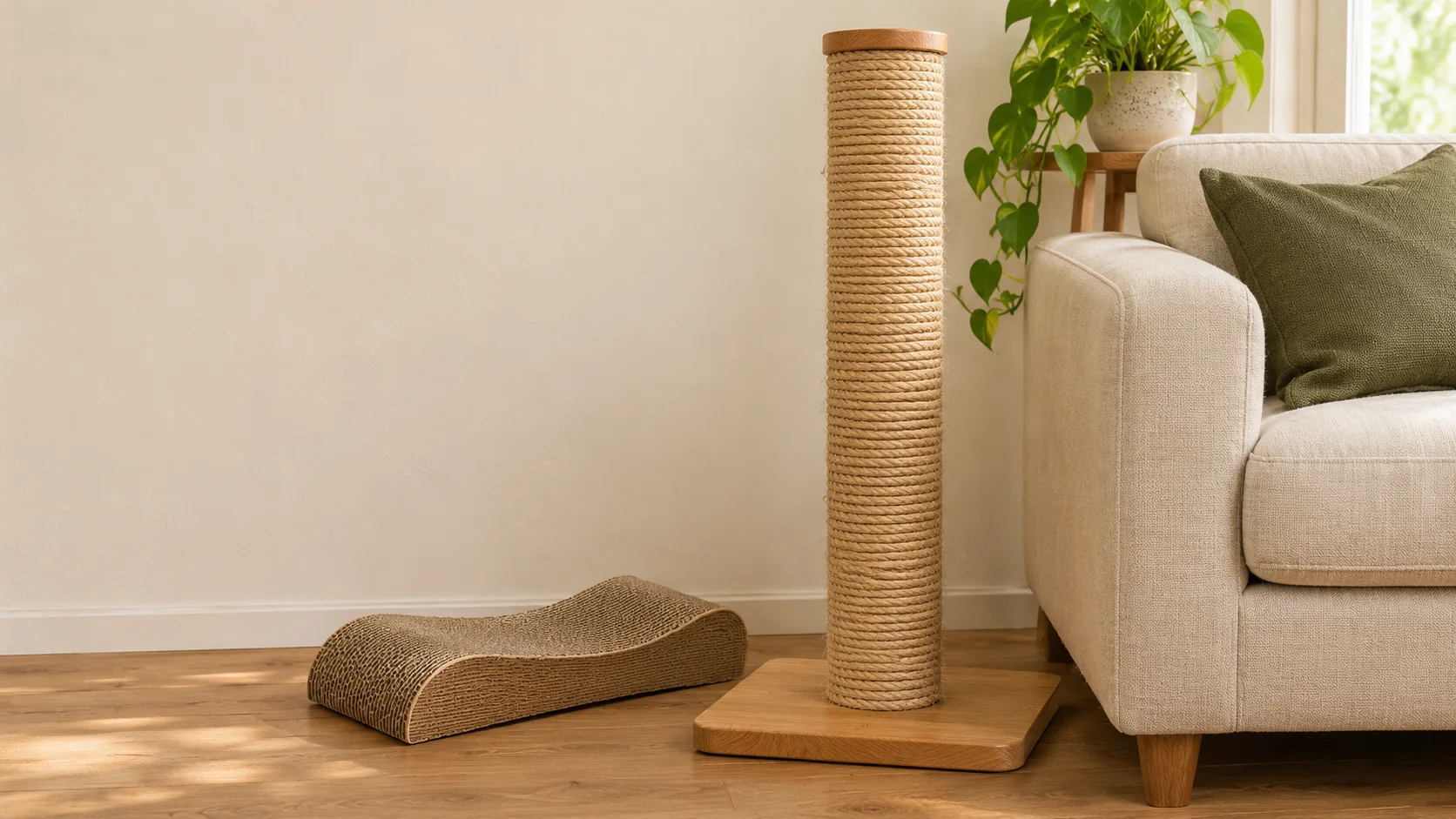
Choose a stable post tall enough for a full stretch if your cat scratches vertically. Offer a suitable horizontal pad if that is its preference. Place it near the affected furniture rather than hiding it in an unused corner.
Keep the scratcher steady and usable. Replace a worn surface when needed. A small wobbling post beside a substantial sofa arm may not offer a convincing alternative.
Reward use and protect the surface
Notice and reward the cat when it uses the scratcher. Do not force its paws across the surface. While the habit develops, use a securely fitted furniture protector that is compatible with the upholstery and safe around the animal.
Test anything that adheres to the cover in a hidden area, and avoid loose or easily swallowed pieces. Move an accepted scratcher only gradually if you need a different final position.
Look at the rest of the room
PDSA recommends suitable scratchers and regular play, and notes that a sudden increase in furniture scratching can be associated with stress. If behavior changes abruptly or you see other concerns, discuss them with a vet.
Think about access and competition as well as decoration. In a multi-cat home, one attractive scratching surface may not suit every cat or every location. Make the desired behavior convenient.
Plan furniture care around the household
No upholstery description should be read as a guarantee against claw damage. Ask for a swatch, understand the weave and check whether a damaged cover or panel can be replaced.
If the couch also collects pet odor, our pet-odor cleaning guide explains how to separate washable layers from cushion filling. For actual leather damage, assess the tear before applying a cosmetic repair.
Offer an alternative at the exact location
Scratching is normal feline behaviour, so place a stable scratching surface beside the furniture the cat currently chooses. Match the orientation: some cats prefer an upright post, others a horizontal pad. Cats Protection's guidance explains the role of scratching and placement. A post hidden in another room may be ignored even if it is attractive to the owner. Make it tall or long enough for a full stretch and secure enough that it does not wobble.
Protect the sofa while a habit changes
Use a furniture-safe, temporary barrier on the targeted corner if the upholstery maker permits it. Test adhesives or covers in a hidden place so they do not lift dye or finish. Reward the cat when it uses the post and avoid punishment that adds stress without teaching an alternative. PDSA's advice offers practical behaviour steps. Check whether the cat also needs more play, resting places or a calmer route through the room.
Choose furniture with the household in mind
When replacing upholstery, compare tightly woven fabrics and removable covers for ease of care, but do not claim any sofa is claw-proof. Inspect the frame corners and seams where the cat likes to scratch. Keep nails managed according to veterinary guidance and maintain several suitable scratching surfaces. If scratching suddenly intensifies or comes with other behaviour changes, ask a vet or qualified behaviour professional. A furniture choice helps when it is paired with the cat's normal needs.
Review the setup after two weeks
Watch whether the cat uses the new post and which sofa corner remains attractive. Move or add a scratching surface at the actual location rather than assuming the first purchase will work. Replace worn posts that wobble or shed unsafe pieces. Keep rewards immediate and consistent. If a protective tape leaves residue or loosens upholstery fibres, remove it as the furniture maker directs. A successful plan changes the environment and routine, then adjusts from the cat's observed behaviour.
Common questions
Should I stop my cat scratching altogether?
No. Scratching is a normal behavior. Provide suitable surfaces and redirect it away from furniture rather than trying to remove the behavior. Observe the cat's preferred direction and location when choosing a scratcher.
Where should the scratching post go?
Start near the area the cat already scratches, with a stable base and enough room for use. Once the alternative is established, move it gradually if necessary rather than placing it somewhere inconvenient immediately.
Is any sofa fabric completely cat-proof?
Do not assume so. Claws can damage many coverings, and marketing terms are not a guarantee. Compare the actual weave, care instructions and replacement options while providing suitable scratching surfaces.
What if scratching suddenly increases?
Consider changes in the home and other signs of stress or discomfort. A vet can help assess an abrupt behavior change. Continue offering appropriate scratchers rather than relying on furniture deterrents alone.