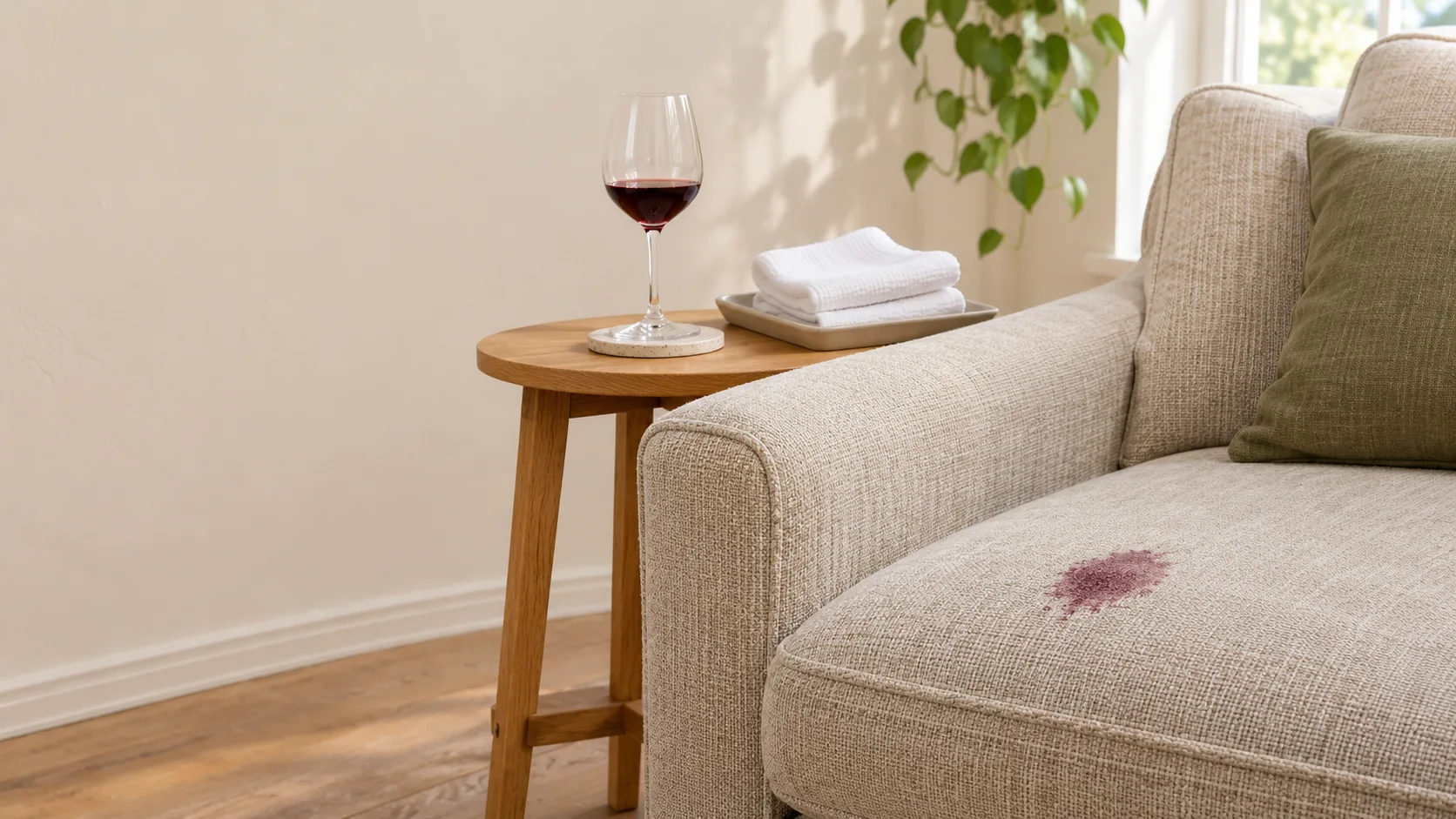
1. Contain the spill without rubbing
Move the glass to a stable surface and keep the affected seat clear. With a clean white absorbent cloth, gently take up free liquid without scrubbing it across the cover. Move to a fresh part of the cloth as it becomes wet.
Do not pour white wine, salt or a mixture of kitchen ingredients over the patch. That adds more material to a stain whose response you have not established. Photograph the spill and note whether anything has already been applied.
2. Identify the permitted treatment
Find the fabric label and the furniture maker's care instructions. A solvent-only, vacuum-only, delicate or unidentified cover is a reason to seek advice before wet treatment. Leather and suede need their own process.
If water-based spot cleaning is permitted, check the specific cleaner and method rather than guessing a detergent concentration. Test out of sight, let the patch dry and inspect the color and texture before continuing.
3. Follow a fabric-specific method
For its own fabric, Sunbrella lists a wine-cleaning process using diluted dishwashing liquid, with additional treatment options for remaining discoloration. Use the current instructions only for a compatible Sunbrella application and check the furniture maker's directions too. This is not a recipe for every upholstery fabric.
Follow the permitted rinsing or residue-removal step and avoid saturating the cushion. Work methodically rather than repeating a treatment with increasing strength.
Check the result after drying
Keep the seat out of use until the approved drying process is complete. A wet patch can hide a ring, color loss or a remaining stain. Do not judge success only while the cover is damp.
If the mark persists, give the cleaner the fabric information, the time of the spill and the products used. Our water-mark guide explains why adding more liquid can complicate a separate ring.
For future spills, keep the care label accessible and use a stable side table for glasses. A washable throw may make routine care easier, but it should be chosen and washed according to its own instructions.
Preserve the evidence of the fabric
Blot the fresh spill with a clean white cloth and stop it spreading into the surrounding seat. Do not rub or pour salt, boiling water or a household chemical onto an unidentified upholstery fabric. Find the care code and product name before choosing a treatment. Sunbrella's cleaning guide gives methods for its own textiles, but another fabric may require solvent-only or professional care. If the wine has soaked through to the cushion insert, the visible surface is only part of the problem.
Test the permitted method before a full panel
Use an inconspicuous area to check for colour loss, pile change and a ring after drying. Follow the furniture maker's instructions for the actual fabric and any cleaner's dilution and contact time. Work with light pressure and a clean cloth face. A stain that becomes paler while wet may reappear when dry, so do not judge the result immediately. If the fabric is delicate or valuable, a specialist is a better choice than repeated home treatments.
Plan for the next spill
Keep the care label and a clean absorbent cloth accessible, then make sure the household knows the first response is blotting and checking the code. A protective treatment may help some fabrics but must be compatible with the exact upholstery and can affect warranty terms. Ask the maker before applying one. If the spill reached a removable cover, confirm whether washing is permitted; a zipper does not make it machine safe. Store a record of the cleaner used on the current mark.
Know when to call a specialist
Seek professional help when the fabric is marked solvent-only, the colour bleeds in a hidden test or the wine reached padding. Tell the cleaner the fabric name, care code, time since the spill and every substance already applied. That history helps avoid an incompatible chemical. Ask what outcome is realistic; complete stain removal cannot be promised on every textile. Once the area is treated, allow the specified drying time before putting cushions back or covering the seat.
Common questions
Does white wine remove red wine?
Do not use it as a general upholstery treatment. It adds more liquid and another substance to the cover. Blot the spill and choose a method approved for the actual fabric instead.
Can I use hydrogen peroxide?
Only if the manufacturer expressly permits it for the selected fabric and application. It can affect color or finish. A recipe that works on one upholstery material should not be transferred to another.
What if the wine has already dried?
Avoid rubbing or soaking the dried patch. Identify the fabric and ask which stain treatment is permitted. Tell a professional what caused the mark and whether you have already applied any products.
Will every red wine stain come out?
No. The fabric, finish, time and previous treatment all affect the outcome. A cleaner can assess likely results, but neither a household method nor a stain-resistant label guarantees complete removal.