
Find out what the cover allows
Look beneath the cushions or on the care label. If the material is unidentified, delicate, leather or requires professional treatment, ask the manufacturer or a cleaner before experimenting. A method for a washable textile may damage a fixed sofa cover.
Sailrite's cleaning-code guide explains the distinction between water-based, solvent-based and vacuum-only care. The code is a starting point. Use the furniture maker's more specific instructions where supplied.
Lift the bulk without pulling the fabric
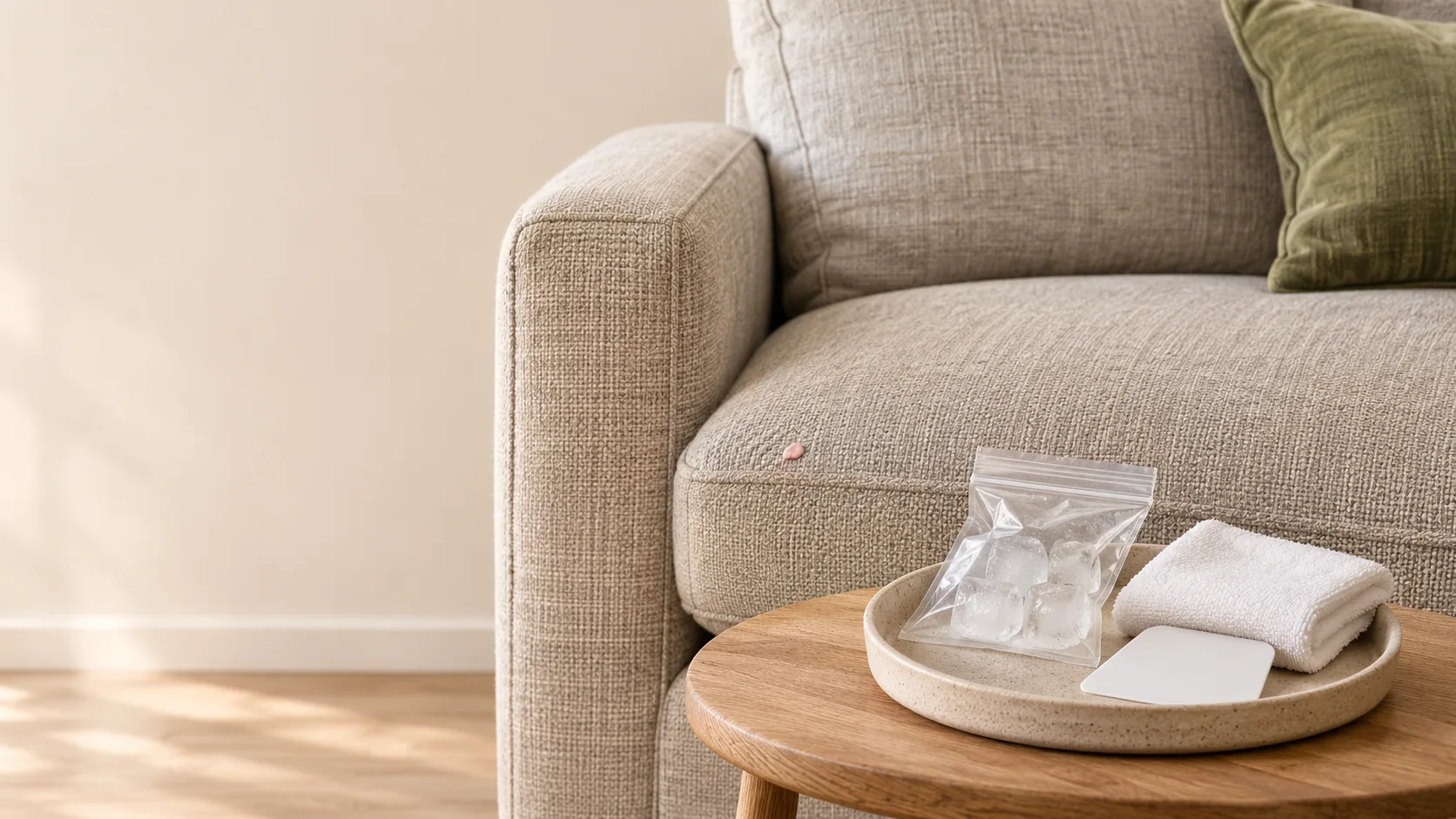
If the care instructions permit it, use a sealed bag of ice to chill the gum while keeping meltwater and condensation off the upholstery. Lift small hardened pieces gently with a blunt plastic edge. Stop if the fibers lift with the gum or the surface changes.
The University of Georgia's textile-care guidance describes hardening gum before removing it and emphasizes care-label checks and hidden-area testing. Its procedures vary by surface. Do not transfer a carpet solvent treatment to your sofa.
Collect the pieces by hand onto a disposable sheet. Work patiently in small stages instead of dragging the entire patch across the cushion.
Treat residue as a separate problem
Once the bulk is removed, inspect the area. A remaining mark may contain sticky residue, coloring or damage to the fibers. More scraping will not necessarily solve it.
Use only a cleaner and application method approved for that upholstery. Test it out of sight and let the test dry before judging the result. Avoid saturating the cushion or repeatedly treating the same patch when it is not improving. A professional can assess residue that resists the permitted method.
Skip kitchen shortcuts
Peanut butter, cooking oil and greasy products can introduce another stain. Heat can spread softened gum. Sharp blades risk cutting the cover, while vigorous rubbing can disturb its texture.
Keep the affected seat out of use until any permitted treatment is dry. If moisture has left a separate ring, read our water-mark guide before adding more liquid. When comparing a replacement couch, ask for its care code and cover instructions before choosing the fabric.
Separate the bulk from the sticky residue
Read the upholstery care code before using moisture, heat or a cleaning product. If the gum is still soft, avoid rubbing it deeper into the weave. Follow a material-appropriate method to make the bulk easier to lift, using a blunt tool with a gentle edge rather than a knife. Protect the surrounding fibres and stop if the fabric begins to fuzz. Sailrite's cleaning-code guide explains why one couch may tolerate a water-based treatment while another requires a solvent or professional method.
Work slowly and collect loosened pieces as you go. An ice cube in a loose bag can introduce moisture or condensation, so it is not automatically safe for water-sensitive fabric. Test the approach in a hidden area and keep the cushion from becoming damp.
Reassess after the fabric has settled
Once the bulk is gone, a sticky patch may remain. Choose a residue treatment only if the fabric maker permits it and the product directions match the material. University of Georgia Extension's stain guidance provides a textile-specific reference, but its method still needs to be checked against the couch's care code. Do not add cooking oil or a harsh household solvent simply because it softens gum; those can leave a second stain.
Let the treated area dry and inspect the pile, colour and hand feel. If a ring or tackiness remains, stop rather than repeating random treatments. Tell a professional what you tried so they can avoid an incompatible follow-up chemical. A small sticky mark is preferable to a damaged upholstery finish.
Protect the surface during later cleaning
Once the gum is removed, avoid washing the whole cushion simply to erase a faint outline unless its care instructions permit that treatment. A tiny local residue can be less noticeable than a large water ring. Keep a record of the product used so the next cleaner does not combine incompatible chemicals. If the couch has a removable cover, check its laundering instructions and whether the filling must stay dry. Do not pull the cover off a tight cushion until you know it can be refitted without stretching seams.
Common questions
Can I put an ice cube directly on the couch?
Avoid direct melting ice on upholstery. Where chilling is compatible with the care instructions, keep it sealed and prevent condensation from wetting the cover. Stop if the fabric reacts or the care label prohibits moisture.
Will cooking oil loosen the gum?
It can leave an oily stain, so it is not a sensible general upholstery treatment. Remove what you can mechanically without damaging fibers, then use only a method approved for the specific cover.
Can I pull the gum off with my fingers?
Do not tug at gum bonded to the fabric. It can pull fibers or spread across the surface. Carefully lift small loosened pieces and stop if the upholstery moves with them.
What if a sticky patch remains?
Check which residue treatment the manufacturer permits and test it in a hidden area. If the material is unidentified or the mark persists, ask an upholstery cleaner rather than combining different household chemicals.