Separate color from composition
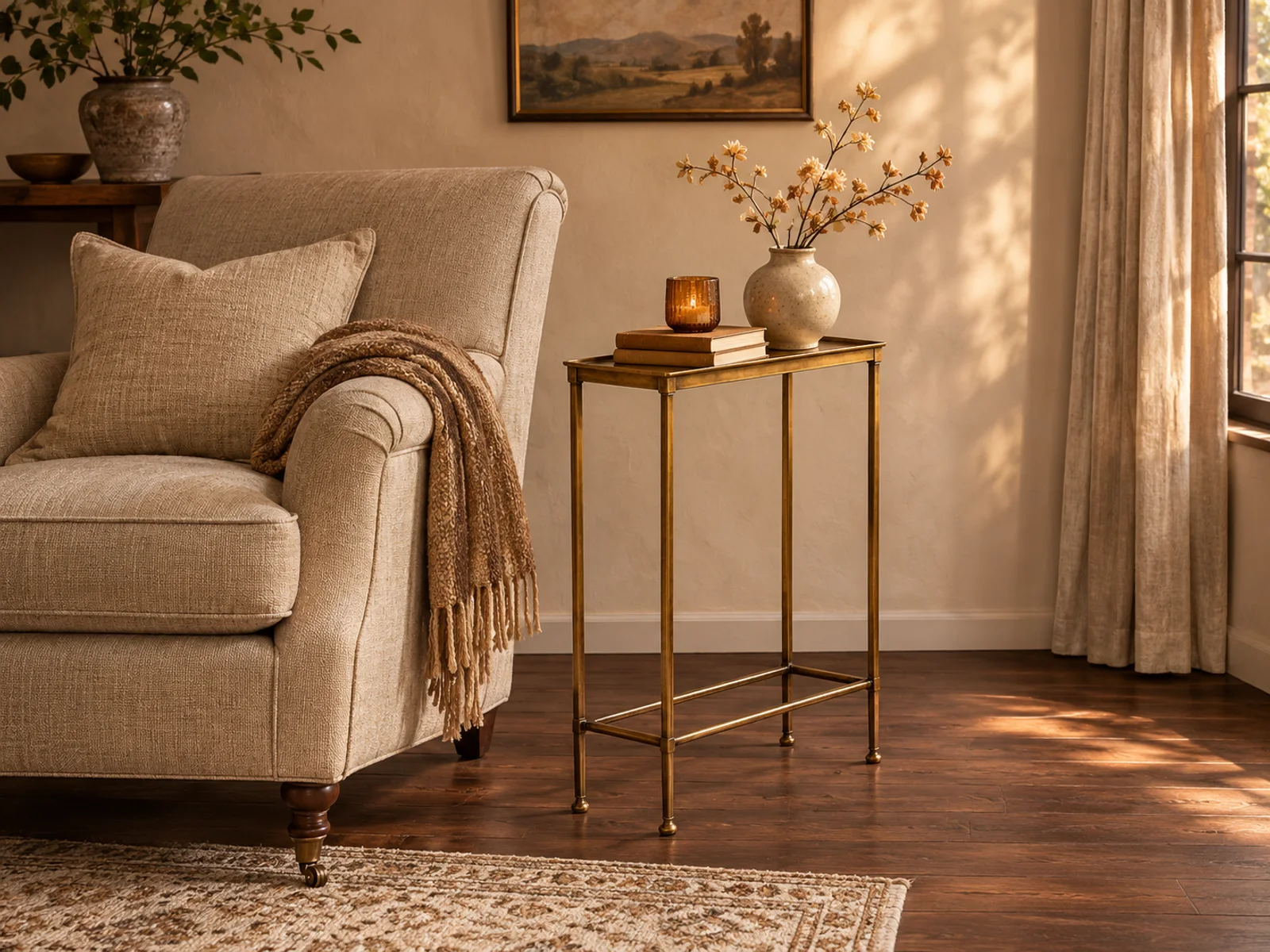
Look for the base material, coating and finish description. Terms such as gold effect describe appearance without establishing solid metal composition. Ask what parts of the table use each material if the top and frame differ.
Keep a screenshot of the selected variant. A retailer may offer the same design in several finishes with different care requirements. Do not transfer the instructions for a polished version to a painted one.
Inspect the finish in your room
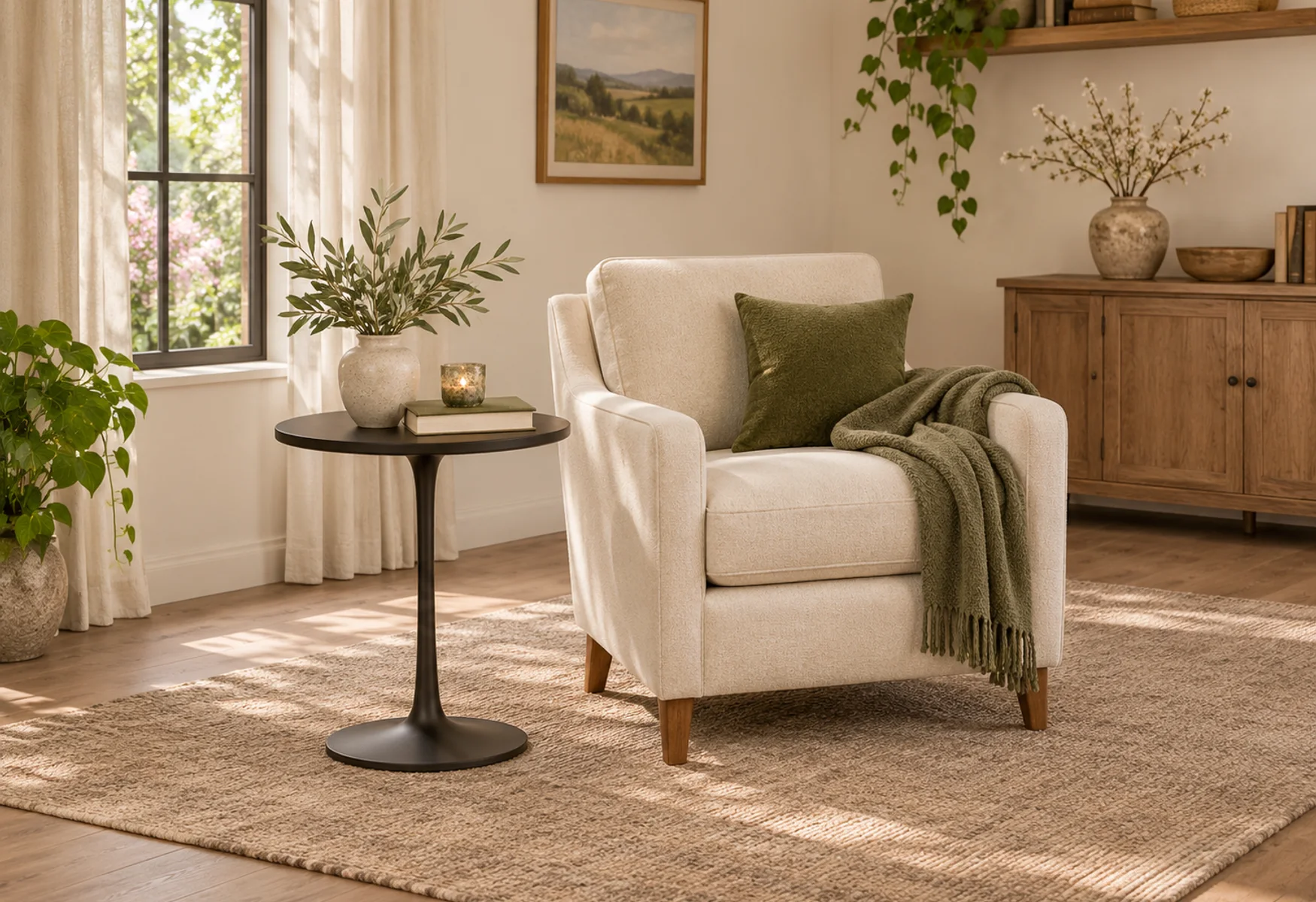
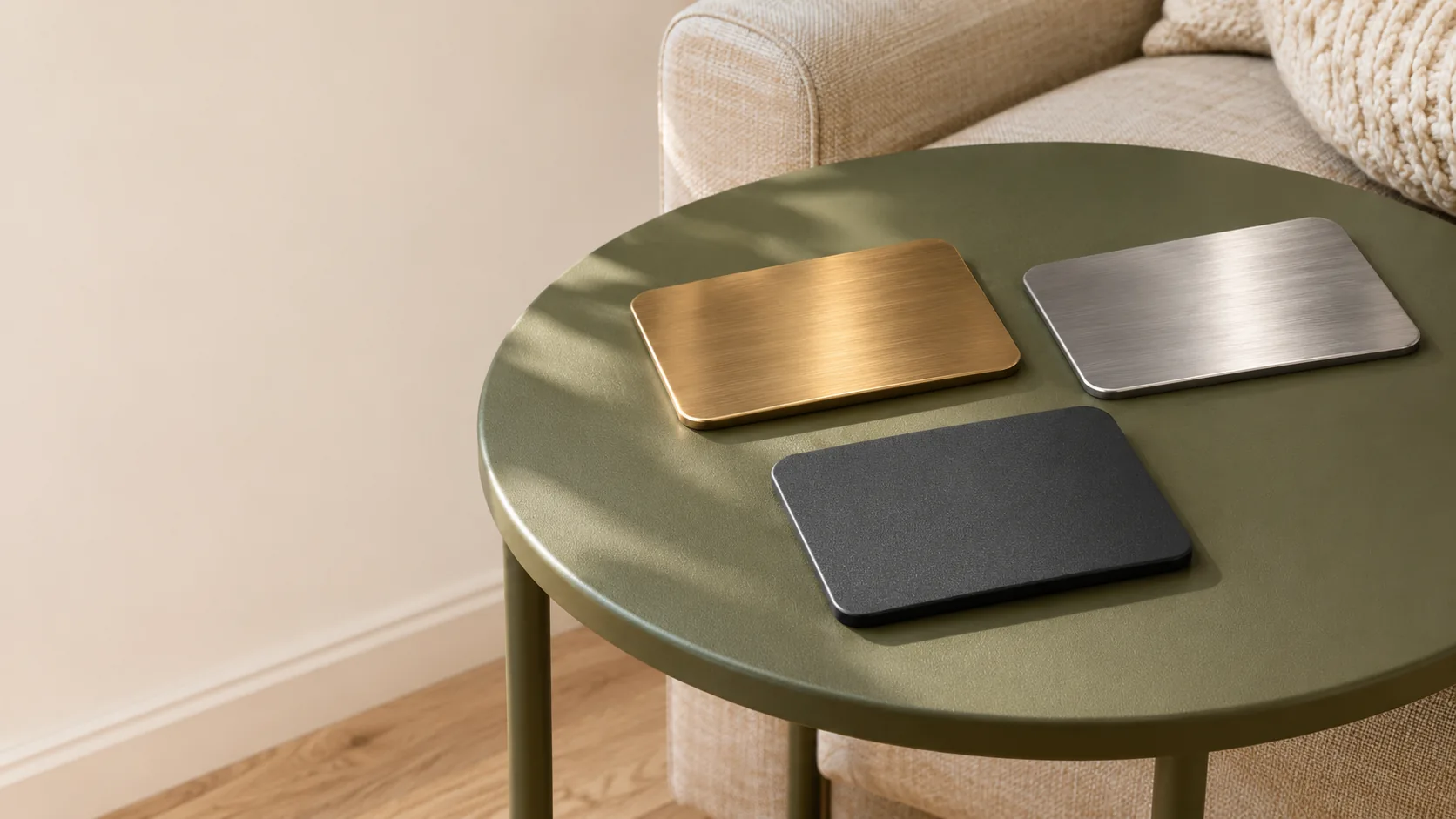
Compare a sample or close-up under daylight and the lamps you use. Brushed, glossy and textured surfaces reflect light differently. Look at the finish beside nearby wood and upholstery rather than against a blank screen.
Decide whether the metal should repeat an existing detail or provide contrast. A whole room need not use one identical finish, but a deliberate comparison is more useful than ordering several objects described only as silver.
Use the correct care category
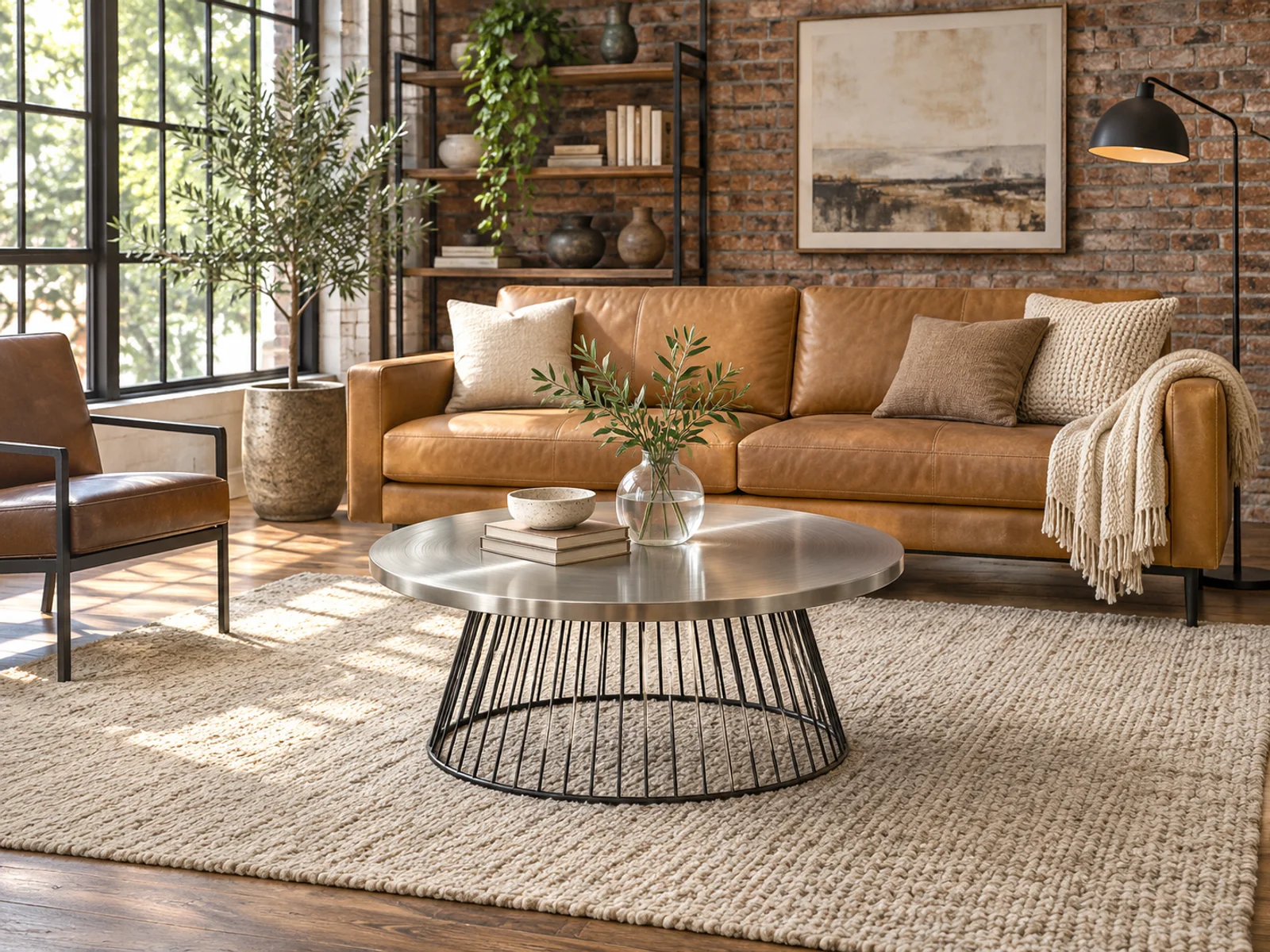
Room & Board publishes a dedicated stainless steel care page. That specificity is a useful reminder to find instructions for the actual surface. A metal polish is not automatically appropriate for a clear-coated or painted finish.
Ask how to handle fingerprints, spills and scratches before buying. Keep approved tools and products separate from general household abrasives. If a coating chips, contact the supplier rather than sanding it back without a repair specification.
Confirm where the furniture can live
Ask whether the complete table is rated for the intended indoor or outdoor setting. Hardware, joints and the underside matter as well as the visible top. A metallic appearance tells you little about weather exposure.
Compare metal coffee tables and metal side tables with those details recorded. For a mixed-material piece, follow the care requirements of each surface and avoid spreading one cleaner onto the adjoining material.
Name the metal and coating
Ask for the base metal and the applied finish, rather than relying on a phrase such as metal look. Powder coating, plating, paint and polished bare metal can have different care requirements. Confirm whether the exact item is for indoor or outdoor use. This material comparison is a starting point, but the product's own specification is decisive.
Inspect joints and exposed edges
Look at welds, bolts, undersides and contact points where coating may be thinner or more easily chipped. Ask how the manufacturer recommends treating a scratch. Compare samples in your room's light, since a brushed finish and a glossy finish show fingerprints and scuffs differently. Check the expected color variation between batches if buying pieces separately.
Match care to the setting
For outdoor furniture, read the maker's guidance on rain, coastal exposure and winter storage. Indoor metal can also react to spills or harsh cleaners. Use protective pads where a metal base meets a delicate floor. Do not assume that a finish described as rust resistant requires no maintenance; inspect it periodically and follow the specified cleaning routine.
Common questions
Is gold-colored furniture made of brass?
Not necessarily. It may be painted, plated or coated over another material. Read the full specification and ask the retailer to identify the base metal and finish if the listing is vague.
Can I use a metal polish on a painted table?
Only if the maker explicitly approves it for that finish. A product intended for bare metal can affect a coating. Follow the table's care instructions instead of choosing by color alone.
Does stainless steel mean outdoor furniture?
The material name alone does not establish outdoor suitability for the whole product. Check the manufacturer's intended use, including its hardware and other components, before placing the table outside.
Is powder coating the same as paint?
Both are finishes, but their application and care can differ. Check the product-specific instructions.
Does stainless steel never stain?
No. Grade, environment and maintenance matter. Ask for the exact material specification.
Can I touch up a chip myself?
Use only a maker-approved repair method so the finish and any warranty are not compromised.
Which finish hides fingerprints?
Compare real samples under your lighting; texture and sheen influence visibility.