Measure the bay as a shape
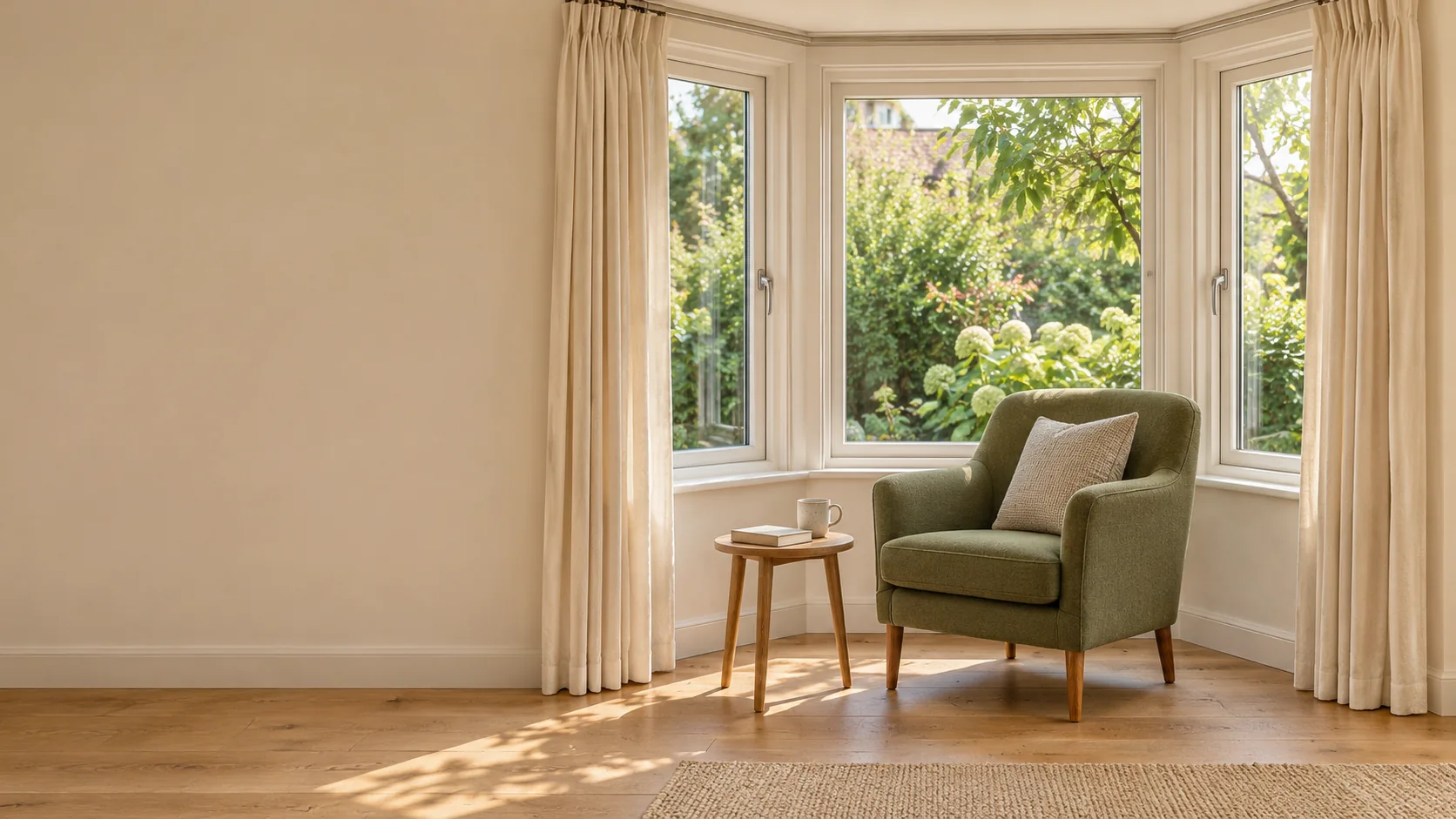
Record each angled wall and the width where the bay joins the main room. Note sill height, projecting trim and the space occupied by curtains. A rectangular width-and-depth measurement can overstate the area available for furniture.
Draw the furniture footprint inside that outline. Check the rear corners of a chair or table, not just its front width. The shape that fits nearest the window may leave too little room to enter the bay.
Choose the view and the activity
A reading chair facing partly into the room can use daylight while remaining connected to the main seating. Two compact chairs may suit conversation if they leave enough room between them. A large sofa across the opening may make the bay difficult to reach.
Try a chair you already own before buying a new one. Our reading chair guide is a starting point once you know the footprint and seated position you need.
Keep practical access in the plan
Check how windows open and how curtains or blinds are operated. Leave access to handles, cleaning areas and any required escape route. Follow the appliance instructions for clearance around radiators or other heaters.
Room & Board's planning guidance notes that furniture layouts should preserve access to vents, outlets and controls. Make those features visible on the bay drawing so an attractive arrangement does not conceal them.
Compare color in the actual light
A bay can show upholstery in several directions of daylight. View a fabric sample in the intended seat position and again when the room lighting is on. The color on a screen cannot show those changes.
Benjamin Moore's guidance on white paint explains how lighting changes the appearance of pale wall colors. Use physical samples to judge the wall and upholstery together rather than deciding from their names.
Keep the smallest useful supporting piece
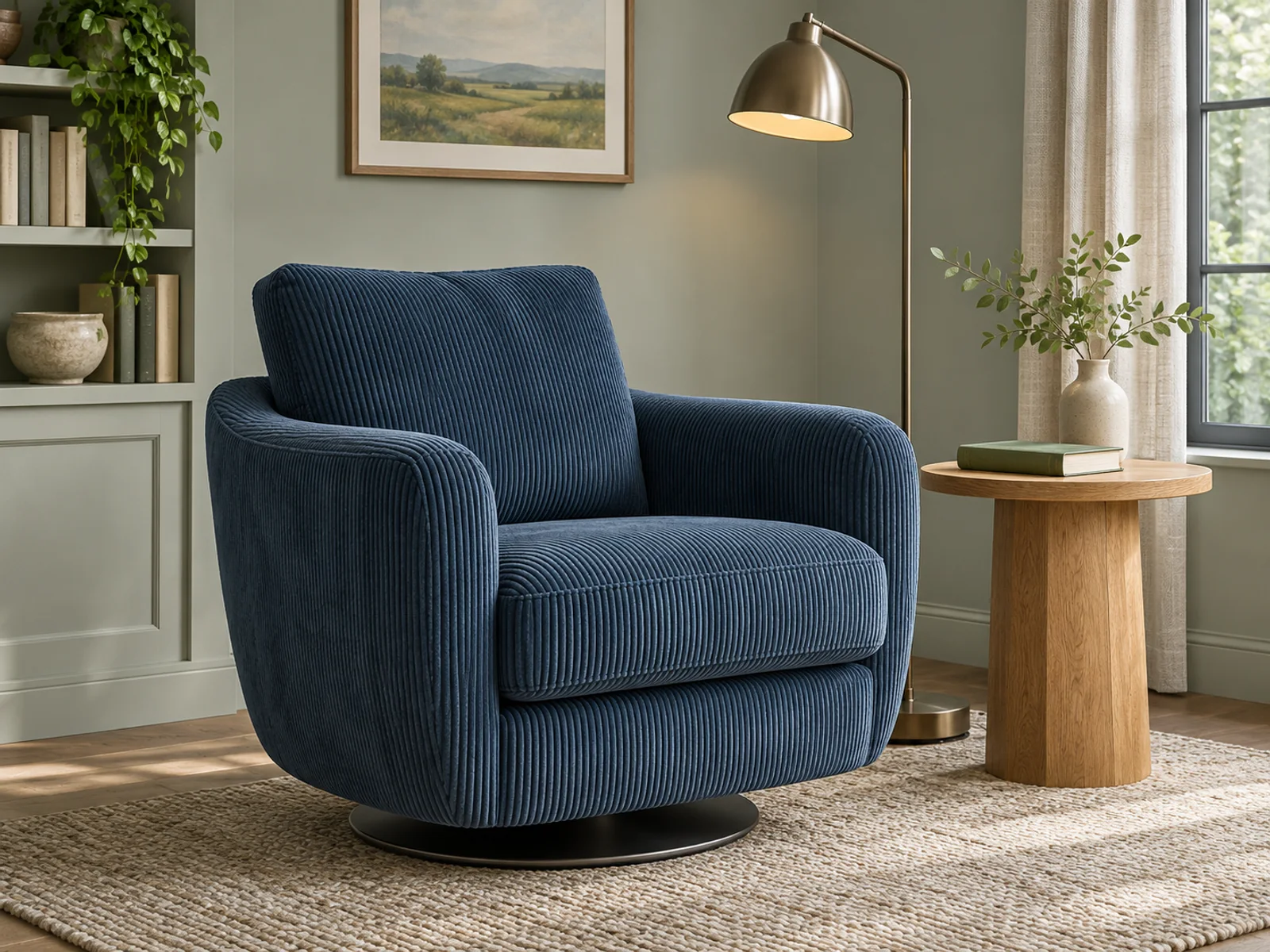
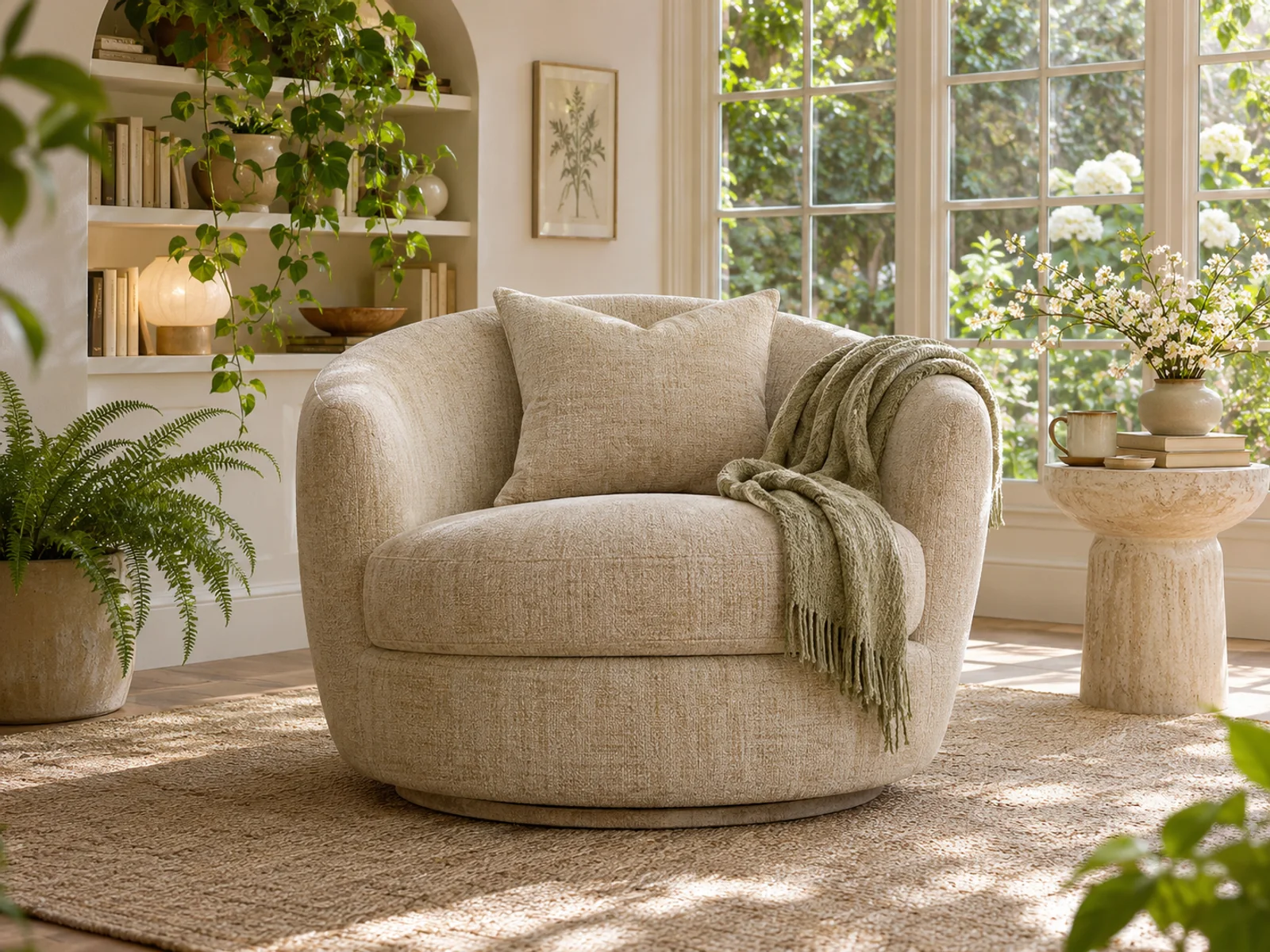
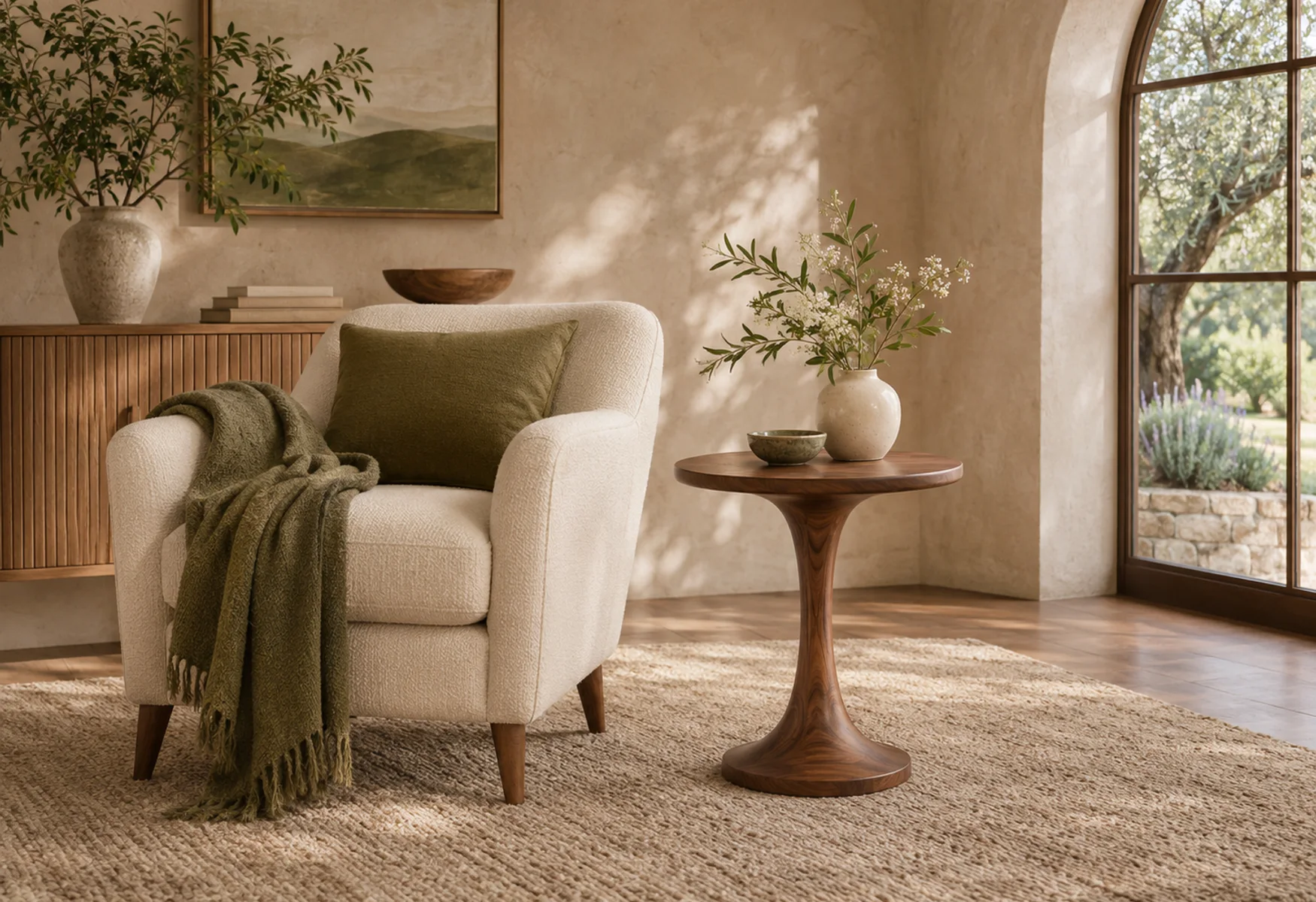
If the bay becomes a reading spot, a compact side table may be enough for a book and drink. Check lamp placement and the cord route before adding another object. A swivel chair needs room for its actual movement, not just its forward-facing footprint.
Compare small side tables after placing the chair. If the bay becomes crowded, leaving it partly open is a valid layout choice rather than a space that must be filled.
Keep the window usable
Measure the bay's straight wall segments, angles, sill height and any radiator or floor vent. A chair may fit inside the outline but still prevent a window from opening or a curtain from moving. Mark the proposed furniture with tape and try the normal cleaning and ventilation routine. If the bay is a sunny reading spot, check glare and fabric fading at the time of day it will be used. A compact seat with a movable table may preserve more flexibility than a large built-in bench.
Decide whether the bay is a place to sit or a source of light for the main seating group. The answer changes whether chairs face the view, the sofa or both.
Test the room from several viewpoints
Stand at the entrance and sit on the sofa before committing to a symmetrical arrangement. Two chairs angled toward each other can support conversation, but may block a path if the bay is shallow. A low console or plant stand can work where a chair would be too deep. Check the full footprint of a round table, including its base and walking clearance. If curtains or blinds are planned, hold samples in the bay's light and check that furniture does not trap the fabric against glass.
Common questions
Can a sofa sit in front of a bay window?
It can if the footprint, window access and any heating or safety requirements allow it. Check the back height against the sill and leave a practical way to operate the window treatments.
Should chairs face the window or the room?
Choose based on how the spot will be used. A chair for the view may face outward, while conversation seating usually needs a connection to the room. Test an angled position before deciding.
Will any round table fit an angled bay?
No. Its diameter and base still need to fit within the actual wall outline. Check the widest part against the angled sides and leave space to reach the seats.
Can a sofa sit partly in the bay?
It can when the dimensions, window access and radiator clearance work. Tape the full sofa footprint and test the route around its arms. Avoid covering a heat source or blocking an opening window.
Should I use matching chairs?
Not necessarily. Chairs with compatible seat height and scale can form a coherent pair even with different upholstery. Test comfort and sightlines first; matching fabric is a styling choice.
What if a radiator is under the bay?
Check the heating manufacturer's clearance guidance and avoid blocking airflow with a sofa or enclosed bench. A chair can sometimes be positioned to preserve access, but test the full footprint and cleaning route.
How should I use the sunlight?
Try the proposed seat at the times the room is normally occupied. Bright light can be pleasant for reading but create glare on a screen and fade fabric. Choose window treatment and upholstery accordingly.