Map the usable area
Draw the patio edges, door swing and any fixed obstacles. Include steps, drains and the route to the garden or other part of the property. Keep required access and escape routes clear.
Measure the actual furniture footprints, including angled legs and arms. A chair that looks small from the front may need substantial depth when someone sits or reclines. This article concerns a ground-level patio layout, not structural loading or balcony design.
Choose the main activity
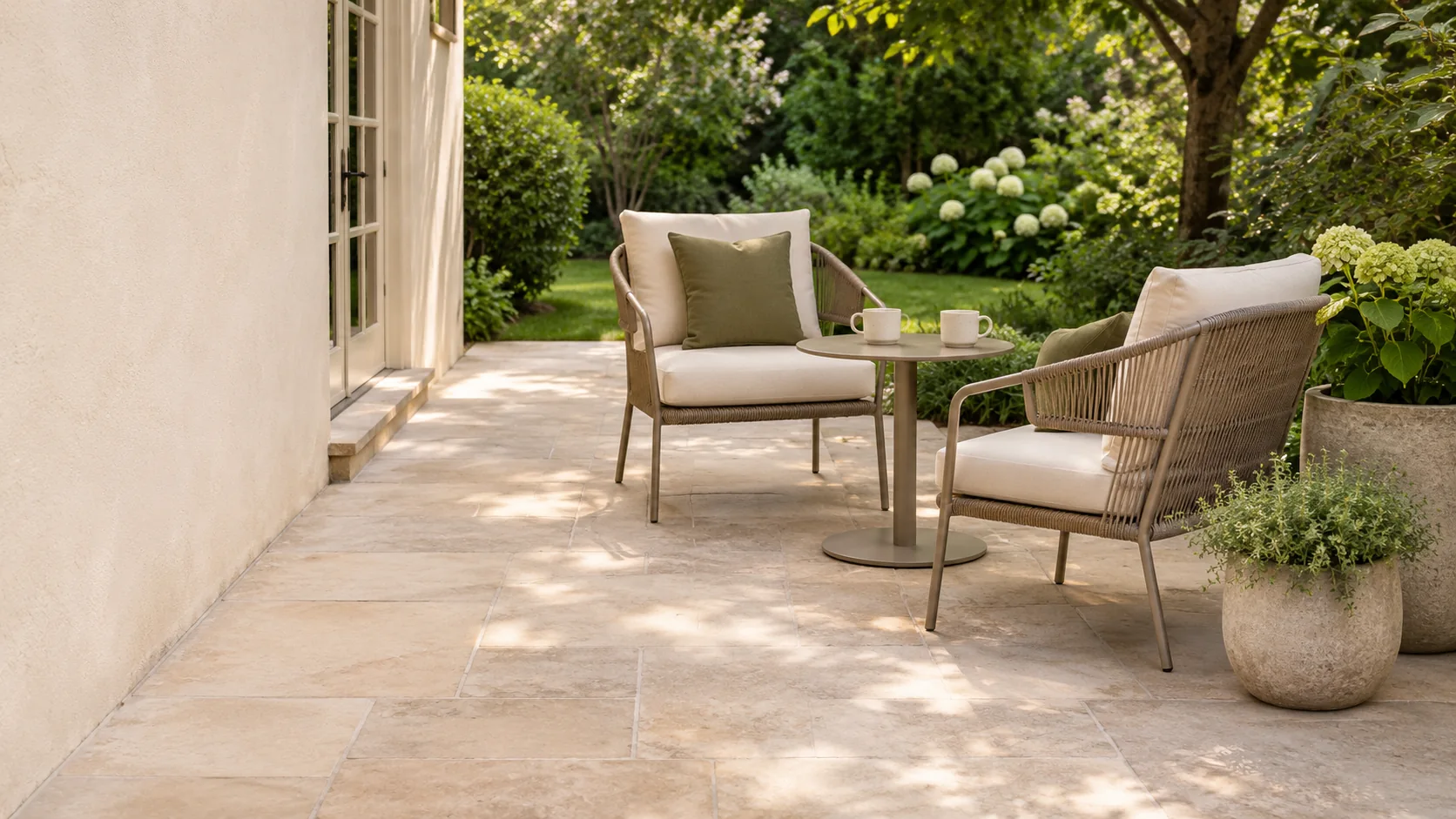
For conversation, two chairs and a small shared surface may be enough. If meals are the priority, compare dining-height furniture rather than trying to make a low lounge table serve every task.
Avoid selecting a large matching set because it contains more pieces for the money. Count the seats used regularly and decide where occasional seating would be stored. The best-fitting group may contain fewer pieces than the product photograph suggests.
Test movement with people in place
Set out the footprint using objects you already have. Sit down, stand up and open the door while another person remains seated. Check access to each chair and the table.
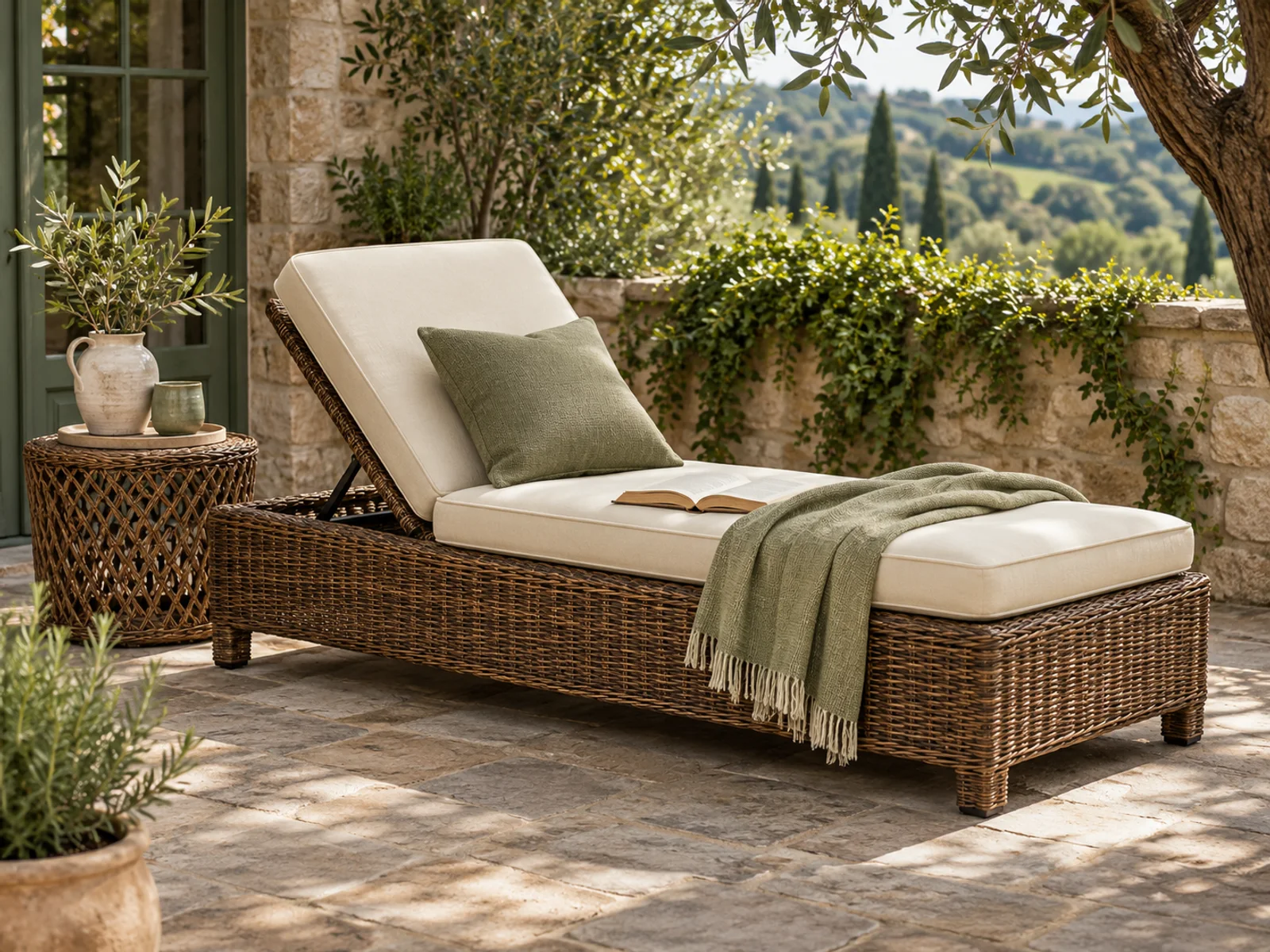
Swiveling, rocking and reclining furniture need their full operating space. Do not place a moving chair where its back or arms can strike a wall or planter. Compare patio lounge chairs by their open dimensions as well as their upright size.
Keep storage and maintenance realistic
Decide where cushions and covers go when the area is not in use. SunVilla's seasonal guidance notes the importance of cleaning and drying before storage. Your selected furniture may have additional requirements.
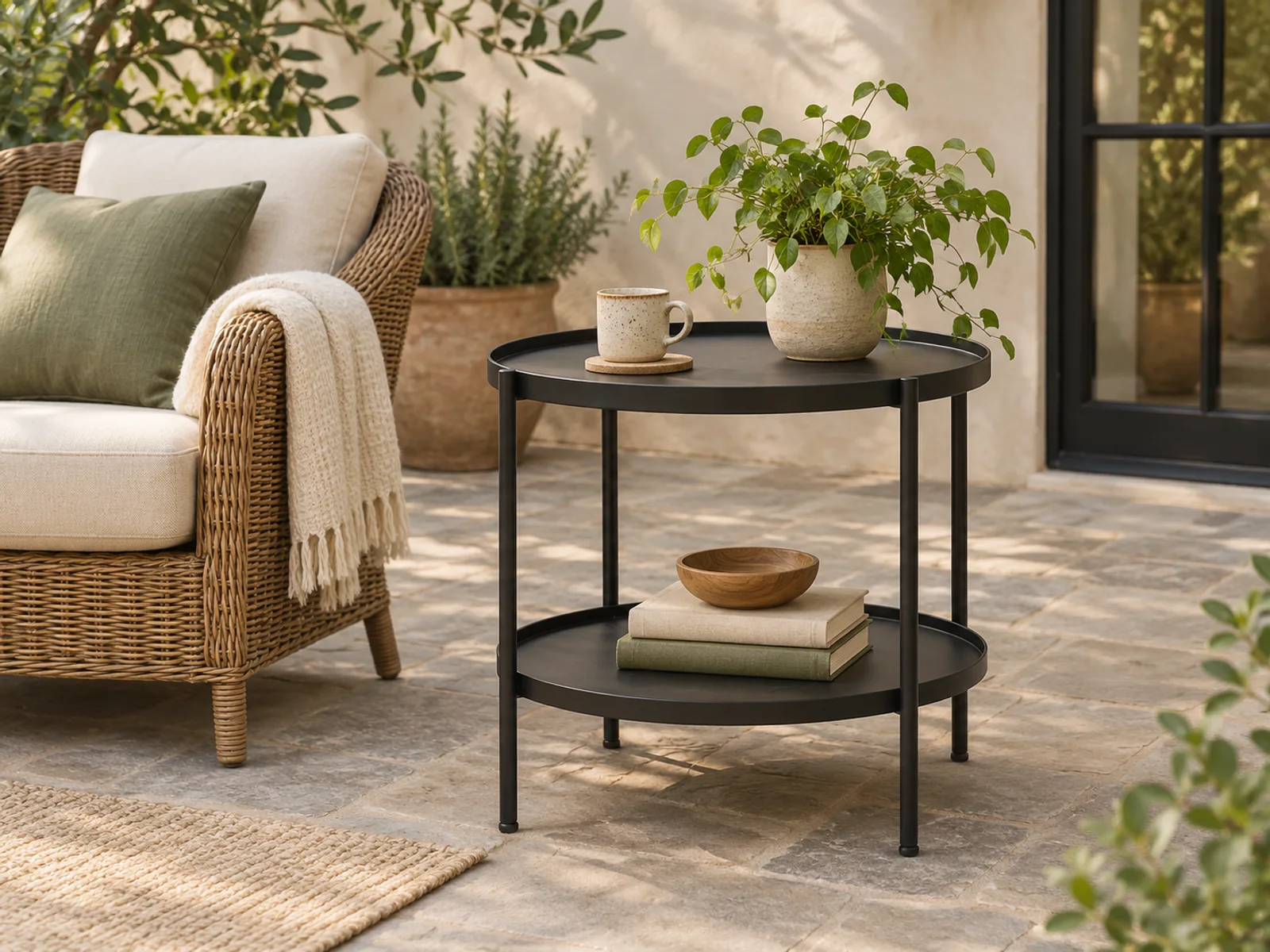
Add an outdoor side table only where it serves the seats without narrowing the route. If every routine requires moving several pieces, reduce the group before buying. Leave room for the patio to be used rather than treating every empty corner as a missing item.
Map doors, sun and drainage first
Measure the patio and mark door swings, steps, drainage points and the path to a garden or grill. Place the seating group where it will be used at the intended time of day, checking sun and shade rather than only the view from indoors. Tape furniture footprints, then pull chairs out and walk the route. A compact bistro set may offer more usable space than a deep outdoor sofa if the patio also needs a clear exit. Keep furniture away from a hot grill or other equipment as their manuals require.
Choose pieces that can move safely
Stacking chairs, folding tables and small benches can help a tight patio, but check stability and load ratings. Test how a table is stored when the area is needed for another task. Avoid a lightweight item that blows over in local wind. A planter can define a seating corner without building a barrier, but it needs drainage and a stable base. Leave room for cleaning and for furniture covers if they will be used.
Plan weather and maintenance with the layout
Check whether cushions need indoor storage and where they will go. Read the furniture's weather and cleaning instructions, especially for wood, metal and woven pieces in the same set. Use an outdoor rug only if it drains and can dry in the space. A good patio layout remains usable after rain and can be cleaned without moving every piece through a narrow door. Photograph a taped mock-up before ordering so dimensions can be compared with actual listings.
Common questions
Can I use indoor chairs on a covered patio?
Only if the manufacturer approves that environment. A roof does not eliminate moisture or temperature changes. Check the frame, upholstery and cushion instructions before moving indoor furniture outside.
Is a loveseat better than two chairs?
It depends on the layout and preferred use. A loveseat creates one larger footprint, while two chairs can be angled independently. Compare the total space including tables and access, not just the number of seats.
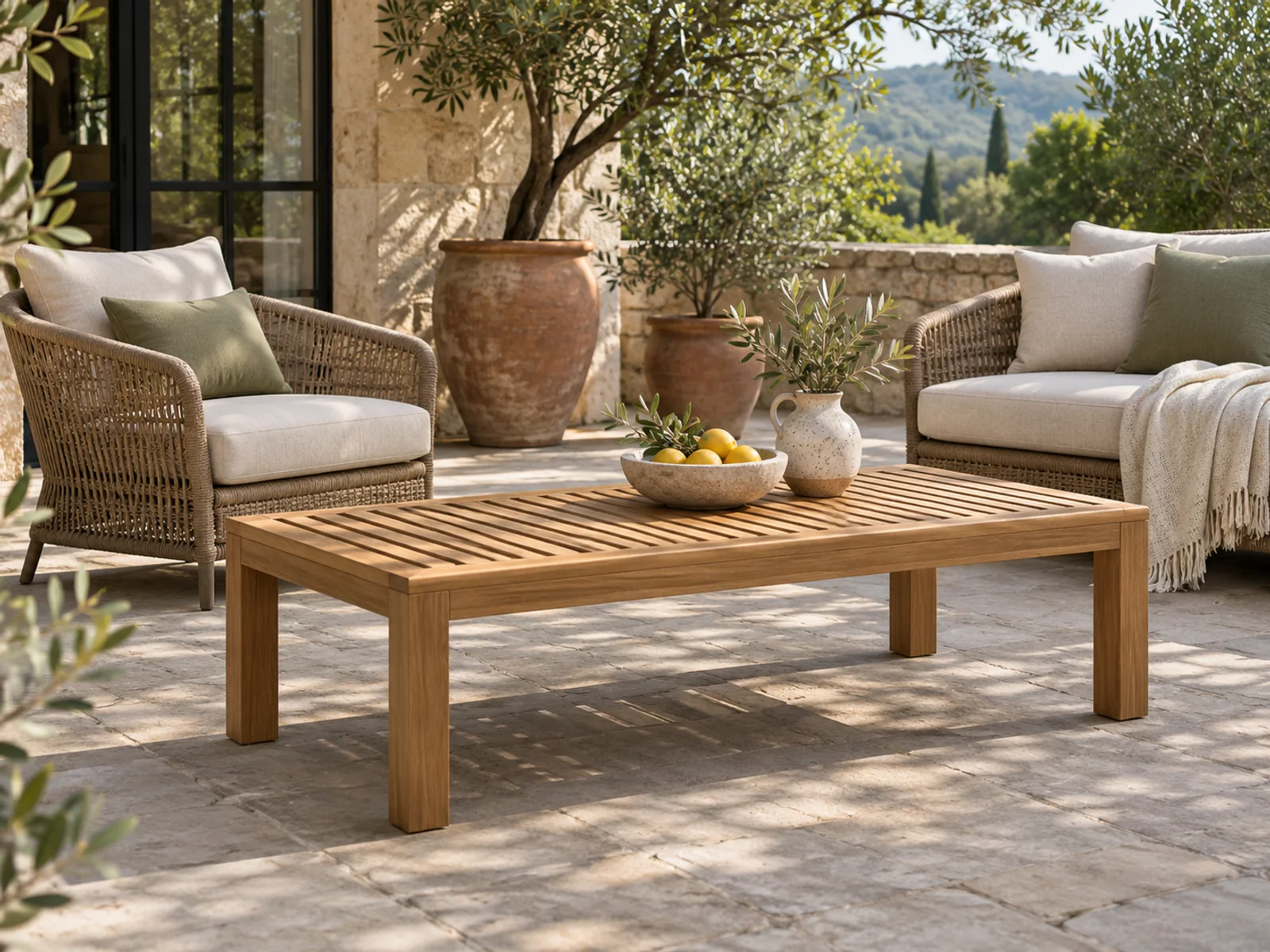
Should I add a coffee table in a tiny patio?
Only if it serves a real need without blocking movement. A smaller side surface may be enough for drinks. Test reach from each seat and keep the door route clear.
Can I put a sofa against the fence?
Check the sofa's depth, fence condition, airflow and access for cleaning. Leave the route and door clear. A shallow bench may fit better.
What if the patio is windy?
Choose stable pieces and follow the maker's anchoring or storage guidance. Avoid leaving lightweight umbrellas or loose covers where they can move dangerously.
Should I add an outdoor rug?
Only if it suits drainage, slip resistance and cleaning in that location. Test door clearance and avoid trapping moisture beneath it.
How many seats should I plan?
Start with daily users and add flexible guest seating if space allows. A crowded permanent set can make the patio less useful.