Compare the visual effect in your layout
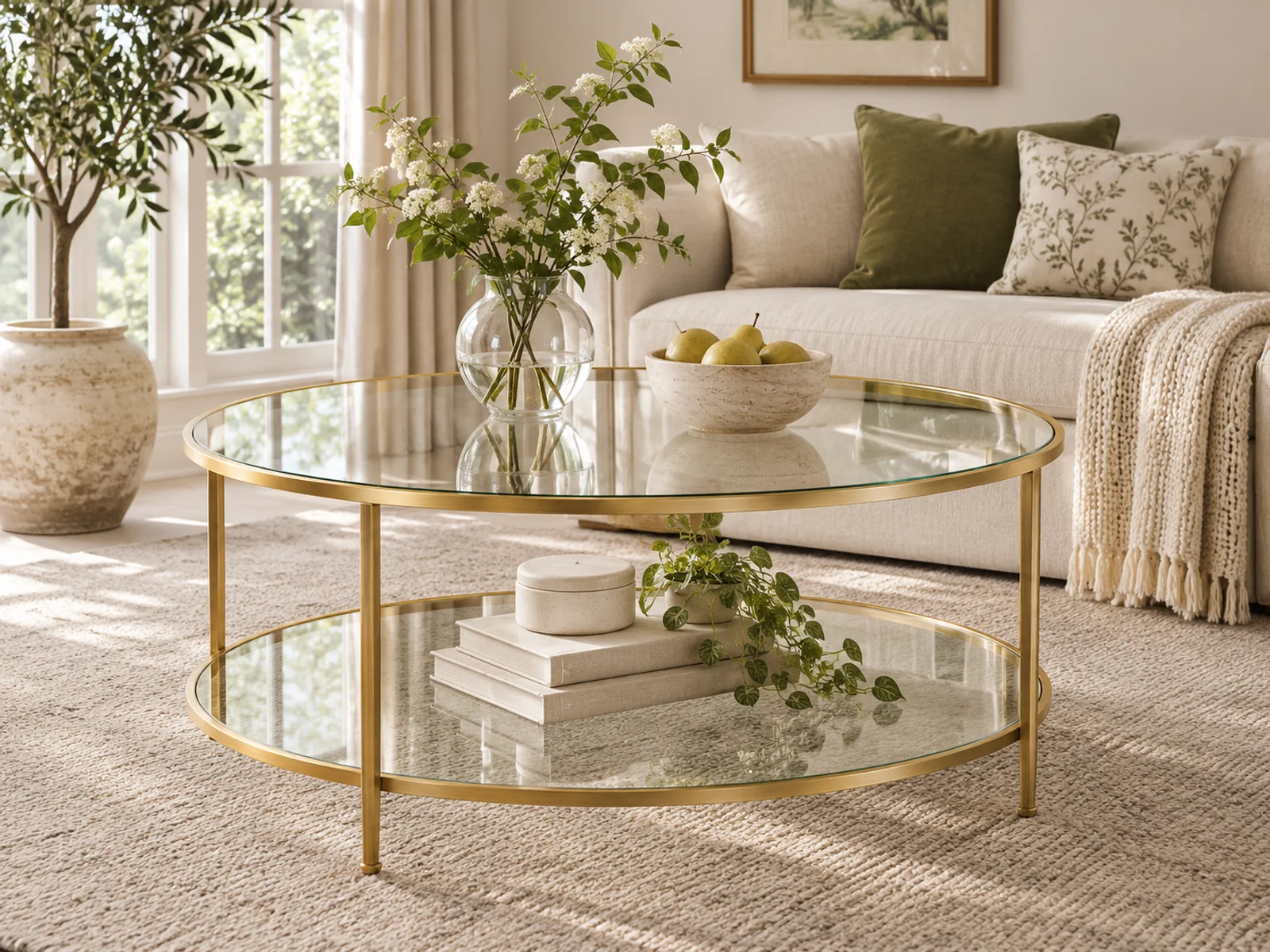
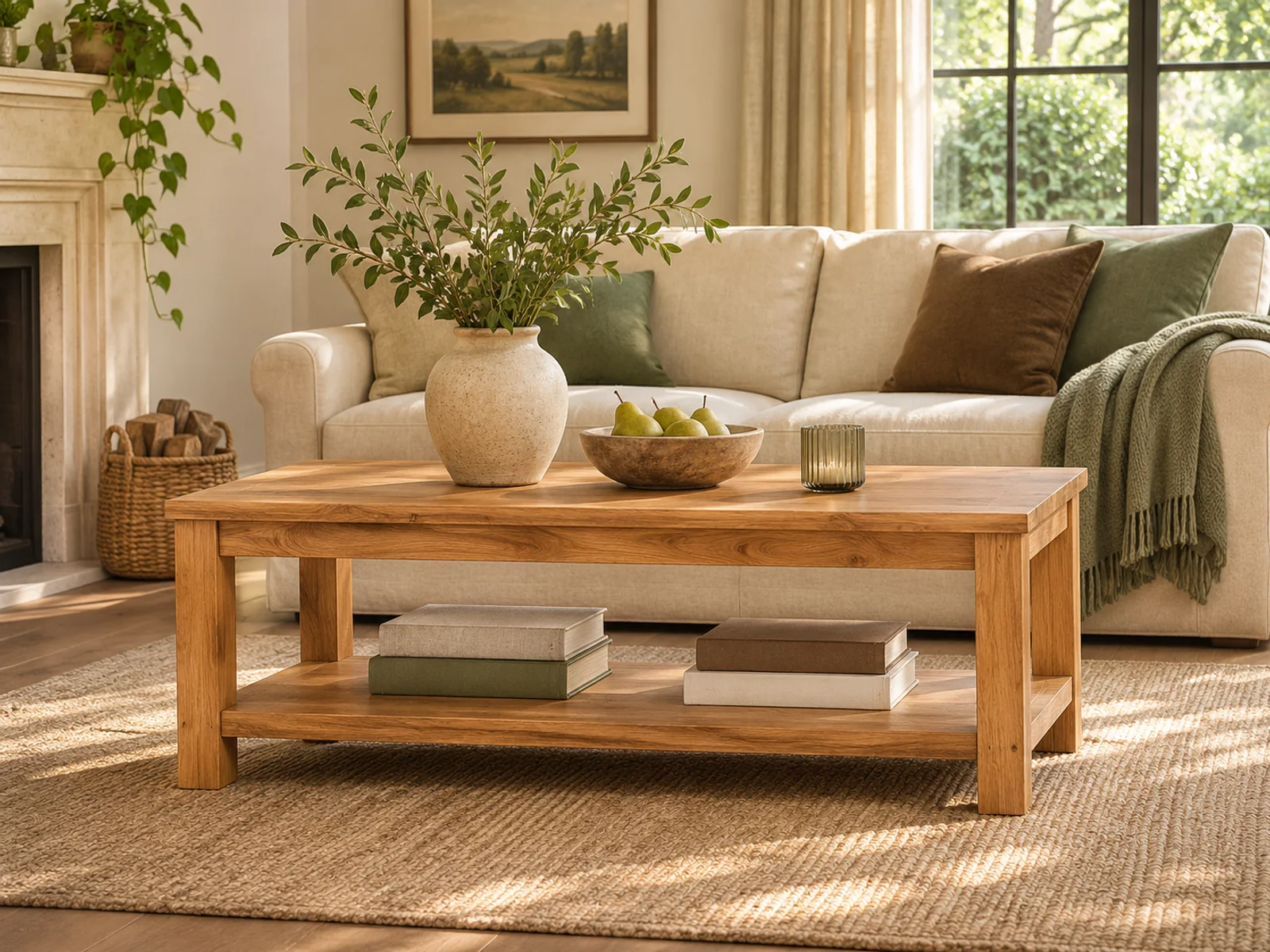
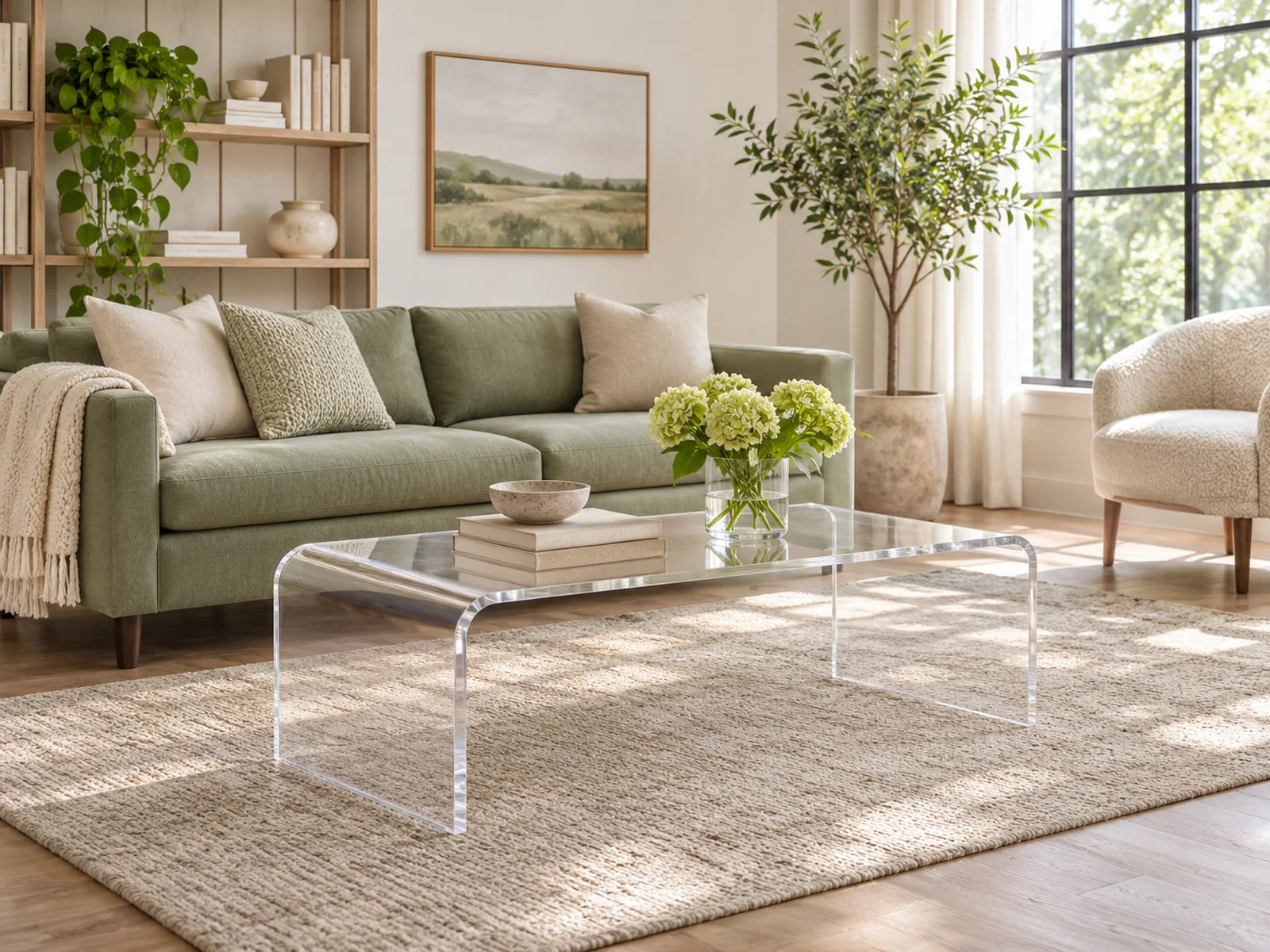
A clear top reveals the rug and base beneath it. A wood top adds a solid area of color and grain. That can be useful contrast or more visual weight than the room needs, depending on the surrounding furniture.
Crate & Barrel's coffee table guide discusses glass and wood as different material directions. Treat the visual descriptions as design guidance, not a reason to ignore the physical footprint of either option.
Inspect the whole construction
For glass, ask about the glass type, edge treatment, support and permitted loads. Do not assume every clear top has the same safety properties. For wood, check whether the top is solid timber, veneer or a wood-look surface and identify the finish.
Look at the base from the seated position. A busy metal structure may be more noticeable through glass than in a product close-up. Broad feet or a shelf can also occupy space beyond the tabletop outline.
Consider the marks you will notice
Fingerprints, dust, spills and everyday objects show differently on each material. Think about the cleaning routine you will actually follow. A clear top may expose clutter on a shelf beneath, while a solid top can conceal it from some angles.
Use the exact care instructions. Avoid general household-cleaner assumptions, especially where a glass top sits close to coated metal or a wood finish. A cleaner suitable for one surface may be inappropriate for the neighboring material.
Test reach and circulation before deciding
Mock up the shortlisted sizes on the floor. A transparent table remains an obstacle even when it looks visually light. Check corners, feet and the route around the seating, including when guests occupy the sofa.
Compare glass coffee tables with wood options using the same size range. The sizing guide can help you separate the room-fit decision from the material preference.
Look at the whole structure
A glass top can make a table look visually light, but its legs and frame still occupy floor space. Ask whether the glass is tempered or otherwise safety-rated for the furniture and inspect how it is supported. A wood table can feel warmer and conceal some fingerprints but may show heat or water rings. Crate & Barrel's selection guide offers layout ideas, while the exact model's materials and care instructions decide daily suitability. Measure the full footprint, not just the visible top.
Test the household's cleaning and safety needs
Think about children, pets and the objects usually placed on the table. Glass can show fingerprints and crumbs quickly; wood needs protection from hot drinks and standing water. Check edge shape and stability, especially on a rug. If the table has a shelf, decide whether it will become useful storage or visual clutter. Sit on each sofa position and see whether the table can be reached without leaning. The better material is the one that fits those routines and can be maintained without resentment.
Use a week-long floor test
Mark both table sizes and walk the room with the number of people who normally use it. Notice where knees, bags and pet paths go. Set temporary objects at the proposed table height to check reach from each seat. If a glass table is chosen for visual openness, keep its top clear enough to deliver that benefit. If wood is chosen for warmth, select a finish the household can protect and clean. The material choice should follow the room's practical pattern.
Common questions
Does glass make a table take less space?
It may reduce visual bulk, but it does not reduce the actual footprint. Measure the top and base, then keep usable routes around the table just as you would with a solid surface.
Is every glass coffee table tempered?
No assumption should be made from appearance. Check the exact specification and ask the retailer if the glass type is not stated. Follow the supplied handling and load instructions.
Can I mix a glass table with wood side tables?
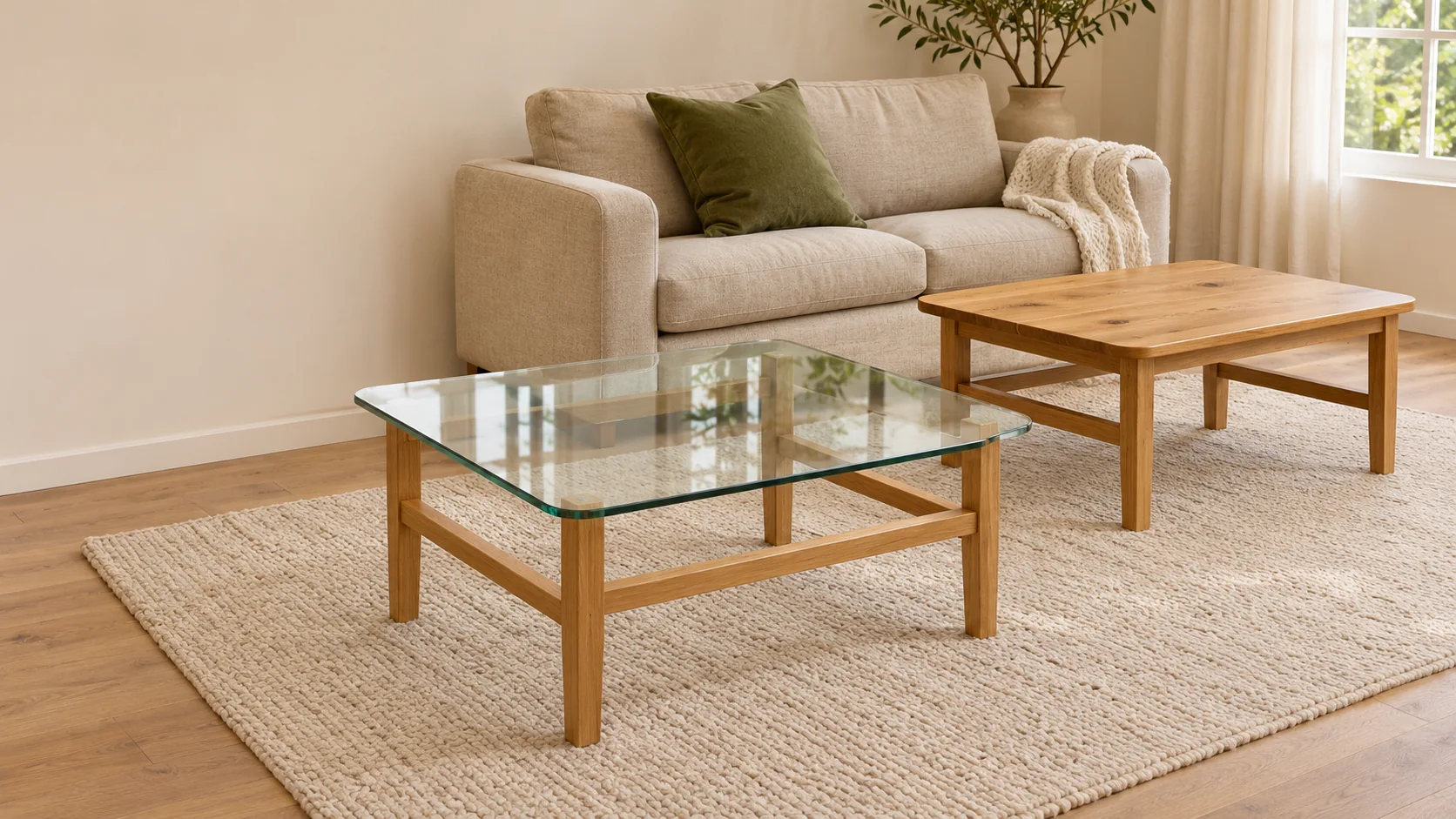
Yes. Compare the glass table's base finish with the other furniture and judge the group in the room. The pieces can share a color or shape without using the same tabletop material.
Is every glass top tempered?
No. Check the manufacturer's specification for the exact table and its intended use. Do not infer safety properties from appearance.
Does glass make a small room bigger?
It can look lighter, but the physical footprint remains. Tape the dimensions and walking route before deciding.
Can I mix glass and wood tables?
Yes. Repeat a finish or shape so the pieces feel connected, then check each surface's care needs separately.
Which hides everyday marks better?
That depends on finish, colour and use. Test samples if possible and consider fingerprints, dust, water and heat under your normal lighting.